
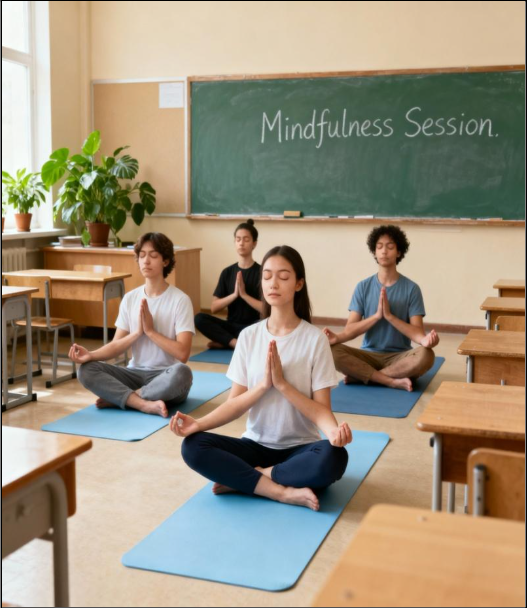
Yoga has been a new sensation for everyone for the last five to six years. People are practicing it and maintaining their well-being and mental wellness. On the other hand, meditation, being a part of self-control, has been practiced for centuries so that people are able to maintain their concentration levels. Seeing both yoga and meditation from a student wellness point of view, they give less importance to these activities. The constant stress of these students may result in issues like anxiety, lack of concentration, and fatigue. In order to tackle these problems, schools have now started to introduce various yoga and meditation classes so that students are able to cope with the stress and have a clear purpose in their lives.
Teenage years are a time when a lot of things are happening in the life of an individual, such as school, tuition, tests, sports, etc., which causes a lot of stress and the development of mental health issues. Yoga may help prevent adolescent mental health diseases mental well-being. Yoga causes the body to release endorphins, which are “feel-good” chemicals that can help people focus and feel rejuvenated to take on scholastic problems. Additionally, this will inspire others and help pupils stay positive. They will be able to meet new people, form friendships, and become the person whom others want to spend time with as a result. While allowing students to practice safely under coaches, basic principles such as Yama and Niyama should be emphasized throughout yoga practice to ensure discipline, respect, and the development of moral character.
5. Importance of Yoga and meditation:
- Better sleep quality
Yoga and meditation help calm the mind and relax the body, which are essential for good sleep. Practices like deep breathing, progressive muscle relaxation, and certain yoga asanas (like Shavasana or Legs-Up-the-Wall Pose) lower cortisol levels—the stress hormone—allowing the body to enter a restful state. Regular practice can reduce insomnia, improve sleep duration, and enhance overall sleep quality.
- Stability in Emotions
Meditation trains the mind to focus and observe thoughts without reacting impulsively. Yoga, through mindful movement and breath control, helps regulate emotional responses. Together, they promote emotional stability, reduce mood swings, and help individuals respond calmly to challenges. Students, in particular, can benefit from this by handling academic pressure, peer interactions, and personal stress more effectively. - Improvement in Physical Health
Yoga strengthens muscles, improves flexibility, enhances posture, and supports joint health. Meditation complements this by reducing stress-induced physical ailments such as high blood pressure, headaches, and fatigue. The combined practice enhances cardiovascular health, boosts immunity, and encourages healthier lifestyle choices, contributing to long-term physical well-being. - Relief from Stress and Mental Satisfaction
Both yoga and meditation activate the parasympathetic nervous system—the “rest and digest” system—helping reduce stress levels. Mindfulness meditation, pranayama (breathing exercises), and yoga postures release tension, calm racing thoughts, and foster a sense of inner peace. Regular practice leads to mental satisfaction, clarity of thought, and a positive outlook on life. - Reduction in Stress
Stress is a major contributor to physical and mental health problems. Yoga reduces the production of stress hormones, while meditation encourages mindfulness and present-moment awareness. This combination lowers anxiety, decreases irritability, and improves resilience, allowing individuals to cope better with daily pressures, deadlines, and personal challenges.
How can yoga programmes be designed to benefit students?
- Morning sessions: Conducting daily sessions on yoga for at least 15-20 minutes plus a few stretches to start the day.
- Meditations: In-class meditation for as little as 5 minutes to increase the focus of the students
- Relaxation from Yoga: Evening stretches in the evening to reduce stiffness in the body and have a pleasant sleep
- Workshops and sessions: Have some trained coaches for conducting live as well as online sessions for students
Some examples that students can practice daily:
- Surya Namaskar,
- Balasana (Child’s pose)
- Pranayama
- Mantra chanting
- Anulom vilom and much more
Impact on students:
Studies have now shown that the students who performed yoga and meditation daily have better academic results, focus better on things in which they are involved, and have a boost in retention of things, or we can say that they have better memory. Moreover, institutions have found that there are lower dropout rates, more participation among students, and a more positive learning environment.
Conclusion
Yoga and meditation not only make a person fitter from the outside, but they are more of a holistic development activity. Embracing students with yoga and meditation is not an investment in their education but in a lifelong journey and their future well-being.
Frequently Asked Questions (FAQs)
1. Why are yoga and meditation important for students?
Yoga and meditation help students manage stress, improve focus, and enhance overall well-being. They promote emotional balance, mental clarity, and physical fitness—key aspects for academic success and personal growth.
2. How do yoga and meditation improve sleep quality?
Practices like deep breathing and relaxation postures (e.g., Shavasana) reduce cortisol—the stress hormone—helping the body relax. This leads to better sleep duration, improved sleep quality, and reduced insomnia.
3. Can yoga and meditation help students handle academic pressure?
Yes. These practices calm the mind, enhance concentration, and improve emotional stability, allowing students to respond to exams, deadlines, and peer pressure with a clear and balanced mindset.
4. How do yoga and meditation contribute to emotional stability?
Meditation trains the mind to observe thoughts calmly, while yoga regulates emotions through mindful movement. Together, they reduce mood swings and promote patience, focus, and self-awareness.
5. What are some physical health benefits of yoga for students?
Yoga strengthens muscles, improves flexibility and posture, enhances immunity, supports joint health, and promotes better cardiovascular function—all of which contribute to long-term physical fitness.
6. How do yoga and meditation help reduce stress and anxiety?
They activate the parasympathetic nervous system, which relaxes the body and lowers stress hormones. Breathing techniques and mindfulness exercises calm the mind and help manage anxiety effectively.
7. How can schools design yoga programs for students?
Schools can organize short morning yoga sessions, five-minute meditation breaks during class, relaxation stretches in the evening, and workshops led by trained instructors—both online and offline.
8. What simple yoga and meditation practices can students do daily?
Students can practice Surya Namaskar, Balasana (Child’s Pose), Anulom Vilom, Pranayama, and mantra chanting for 15–20 minutes daily to improve focus and energy.
9. What impact does regular yoga and meditation have on students’ academic performance?
Research shows that students who regularly practice yoga and meditation have improved memory, better concentration, higher participation rates, and greater overall academic success.
10. How do yoga and meditation support holistic development?
Beyond physical fitness, these practices nurture mental, emotional, and moral growth. They encourage discipline, positivity, and self-control—essential for lifelong well-being and personal development.
References
[1] “Yoga and Mindfulness in Schools: A Comprehensive Guide,” Harvard Health Publishing, 2023. [Online]. Available: https://www.health.harvard.edu/mind-and-mood/yoga-and-mindfulness-in-schools
[2] “How Yoga Can Improve Student Mental Health and Academic Performance,” Edutopia, 2022. [Online]. Available: https://www.edutopia.org/article/how-yoga-can-improve-student-mental-health
[3] “Meditation and Yoga: Supporting Student Mental Wellness,” National Center for Biotechnology Information (NCBI), 2021. [Online]. Available: https://www.ncbi.nlm.nih.gov/pmc/articles/PMC7709162/
[4] “The Benefits of School-Based Yoga Programs,” Yoga Alliance Foundation, 2023. [Online]. Available: https://www.yogaalliance.org/impact/schools-and-youth
[5] “Meditation in Education: How Mindfulness Helps Students Manage Stress,” American Psychological Association (APA), 2023. [Online]. Available: https://www.apa.org/news/press/releases/stress/2023/mindfulness-education
[6] “Yoga and Meditation to Improve Student Focus and Reduce Stress,” World Health Organization (WHO) – Mental Health Promotion in Schools, 2024. [Online]. Available: https://www.who.int/mental_health/schools
[7] “The Science of Yoga: Benefits for Students’ Physical and Emotional Well-Being,” National Institutes of Health (NIH), 2022. [Online]. Available: https://www.nccih.nih.gov/health/yoga-what-you-need-to-know
[8] “Mindfulness and Relaxation Techniques for Students,” UNICEF India, 2024. [Online]. Available: https://www.unicef.org/india/stories/mindfulness-and-relaxation-for-students
Penned by Abhishek
Edited by Reeya Kumari , Research Analyst
For any feedback mail us at [email protected]
Transform Your Brand's Engagement with India's Youth
Drive massive brand engagement with 10 million+ college students across 3,000+ premier institutions, both online and offline. EvePaper is India’s leading youth marketing consultancy, connecting brands with the next generation of consumers through innovative, engagement-driven campaigns. Know More.
Mail us at [email protected]