
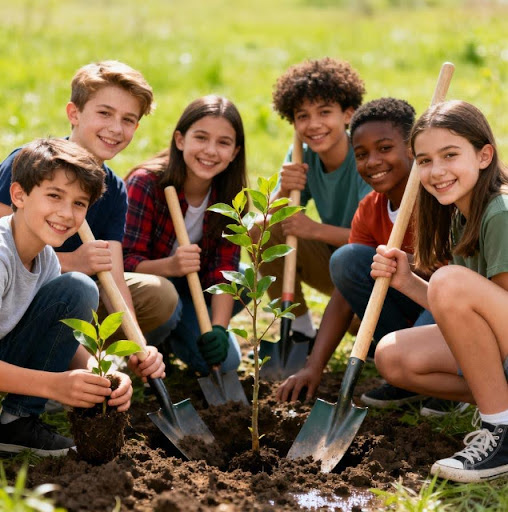
In the era of global challenges such as climate change, inequality, and digital divides, youth-led volunteering stands out as a transformative force driving community change. All around the world, young people are taking the lead, channeling their energy, creativity, and empathy to redefine the future of their communities.
Youth-led volunteering is not just about lending a hand; it represents new ownership and leadership. Youth are designing impactful campaigns, building digital platforms, and championing critical issues from environmental protection to mental health awareness proving their efforts are essential to tackling today’s greatest challenges.
A defining feature of youth-led volunteering is the ability to combine digital fluency with bold ideas. From crowdfunding for flood victims and organizing clean-up drives online to developing educational apps, innovation and compassion set youth apart. This combination accelerates the scale and effect of volunteer work, positioning young people as catalysts for widespread change.
Whenever, youth lead a volunteering service it nurtures them with qualities such as leadership and empathy. They may also develop skills such as communication skills, teamwork, and problem-solving in the real world. Their experiences not only make this volunteering service successful, but the future policy makers are being shaped out of these roles and services.
Also, youth-led volunteering bridges the age gap and generations; it literally shows us that volunteering is not defined by any age group. Youth leaders foster intergenerational trust and group resilience by working with institutions, elders, and neighborhood organizations. Their endeavors will have both short-term effects and long-term continuation due to this synergy. According to empirical data, young volunteerism supports sustainable development objectives, builds community resilience, and improves social capital. Well-known examples, such as local community service projects and youth climate campaigns, show how youth-led collective action may impact public opinion and legislation.
Intergenerational cooperation is another benefit of youth-led volunteering. While young people contribute their creativity and energy, cooperation with more seasoned community members guarantees knowledge transfer and ongoing efforts. This collaboration creates a sense of common purpose among generations and improves social cohesion.
Today, the youth-driven initiatives are responsible for the momentum of many major social movements, including gender equality, school reform, and climate action. People like Malala Yousafzai and Greta Thunberg are good examples of how passion can have a profound impact on a society. Beyond these international heroes, however, are a number of local heroes: college groups teaching digital literacy in communities, young farmers advocating for sustainable agriculture, and students organizing blood donation camps.
The youths’ experiences serve as evidence that even little efforts can lead to change.
To sum up, youth-led volunteering is a force for tangible, quantifiable change rather than a side project. It represents creativity, inclusivity, and hope. Empowering young volunteers is not only a moral decision, but also a calculated one as nations deal with complicated challenges. A transformation that goes from generation occurs when young people’s enthusiasm and purposeful power come together. In addition to being an investment in social development, recognizing and assisting youth-driven initiatives demonstrates a commitment to raising a generation of leaders who are empathetic, creative, and honest.
FAQs: The Impact of Youth-Led Volunteering
Q1. What defines an initiative as youth-led volunteering?
An initiative is defined as youth-led volunteering when young people take ownership, designing, planning, and executing the core activities, rather than just assisting adult-driven projects.
Q2. How does it contribute to community change?
These youth-driven initiatives channel young people’s energy and fresh perspectives toward tackling complex issues like climate change and social inequality directly within their communities.
Q3. What specific skills do young people develop through such initiatives?
Participants in these programs develop essential skills such as leadership, problem-solving, real-world communication, and effective teamwork, which are vital for future careers.
Q4. Why is digital fluency a major asset in modern youth-led volunteering?
Digital fluency allows such initiatives to accelerate their impact through crowdfunding, social media campaigns, and educational apps that extend outreach and participation.
Q5. How do youth programs foster intergenerational cooperation?
They bridge the age gap by having young leaders collaborate with elders and established institutions, ensuring knowledge transfer and building mutual community trust.
Q6. Can these initiatives influence public policy or legislation?
Yes, successful youth-led volunteering campaigns, particularly in areas like climate action or school reform, have influenced public opinion and even local or national legislation.
Q7. What is the difference between youth-led initiatives and general teen volunteerism?
Youth-led initiatives emphasize leadership and ownership (youth design the project), whereas general volunteerism often involves assisting with adult-designed projects.
Q8. How do they support Sustainable Development Objectives (SDOs)?
Empirical data shows such youth programs support SDOs by addressing local issues aligned with global goals, such as environmental protection or health awareness.
Q9. Do these experiences help shape future policy makers?
Yes, by leading and managing community efforts, participants gain practical experience in governance, planning, and resource management — crucial for future leadership roles.
Q10. How does youth-led volunteering demonstrate inclusivity?
It is inherently inclusive, drawing diverse groups of young people to address issues that directly affect their peers and neighborhoods.
Q11. What is an example of a local youth initiative?
Local examples include high school groups organizing blood donation drives, college students teaching digital literacy, or youth teams campaigning for local environmental clean-up.
Q12. How does intergenerational cooperation ensure the continuation of these efforts?
The synergy between generations guarantees long-term sustainability by securing institutional backing and transferring foundational knowledge from experienced members.
Q13. Is empowering youth initiatives a “calculated decision” for nations?
Yes, empowering such movements is a calculated decision because it builds community resilience and nurtures empathetic, creative young leaders.
Q14. How do these initiatives build social capital in a community?
They strengthen social capital by increasing trust, cooperation, and networking among diverse members, reinforcing the social fabric.
Q15. How can institutions better assist youth volunteer groups?
Institutions can assist by offering mentorship, funding, and platforms to amplify their voices and enhance the reach of their initiatives.
References
[1] NVFS, “The Benefits of Teen Volunteerism: Transforming Lives and Communities” NVFS. 2024. [Online].
Available: https://www.nvfs.org/benefits-of-teen-volunteerism/
Penned by Abhishek
Edited by Reeya Kumari, Research Analyst
For any feedback mail us at [email protected]
Transform Your Brand's Engagement with India's Youth
Drive massive brand engagement with 10 million+ college students across 3,000+ premier institutions, both online and offline. EvePaper is India’s leading youth marketing consultancy, connecting brands with the next generation of consumers through innovative, engagement-driven campaigns. Know More.
Mail us at [email protected]