
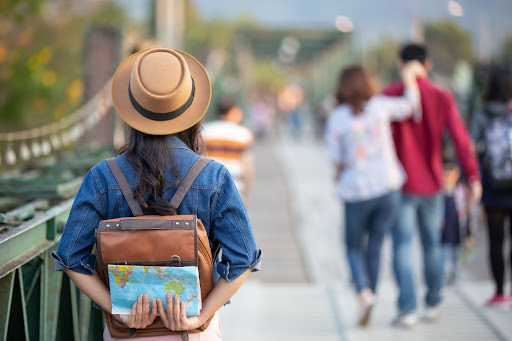
Going abroad to study sounds like a dream, a new country to go to, new people to interact with, new experiences to have. And, in a lot of ways, it is just that. But what you don’t always see in the brochures or in the information sessions is how much you learn about yourself during the process.
Introduction
Going abroad to study sounds like a dream, a new country to go to, new people to interact with, new experiences to have. And, in a lot of ways, it is just that. But what you don’t always see in the brochures or in the information sessions is how much you learn about yourself during the process.
The best study abroad lessons often happen in the moments you’re not expecting – the awkward conversations, cultural misunderstandings, homesick nights, and unexpected successes. This isn’t a checklist or how to guide, it’s just my experience of what I wish someone had told me before I left. Think of it as an authentic student travel reflections and take it for what it is, from one student to another.
- Culture Shock is Real and that’s okay : The Abroad Lessons.
Before I left I thought I was mentally prepared to enter a new culture. But the first few weeks abroad was a different story. It totally came as a shock to me after grocery shopping, classroom norms, and cultural relatedness. I later learned all this discomfort is completely normal and is part of the process of being part of a new culture.
One of the biggest takeaways from studying abroad, is that just because you might feel out of place right away doesn’t mean you made the wrong choice, you are simply adjusting, expanding as a person, and stretching your comfort zone.
- Budgeting Will Become a Life Skill
I thought I was pretty good at managing finances, but I was totally not prepared. When you are abroad, the expenses can creep in so unexpectedly – like train tickets, spontaneous weekend trips, a local SIM card, or the daily cappuccino that turns into a habit. One of the most humbling student travel reflection moments was realizing that every single thing costs money. I eventually learned how to track spending, compare currency exchange rates, and save without missing out.
Tip: Use budgeting apps, and always keep an emergency fund. It’s not about being restrictive but about being smart.
- Academic Systems Will Surprise You
I thought classrooms would feel familiar, just in a different language. But every country has its own academic culture. For me, that meant fewer lectures and more independent study and which at first felt like being thrown into the deep end.
Eventually, I caught on. I learned to read between the lines, seek help on occasion, and take responsibility for my own learning. It actually changed the way I viewed myself as a learner as a whole: more confident One of the most useful study abroad lessons? Learning how to take control of your education.
- You’ll Miss the Smallest Things From Home
You anticipate missing your family and friends, but I never would have guessed I would miss street food, my mom’s cooking, or the smell of my local market. It is the little details, the special things we mask, they suddenly became filled with apparent emotional significance.
This turned into a very personal student travel reflection, that missing home does not imply you are not enjoying the experience, it means that you appreciate your roots and that is worth celebrating.
- Communication Barriers are More than Just Words
Even when you’re good in the local language, there are many moments where it does not matter if we can speak the same language, there is still a miscommunication of cultural nuances, body language or tones. I was often annoyed at being misunderstood or misunderstood while talking about things.
But one of the best lessons from study abroad was how communication is about connection, not just syntax and phonetics. Smiling, patience, and respect can mean a lot further than words, sometimes.
- Friendships Will Look Different and That’s Beautiful
At first, it can be quite hard to make friends abroad. People generally are from different cultures, with different humor, and different conceptions of friendship. But over time you can really develop some of the strongest bonds, often with people you may never have had an opportunity to meet. This was a large portion of my travel reflection as a student. These friendships taught me empathy, opened my mind to different ways of thinking, and made me more able to tolerate difference.
Pro tip: Say yes to things! Go to campus events, join language exchanges, or check out the new city with someone you don’t know.
- You’ll Come Home…Different
The biggest takeaway? You will not be the same upon your return. While not in some huge manner, you will notice the changes in your thought patterns, how you speak and communicate, and what your values are. You will step firmly away from your bubble that has confined you to that place, and view the world in a different way…and, yourself in a different way. And therein lies the beauty of it all. You will carry the marks of studying abroad, long beyond the semester experience, when you apply the lesson/s in future, they will affect your decisions, your goals, and your confidence.
Conclusion
Studying abroad is not simply another academic achievement or travel experience, it is a distinct personal journey. Each travel abroad experience is different due to the fact that we all have different worldviews and approaches. However, we can all agree on a few lessons you will learn: you will grow in discomfort, you will fail and learn, and you will come home with stories that only you can tell.
In your experience, you may find out that the most important lessons for your future lie in the act of just showing up, despite how uncomfortable that may feel. So, take the time to reflect, take it all in, and allow the world to change you for the better! Your own student travel reflections can create someone else’s experience of learning- that is the beauty.
References:
- https://link.springer.com/article/10.1007/s10734-017-0119-z
- https://scholars.carroll.edu/bitstream/20.500.12647/262/1/2004_SmithN_THS_000814.pdf
- https://onlinelibrary.wiley.com/doi/abs/10.1111/flan.12047
- https://www.jstor.org/stable/30198037
Frequently Asked Questions About Studying Abroad
1. What is the best time to apply for studying abroad?
Most universities abroad have two main intakes: Fall (August/September) and Spring (January/February). Apply at least 8–12 months in advance to meet deadlines, secure scholarships, and complete visa formalities.
2. How do I choose the right country to study abroad?
Consider factors like your course availability, budget, cultural fit, language requirements, and future career prospects before deciding where to study abroad.
3. Do I need to learn the local language before going abroad?
Not always. Many programs abroad are in English, but learning basic phrases in the local language helps with daily life and cultural adaptation.
4. What are the main challenges of living abroad as a student?
Common challenges include culture shock, homesickness, budgeting, and adapting to different academic systems abroad.
5. How can I manage homesickness while studying abroad?
Stay connected with loved ones through calls and messages, but also engage with your new environment abroad by joining student clubs or exploring local attractions.
6. Is studying abroad more expensive than studying in my home country?
It depends on the country and course. Some countries abroad offer affordable tuition and living costs, while others can be costly but offer strong scholarship options.
7. What documents are needed for studying in foreign states?
You typically need academic transcripts, a valid passport, proof of English proficiency, letters of recommendation, a statement of purpose, and a student visa to study abroad.
8. How can I budget effectively while living ain other nation?
Track your expenses, cook at home, use student discounts, and set aside an emergency fund to handle unexpected costs abroad.
9. Will studying different countries improve my career prospects?
Yes. Employers value the global exposure, adaptability, and problem-solving skills gained while studying abroad.
10. How do I make friends internationally?
Attend campus events, join clubs, participate in cultural exchange programs, and be open to connecting with people from different backgrounds abroad.
11. What should I pack for studying in foreign nations?
Carry essentials like important documents, clothing suited to the climate abroad, electronics, and any special items from home you may miss.
12. Can I work while studying in foreign nations?
Many foreign countries allow part-time work for students. Check visa regulations and balance work with academics.
13. How long does it take to adjust to life in foreign nations?
Adjustment varies for each person. On average, students take 1–3 months to feel comfortable abroad, depending on their openness to new experiences.
14. What if I face academic difficulties in foreign nations?
Seek help from professors, academic advisors, and peer study groups abroad. Universities often have support centers for international students.
15. What is the biggest benefit of studying in foreign nations?
Beyond academic learning, studying abroad offers personal growth, cultural awareness, lifelong friendships, and a broader perspective on life.

Penned by Riya Singh
Edited by Ragi Gilani, Research Analyst
For any feedback mail us at [email protected]
Transform Your Brand's Engagement with India's Youth
Drive massive brand engagement with 10 million+ college students across 3,000+ premier institutions, both online and offline. EvePaper is India’s leading youth marketing consultancy, connecting brands with the next generation of consumers through innovative, engagement-driven campaigns. Know More.
Mail us at [email protected]