
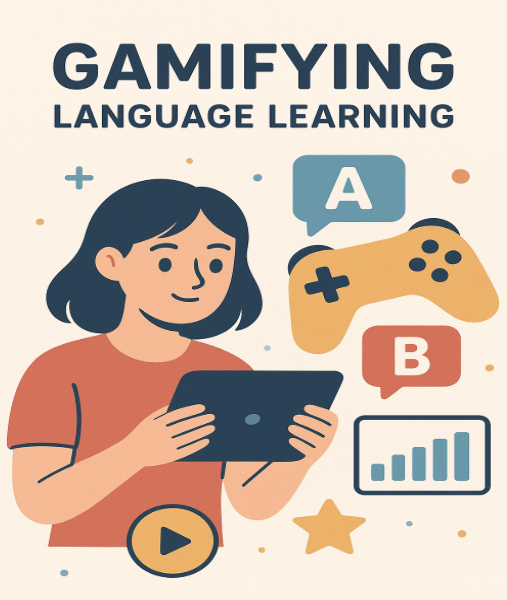
8 Proven Reasons to Gamify Language Learning Without Killing the Fun
A lot of people dive into a new language full of energy, only to quit a few weeks later. It’s rarely about laziness — the real problem is that traditional learning often feels like grinding through a never-ending textbook. That’s where gamified language learning comes in. By wrapping lessons in game-type elements, the process becomes less of a chore and more of a challenge you actually want to return to. The best part? You’re so busy chasing a score, unlocking levels, or trying to beat your last record that you forget that you’re “studying.”
Why the Game Part Works
Our brains love small victories. Scoreboards, “You nailed it!” pop-ups, or confetti animations light up the brain’s reward system. But here’s the catch — if you’re only collecting fake coins, you’re missing the real prize: being able to hold a conversation without freezing. Strong gamification keeps motivation and meaningful progress moving together.
Start Small, Then Level Up
Learning a new tongue doesn’t just happen fast, it’s more like working out a game with many small rules. You begin with simple parts like “hello” and “thank you” before you dive into the hard grammar. The right apps that help you learn play too, making app-assisted language study an effective way to stay consistent. They give you quick wins — a word you get right, a line that sounds good — and push you to keep on. Miss a day? Not a big deal. But the next time you open it, you’re back at it. Over time, these little wins grow into real talks, and you don’t see how much you’ve grown until someone tells you.
Daily Nudges and Tiny Wins
Blocking out a full study hour feels heavy. A five-minute quiz? Not so much. That’s why streaks, mini challenges, and “beat yesterday’s score” goals work — they get you to show up daily. And showing up is half the battle.
Competition Without the Pressure
Leaderboards can motivate, but dumping every user into one giant ranking can crush beginners. Smaller, skill-based tiers — or friendly rivalries in a small group — keep competition fun without making anyone feel left behind.
Add a Story
Stories are more than fluff. Quests, mystery clues, or characters speaking your target language give you a reason to keep going. The grammar drill stops being “homework” and becomes the key to unlocking the next part of the plot.
Rewards That Actually Help You Learn
Badges are nice, but rewards tied to learning are better. Unlock a new conversation topic after you master the last one, or gain access to faster listening exercises once your accuracy improves. That way, the reward itself pushes your skills forward.
Bring It Into the Real World
Not all gamification happens on a screen. Set yourself real-life missions — order food in your target language, watch a scene without subtitles, or text a friend entirely in that language for a day. These moments stick far longer than any app streak.
Keep the Learning at the Core
If you’re logging in just to protect a streak but can’t remember what you learned, it’s time to change. Gamification should only keep you engaged, but the ultimate reward must be using the language successfully in real situations.
Final Thoughts
Gamifying language learning isn’t about making a video game for its own sake. It’s about using game mechanics to keep your brain hooked long enough for the skills to stick. When you mix fun with meaningful progress, you stop dreading practice and start looking forward to “just one more round.”
The purpose of networking is to make new friends, industry acquaintances, and even business partners, which help you make progress on your career path quickly. Expanding your contacts can open doors to new opportunities for business, career advancement, and personal growth. Having several connections with professional people will help you when you need an opportunity or want to clear your doubts.
Networking doesn’t mean going up to strangers and asking for their number or going out partying, but building fruitful connections can be a professional and gradual process. Meeting people through mutual friends, networking events, a workplace can be an easy way to start building your network. Meeting people who are going through similar experiences or have overcome obstacles you may be facing is always a great learning opportunity to make you a better individual.
Volunteering your skills for your acquaintance builds trust between your networks. Every event no matter how minuscule can help you grow your networks and in turn, help you in the long run.
References
[1] E. Ratinho, “The role of gamified learning strategies in students’ motivation — long-term effects,” PMC, Mar. 2023. [Online]. Available: https://pmc.ncbi.nlm.nih.gov/articles/PMC10448467/
[2] C. Pappas, “eLearning gamification: what are the potential risks involved?” eLearning Industry, Aug. 18, 2024. [Online]. Available: https://elearningindustry.com/eLearning-gamification-what-are-the-potential-risks-involved
[3] StriveCloud, “Duolingo gamification explained,” StriveCloud Blog, Jul. 17, 2025. [Online]. Available: https://strivecloud.io/blog/gamification-examples-boost-user-retention-duolingo/
[4] ClassPoint, “How gamification encourages student progress,” ClassPoint Blog, Dec. 21, 2023. [Online]. Available: https://www.classpoint.io/blog/how-gamification-encourages-student-progress
[5] V. Rikkers, “Story-driven gamified education on USB-based attack,” Springer, 2025. [Online]. Available: https://link.springer.com/article/10.1007/s12528-023-09392-z
FAQ: Making Language Learning Fun and Effective
Q1. What does it mean to make language learning interactive?
It means adding playful challenges, rewards, and engaging activities that turn lessons into experiences you actually want to return to.
Q2. Why do interactive methods work better than traditional study?
Because they give small wins, instant feedback, and motivation, making the process less of a chore and more enjoyable.
Q3. How can small victories boost language progress?
Each correct word, phrase, or mini-challenge activates the brain’s reward system, building confidence step by step.
Q4. Is starting small really effective in language learning?
Yes. Beginning with short, easy tasks like greetings or simple sentences helps you stay consistent without feeling overwhelmed.
Q5. How do daily nudges help learners?
Short reminders, streaks, or quick quizzes encourage you to show up every day, and regular practice creates long-term fluency.
Q6. Can competition motivate learners without causing pressure?
Yes. Friendly rivalries in small groups or tiered levels keep the experience motivating without discouraging beginners.
Q7. Why should stories be included in language learning?
Stories make lessons immersive by giving you characters, quests, and reasons to keep practicing naturally.
Q8. What are useful rewards in language learning?
The best rewards unlock new skills — like harder listening drills, new conversation topics, or access to practical dialogues.
Q9. How can language study be linked to real life?
By setting missions such as ordering food, texting in your target language, or watching a scene without subtitles.
Q10. Do playful methods replace serious study?
No. They simply make practice engaging while keeping meaningful progress at the center.
Q11. What if someone focuses only on streaks or scores?
That can be a trap. The main goal should always be applying the language in real conversations, not just maintaining a record.
Q12. How do interactive apps support consistency?
They provide quick, manageable sessions that fit into daily life, encouraging regular practice without feeling forced.
Q13. Can learners really improve with just 5–10 minutes a day?
Yes. Short but focused sessions add up, especially when repeated daily, leading to steady improvement.
Q14. How does playful learning affect motivation long term?
It keeps learners curious, prevents burnout, and creates an environment where progress feels natural.
Q15. What’s the ultimate goal of using interactive methods?
The true reward is fluency — being able to use the language confidently in real-world situations.
Penned by Apeksha S
Edited by Shashank Khandelwal, Research Analyst
For any feedback mail us at [email protected]
Transform Your Brand's Engagement with India's Youth
Drive massive brand engagement with 10 million+ college students across 3,000+ premier institutions, both online and offline. EvePaper is India’s leading youth marketing consultancy, connecting brands with the next generation of consumers through innovative, engagement-driven campaigns. Know More.
Mail us at [email protected]