
Let’s understand about Microlearning and it’s ways:
In the revolutionizing scenario of the college education framework, microlearning, students, and fast learning techniques are becoming trailblazers to level up the skills. By adopting methods to transform their journey from campus to corporate, catalysts like delivering bite-sized, focused learning units. Microlearning offers a pivot and efficient learning experience which tailor the college students to become ready for today’s dynamic academic environment.
1.Higher Retention with Bite-Sized Content
Microlearning and training modules typically span just a few minutes and focus on a learning objective at a particular time. This concise and engaging format aligns with cognitive load theory and helps students to process and retain the information in a more effective manner. For instance, a meta-analysis reported that microlearning significantly boosts academic performance by highlighting the importance of, as compared to traditional macro-lessons conducted in theory classes.

2.Mobile Learning for On-the-Go Access
Paradigm shifts in mobile education, or “m-learning,” are closely tied to microlearning. A recent overview highlights short learning modules and project modules of just 5-10 minutes being delivered through smartphones, laptops and tablets to increase the engagement and also to shift towards practicality of concepts by spacing practice assignments and accessibility to home. Mobile apps now allow students to complete lessons, quizzes anytime and anywhere. This will help college students to balance studies with internships and co-curricular activities.
3.Personalized & Adaptive Learning Paths
Microlearning allows educators and facilitators to modify their content to make it resonate with the learner’s pace and needs. Integrating microlearning into conventional e-learning portals with medium like LTI and cloud-based architectures, which enables the real-time tracking and customized and personalized delivery in higher education among youth.
4.Boosting Motivation & Integration of Gamification for Higher Engagement
Recent research concludes that microlearning not only enhances objective outcomes like grades but also leads to motivation and learner’s confidence. Studies reveal that it is concise, short and relevant content materials to encourage frequent review and also supports sustained engagement. Enriching content with gamification by using elements like points, leaderboards, and challenges, is turning a learning program into an interactive experience for students. Combination of microlearning and gamified lessons can increase motivation and also improve the participation level of the campus students and help them to enjoy the channel of acquiring new skills.
5.Supporting & Preparing Students for a Rapidly Changing Job Market
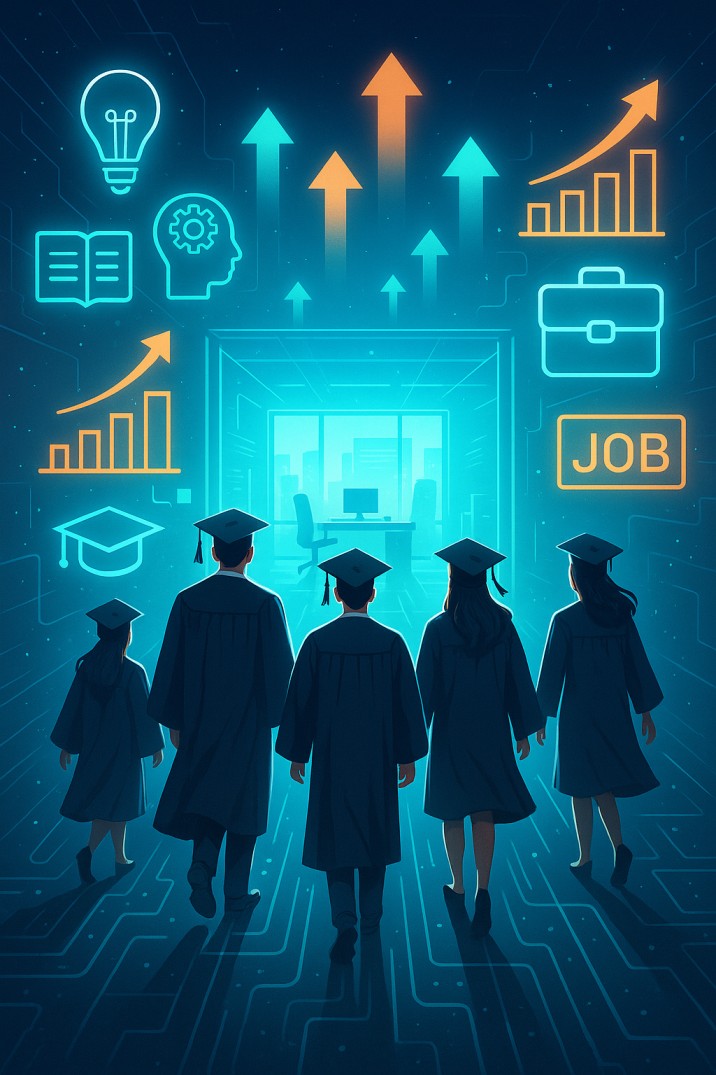
Initially introduced as a strategy for ongoing professional development, microlearning is now embedded in online communities to bridge the gap between formal and informal learning practices and aligning with the modern multitasking routine life. The modern workplace demands quick flexibility, adaptability and continuous capacity-building. Colleges adopting this model, can better equip their graduate students with the agility to stay relevant in their careers.
Conclusion
The trajectory of college education is undeniably leaning toward the shorter, smarter, more focused and technology-driven learning formats. By embracing microlearning, students can enjoy fast learning techniques that can hone both the academic success with learning satisfaction seamlessly. As colleges adopt this approach, they will cultivate learners, to thrive in a dynamic and ever-changing world.
References
[1] I. Buchem and H. Hamelmann, “Microlearning: A strategy for ongoing professional development,” eLearning Papers, no. 21, Sep. 2010. [Online]. Available: [Microlearning: a strategy for ongoing professional development]ResearchGate
[2] V. V. Senandheera, C. K. Muthukumarana, D. S. Ediriweera, and T. P. Rupasinghe, “Impact of microlearning on academic performance of students in higher education: A systematic review and meta-analysis,” J. Multidisciplinary & Translational Res., vol. 9, no. 1, pp. 10–25, Aug. 2024. [Online]. Available: [Impact of microlearning on academic performance]jmtr.sljol.info
[3] Wikipedia, “M-learning,” Wikipedia, updated recently. [Online]. Available: [M-learning wiki entry]Wikipedia
[4] R. P. Díaz-Redondo, M. Caeiro-Rodríguez, J. J. López-Escobar, and A. Fernández-Vilas, “Integrating micro-learning content in traditional e-learning platforms,” arXiv, Dec. 2023. [Online]. Available: [Integrating micro-learning content in traditional e-learning platforms]arXiv
[5] A. B. R. Shatte and S. Teague, “Microlearning for improved student outcomes in higher education: A scoping review,” ScienceGate, 2020. [Online]. Available: [Microlearning for improved student outcomes in higher education]ScienceGate
[6] Unsplash: Royalty Free Images, Students, javier trueba
Frequently Asked Questions (FAQs) on Microlearning in College Education
1. What is microlearning in college education?
It is an innovative teaching approach that delivers content in short, focused bursts rather than lengthy lectures. In college education, it means providing students with small learning modules—such as 5–10 minute videos, flashcards, or quizzes—that target one skill or concept at a time. This format helps reduce cognitive overload and makes it easier for students to absorb and retain knowledge effectively.
2. How does it help students improve retention?
Traditional long lectures can overwhelm students with too much information at once. Microlearning solves this by presenting bite-sized lessons that align with the brain’s natural way of processing knowledge. Studies show that short modules improve memory retention because learners can review the material multiple times without fatigue. For college students, this means they can better prepare for exams and projects by revisiting small, digestible chunks of content.
3. Why is microlearning considered a fast learning technique?
It is often described as a “fast learning technique” because it saves time while improving outcomes. Instead of sitting through hour-long lectures, students can complete a micro-lesson in just a few minutes. This allows them to learn at their own pace and fit study sessions into busy schedules filled with internships, extracurricular activities, and part-time jobs.
4. Can microlearning be accessed on mobile devices?
Yes, one of the biggest advantages is its compatibility with mobile devices. Students can access lessons, practice quizzes, or flashcards on smartphones, tablets, or laptops. This “m-learning” (mobile learning) approach ensures that students can study anytime and anywhere—on a bus ride, between classes, or even at home.
5. How does microlearning support personalized learning paths?
It can be easily customized to meet individual learning needs. Through adaptive learning platforms, students can receive personalized recommendations based on their performance. For example, if a student struggles with a math problem, the system can assign micro-lessons that focus on that specific concept. This tailored approach makes learning more efficient and student-centered.
6. What role does gamification play in microlearning?
Gamification is the use of game-like elements such as points, leaderboards, and badges in education. When combined with microlearning, it makes lessons more engaging and interactive. For example, students might earn points for completing a module or unlock badges for consistent practice. This increases motivation, fosters healthy competition, and keeps students actively involved in the learning process.
7. How does microlearning prepare students for the job market?
The modern job market requires agility, adaptability, and continuous upskilling. It equips students with these skills by allowing them to quickly learn and apply new knowledge. Instead of waiting for long training sessions, students can access short courses that cover essential workplace skills—like communication, coding, or data analysis—making them more job-ready upon graduation.
8. What are some examples of microlearning techniques in colleges?
Common techniques in higher education include:
Short explainer videos (5–10 minutes)
Interactive quizzes and flashcards
Infographics summarizing key points
Case studies broken into mini-modules
Mobile apps with bite-sized lessons
Gamified learning portals
These methods help students learn more efficiently compared to traditional lecture-based approaches.
9. Does microlearning replace traditional classroom teaching?
No, microlearning is not meant to replace traditional teaching but to complement it. Lectures, group discussions, and lab work remain essential in colleges. It acts as a support system, offering quick reinforcement of concepts and providing students with flexible study options outside the classroom.
10. How does microlearning save time for college students?
Time is a valuable resource for students balancing academics, part-time jobs, and personal commitments. Since It modules are short and focused, they save time compared to reading entire chapters or attending long sessions. Students can complete a lesson in under 10 minutes, making it easy to study in small intervals throughout the day.
11. Is microlearning suitable for all types of students?
Yes, microlearning is versatile and benefits different types of learners—visual, auditory, and kinesthetic. Visual learners can benefit from infographics, auditory learners from podcasts or short lectures, and kinesthetic learners from interactive tasks and quizzes. This flexibility makes it effective across diverse student groups.
12. How does microlearning encourage active participation?
It is designed to keep students engaged with interactive content. Quizzes, challenges, and flashcards encourage learners to apply knowledge immediately, rather than passively listening. By engaging with the material in small, meaningful ways, students remain active participants in their education, which leads to better learning outcomes.
13. Can microlearning help reduce student stress?
Yes, it can reduce stress by breaking down complex topics into manageable chunks. Instead of feeling overwhelmed by lengthy lectures or dense textbooks, students approach learning step by step. This gradual learning process makes academic workloads feel less intimidating and increases confidence in mastering difficult subjects.
14. How can colleges implement microlearning effectively?
Colleges can integrate microlearning into their curriculum by:
Creating mobile-friendly platforms for bite-sized lessons
Using gamification to boost engagement
Encouraging faculty to design short, focused content
Offering personalized learning dashboards
Aligning micro-modules with industry skills for career readiness
This structured approach ensures that microlearning enhances rather than disrupts traditional education.
15. What is the future of microlearning in higher education?
The future looks promising as technology continues to evolve. With AI, adaptive learning systems, and gamified platforms, students will enjoy even more personalized and engaging educational experiences. As the job market demands continuous skill upgrades, microlearning will play a central role in bridging the gap between college education and professional success
Penned by Rohit Rathore
Edited by Ragi Gilani, Research Analyst
For any feedback mail us at [email protected]
Transform Your Brand's Engagement with India's Youth
Drive massive brand engagement with 10 million+ college students across 3,000+ premier institutions, both online and offline. EvePaper is India’s leading youth marketing consultancy, connecting brands with the next generation of consumers through innovative, engagement-driven campaigns. Know More.
Mail us at [email protected]
Penned by Names
Edited by Ritika Sharma, Research Analyst
For any feedback mail us at [email protected]
Transform Your Brand's Engagement with India's Youth
Drive massive brand engagement with 10 million+ college students across 3,000+ premier institutions, both online and offline. EvePaper is India’s leading youth marketing consultancy, connecting brands with the next generation of consumers through innovative, engagement-driven campaigns. Know More.
Mail us at [email protected]
Penned by Names
Edited by Ritika Sharma, Research Analyst
For any feedback mail us at [email protected]
Transform Your Brand's Engagement with India's Youth
Drive massive brand engagement with 10 million+ college students across 3,000+ premier institutions, both online and offline. EvePaper is India’s leading youth marketing consultancy, connecting brands with the next generation of consumers through innovative, engagement-driven campaigns. Know More.
Mail us at [email protected]