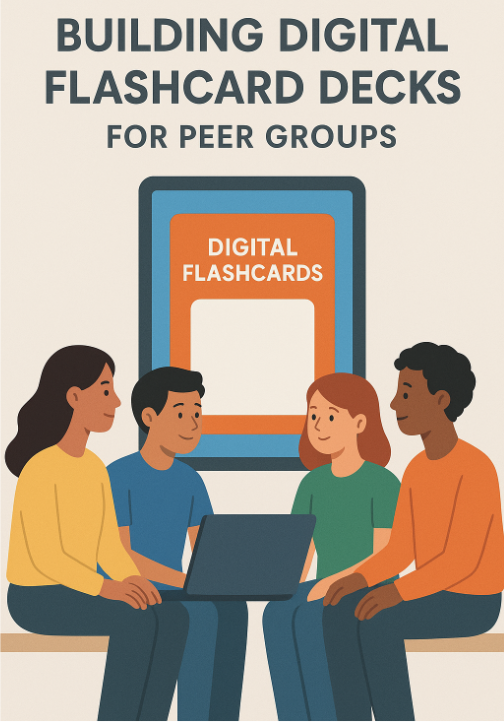
Remember cramming for an exam with a stack of handwritten flashcards? You’d flip them at lightning speed, hoping something would stick. Now picture the same thing, but digital—and not just for you. Imagine your whole group building a deck together. That’s where peer digital flashcards get interesting.
They’re not just about studying anymore. When peers collaborate, the deck feels less like a dry list of facts and more like a conversation. Someone adds a meme, someone else sneaks in an example from last week’s project… suddenly it’s not “studying” at all. It’s sharing.
And if you look at it through a marketing angle, it’s even better. Why? Because people love content that’s short, useful, and shareable. Flashcards hit all three.
Innovative peer-built digital flashcards have a way of turning the learning process simultaneously into a study hack and a social experience, encouraging study tool sharing among learners. Solo cramming, which used to be the norm, is transformed into a growing dialogue, where figures, examples, jokes, and even everyday references intermingle in a shared deck. This mixture of seriousness and fun reflects the highest engagement level and keeps the knowledge learnt for a longer time.
Pick one more point from a marketing perspective, the presentation is even greater—flashcards are flash-sized, visually attractive, and can be easily distributed to different platforms. They are an excellent fit for today’s content ecosystem, where audience demand is for quick insights that can be consumed in a matter of seconds.
Through the merging of collaboration and virality, peer flashcards have become almost indistinguishable as a study tool and micro-content; thus, they are as applicable in classrooms as in online communities, brands, or professional teams that are looking for a quick way to spread their ideas.
Why Digital Flashcards Work (And Why They Stick)
Here’s the thing: our brains like small chunks. Long articles? Most people skim. A card with a single point? That sticks. Peer-created flashcards go one step further because they mix in different voices and perspectives. It’s not a lecture—it’s a mash-up of ideas.
Now flip that to marketing. Instead of another boring PDF, imagine a quick deck of flashcards on “5 Email Subject Lines That Always Work.” People don’t just read it, they pass it around. That’s study tool sharing, but in the wild, it doubles as brand exposure.
Why Marketers Should Pay Attention
- They’re quick to make. You don’t need a 20-page guide—just a handful of cards.
- They’re ridiculously easy to share. WhatsApp, Slack, LinkedIn—done.
- They build trust because you’re teaching, not selling.
- They feel fun. People don’t groan when they see a flashcard deck.
How to Actually Use Them
Let’s say your brand works in digital marketing. You could create a flashcard set called “SEO Myths That Refuse to Die.” Or run a mini challenge where your community adds their own tips to the deck. Suddenly, you’re not just pushing content, but you’re building something with your audience. That’s a huge difference.
Conclusion
At the end of the day, peer digital flashcards aren’t just for exams. They are actually little packets of knowledge that work because they’re light, collaborative and easy to share and if you’re smart about it, they can be a subtle but powerful study tool sharing and marketing method.
So next time you think of creating “content,” maybe don’t start with a blog post. Start with a flashcard.
References
[1] J. Dunlosky, K. Rawson, E. Marsh, M. Nathan, and D. Willingham, “Improving Students’ Learning With Effective Learning Techniques: Promising Directions From Cognitive and Educational Psychology,” Psychological Science in the Public Interest, vol. 14, no. 1, pp. 4–58, 2013.
[2] Quizlet, “The Power of Digital Flashcards in Student Learning,” Quizlet Blog, 2022. [Online]. Available: https://quizlet.com/blog
[3] A. Kang, S. Lindsey, and H. Mozer, “Spacing Effect in Learning: A Cognitive and Educational Perspective,” Educational Psychology Review, vol. 31, no. 2, pp. 309–332, 2019.
[4] B. Beatty and G. Feldman, Flipped Learning and Peer Instruction in Higher Education, Springer, 2021.
FAQ
Q1. What exactly are peer digital flashcards?
Peer digital flashcards are collaborative study decks created and shared by groups of learners. Instead of one person making all the content, multiple peers contribute examples, visuals, or even jokes, making the deck more interactive and engaging.
Q2. How are peer-built decks different from traditional study tools?
Unlike solo notes or handwritten cards, peer-created decks feel more like a conversation. They bring in multiple perspectives, turning dry information into a living resource filled with references, creativity, and shared context.
Q3. Why do peer digital flashcards improve memory retention?
They present information in bite-sized chunks, which align with how our brains process knowledge. The mix of perspectives and repetition through study tool sharing ensures concepts are remembered for longer compared to reading large blocks of text.
Q4. How can study tool sharing enhance group learning?
When students share decks, they create a cycle of feedback and reinforcement. Everyone adds, edits, or reshapes content. This co-creation strengthens understanding and makes studying less isolated.
Q5. Can digital decks be used outside of academic exams?
Absolutely. Peer digital flashcards are useful for professional training, workplace skill-building, and even marketing. They can summarize key points, spark discussions, or quickly distribute micro-content across teams.
Q6. What role does collaboration play in peer-created decks?
Collaboration turns static study cards into dynamic knowledge packets. Each peer brings unique insights, humor, or examples, making the set richer and easier to relate to.
Q7. How does study tool sharing overlap with digital marketing?
From a marketing perspective, collaborative decks act like micro-content. They’re short, visually appealing, and easily shareable across platforms like LinkedIn or WhatsApp, helping brands spread knowledge while building trust.
Q8. Are peer digital flashcards time-consuming to create?
Not at all. Since they’re bite-sized, a deck can be built quickly. And with study tool sharing, peers divide the work, making the process even faster and more engaging.
Q9. Do these decks work for both serious and casual learning?
Yes. They can hold technical definitions, project-based examples, or even fun references like memes. This mix keeps learners motivated while still covering serious material.
Q10. How do peer decks compare to long-form content like PDFs or blogs?
Long documents are often skimmed or ignored. Peer digital flashcards break down the same ideas into quick, scannable formats that are easier to study, share, and remember.
Q11. Can study tool sharing work in professional teams?
Yes. Teams can create digital decks for onboarding, skill refreshers, or quick updates. This makes learning part of everyday workflow without the need for heavy training materials.
Q12. How do collaborative decks encourage community engagement?
When learners or teams contribute to a shared deck, it builds ownership and a sense of belonging. It’s not just “studying together” but co-creating knowledge that benefits the entire group.
Q13. What makes peer digital flashcards so effective in today’s content ecosystem?
They fit perfectly with the modern demand for quick, visual, and shareable insights. Study tool sharing turns them into hybrid tools that are both educational and social.
Q14. Can brands really benefit from peer digital flashcards?
Yes. Brands can use them to package quick tips, industry myths, or marketing tricks. Because they’re short and shareable, these decks work as both study tools and subtle promotional content.
Q15. What’s the future of study tool sharing with digital decks?
Expect more integration with AI, gamification, and social learning platforms. Peer digital flashcards will evolve from exam prep tools into versatile resources for learning, marketing, and community-driven engagement.
Penned by Apeksha S
Edited by Shashank Khandelwal, Research Analyst
For any feedback mail us at [email protected]
Transform Your Brand's Engagement with India's Youth
Drive massive brand engagement with 10 million+ college students across 3,000+ premier institutions, both online and offline. EvePaper is India’s leading youth marketing consultancy, connecting brands with the next generation of consumers through innovative, engagement-driven campaigns. Know More.
Mail us at [email protected]