
Topics: sustainability, food
Introduction
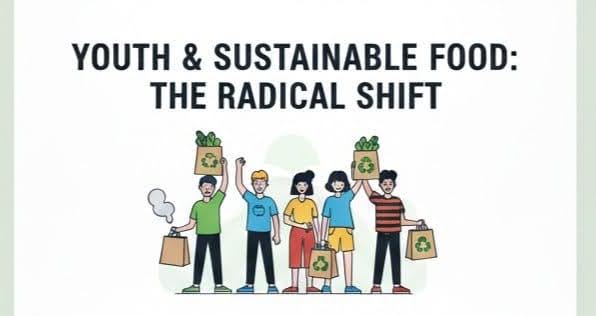
In more ways than one, the food industry is poised for a revolution. The young are not typically known to be activists, yet here they are. For Generation those born between 1997 and 2012-food has become much more than a basic need or a luxury product; it’s a critical factor in determining the future of the planet.
They have seen the wildfires, flooding, and other manifestations of the climate crisis, and today’s youth are forcing a rapid change in how the food industry does business. These young people will not just be passive consumers, taking whatever is put in front of them; they create change. Food reflects their character and values. The following are four radical ways young people are forcing sustainability in the global food system.
1. Climate Reality, Harsh
Young people today have never lived in a world that is not threatened by disaster due to climate change. It has instilled a sense of urgency in many young minds-what many refer to as “eco-anxiety.” But young people are taking that anxiety and putting it into action.
To them, every meal is a lifeline. Industrial farming and pollution of the earth are equated with the destruction of nature. Eco-friendliness is no passing fad; it is a committed thing. They are concerned with carbon emissions and food miles in the same way their parents’ generation counted calories.
2. The Flexitarian Explosion
It is also reflected in the shifting away from meat-heavy diets: Younger people may not be full vegans, but many follow a “flexitarian” diet, where food consumption is mainly vegetarian while trying to keep meat consumption as low as possible to have a lesser environmental effect-they save the meat for special occasions.
This change is also visible in grocery stores: plant-based products have become trendy among young consumers and are not a niche. The demand of the youth pushed big companies to innovate at a fast pace. Now, industries are producing meat and dairy alternatives that are eco-friendly, affordable, and tasty since they require less water and land.
3. The War on Greenwashing
Basically, young people today have grown up with the internet and can quickly check the claims of a company. They quite naturally distrust ads that try to misleadingly present themselves as green while doing the opposite. The practice is called “greenwashing.” Vague words like “natural” or “eco-friendly” do not impress.
They want transparency about where their food comes from and how it is produced. When a brand says it’s greener, they want the proof. They’ll notice the fair trade certificate and plastic-free packaging. They leave companies that let them down on the ethical front quickly and use TikTok and Instagram to call them out faster than any marketing team can move.
4. Wallet Activism as Economic Power
Indeed, research has time and again shown that young people are generally willing to spend more on products that align with their values. However, their financial situation is often not as strong as that of the older generation, who generally possess more wealth. In fact, all this goes against the traditional economic theories that would generally state that price is the main factor in buying decisions.
Younger consumers would much rather buy brands that actually care about saving water or supporting workers. They vote with their wallets. This represents a fundamental shift whereby sustainability will become key to brands hoping for success in the future. By ignoring this trend, companies risk losing relevance to the biggest group of new customers ever.
The Revolution Served Daily
Mindless eating is becoming a thing of the past. The young are not only asking for a seat at the table but are instead building a new table altogether. Having linked their appetite to their conviction, grocery shopping has become a way of voting. What was once “what tastes good” as the trend is now “what does good,” and that is what’s normal. As their influence grows, they are not just dreaming of what the food future will be but are making it, one eco-friendly bite at a time.
References
[1] M. Dimock, “Defining generations: Where Millennials end and Generation Z begins,” Pew Research Center, Jan. 17, 2019. [Online].
Available: https://www.pewresearch.org/fact-tank/2019/01/17/where-millennials-end-and-generation-z-begins/
[2] T. Hickman, E. Marks, P. Pihkala, S. Clayton, R. E. Lewandowski, E. E. Mayall, B. Wray, C. Mellis, and L. van Susteren, “Climate anxiety in children and young people and their beliefs about government responses to climate change: a global survey,” The Lancet Planetary Health, vol. 5, no. 12, pp. e863-e873, Dec. 2021.
[3] G. Petro, “The State of Consumer Spending: Gen Z Shoppers Demand Sustainable Retail,” First Insight, Warrendale, PA, USA, Rep., Jan. 2020. [Online].
Available: https://www.firstinsight.com/white-papers-posts/gen-z-shoppers-demand-sustainable-retail
FAQs
Q1. What does youth sustainability mean in the context of food choices?
Youth sustainability refers to young consumers choosing foods that are environmentally responsible, ethical, and aligned with climate-conscious values.
Q2. Why are young people shifting toward sustainable food choices?
They are experiencing climate anxiety and feel responsible for reducing environmental damage, making their food habits more intentional.
Q3. What is a flexitarian diet and why is it popular among youth?
A flexitarian diet is mostly plant-based with occasional meat. Young people prefer it as a practical way to lower environmental impact.
Q4. How does climate anxiety drive sustainable habits in the food sector?
Climate anxiety makes young people more aware of carbon footprints, food miles, and farming practices, shaping their everyday food decisions.
Q5. Why are young consumers critical of greenwashing?
Because they research online, verify claims quickly, and expect transparency instead of vague sustainability statements.
Q6. How has youth sustainability influenced grocery store offerings?
It has increased demand for plant-based, eco-friendly alternatives, pushing companies to innovate in sustainable product development.
Q7. What role does social media play in promoting sustainable food choices?
Platforms like TikTok and Instagram allow young consumers to expose dishonest brands and amplify truly sustainable ones.
Q8. What is wallet activism in the food sector?
Wallet activism means using purchasing power to support brands that are ethical, sustainable, and aligned with climate values.
Q9. Why do young consumers prefer sustainable brands even if they cost more?
Because they prioritize environmental impact and value alignment over price, breaking traditional economic assumptions.
Q10. How are young people influencing the future of the global food system?
Through their buying power, demand for transparency, and sustainable habits, they are pushing the industry toward eco-friendly practices.
Q11. How does sustainability influence the way young consumers choose food brands?
Sustainability guides young shoppers toward brands that use ethical sourcing, reduce waste, and offer environmentally responsible packaging.
Q12. What signs help young consumers identify greenwashing in the food industry?
They look for vague claims, lack of certifications, and unclear sourcing details—key indicators that a brand might be engaging in greenwashing instead of real sustainability.
Q13. Why is sustainability becoming a top priority for global food companies?
As more young consumers demand sustainability, companies must adopt cleaner processes, transparent labels, and eco-friendly packaging to stay relevant.
Q14. How can brands avoid accusations of greenwashing?
Brands can avoid greenwashing by sharing verified data, using recognized certifications, and communicating clear, measurable sustainability practices.
Q15. What role does sustainability play in long-term food industry growth?
Sustainability drives innovation, builds consumer trust, and reduces environmental impact, making it essential for the long-term survival of food brands—and helping them prevent greenwashing backlash.
Penned by Sanskriti
Edited by Pranjali, Research Analyst
For any feedback mail us at [email protected]
Transform Your Brand's Engagement with India's Youth
Drive massive brand engagement with 10 million+ college students across 3,000+ premier institutions, both online and offline. EvePaper is India’s leading youth marketing consultancy, connecting brands with the next generation of consumers through innovative, engagement-driven campaigns. Know More.
Mail us at [email protected]