
Transforms Student Help Automation
Universities and colleges are under pressure to offer their students timely, effective, and individual assistance in the new digital world. Traditional support systems frequently find it difficult to keep up with the requirements of instant communication, differential needs, and large student populations.
This is where intelligent, computerised machines that can answer questions, assist students, and speed up managerial procedures-known as campus chatbots-come into the picture. Universities and colleges can provide immediate assistance, lessen staff workloads, and improve the overall student experience by utilising student help automation.
This article examines seven significant ways that campus chatbot support is transforming higher education by improving the speed, intelligence, and accessibility of student services.
Immediate assistance for students
The availability is one of the main issues with student services. While campus offices usually work during business hours, students may have questions at other times as well.
Help is always available thanks to a designed campus chatbot support system. Students receive quick, accurate replies to all of their questions, whether they are about exam dates, enrolment deadlines, or campus services.
The technological transition of student guidance ensures that students can get information at any time, improving their level of satisfaction and reducing their stress levels.
Simplifying Administrative Inquiries
The time of employees is frequently wasted answering the same questions during office processes like course registration, fee payments, and records requests. Chatbots can precisely respond to these common questions, allowing our human employees to work on harder or complex issues.
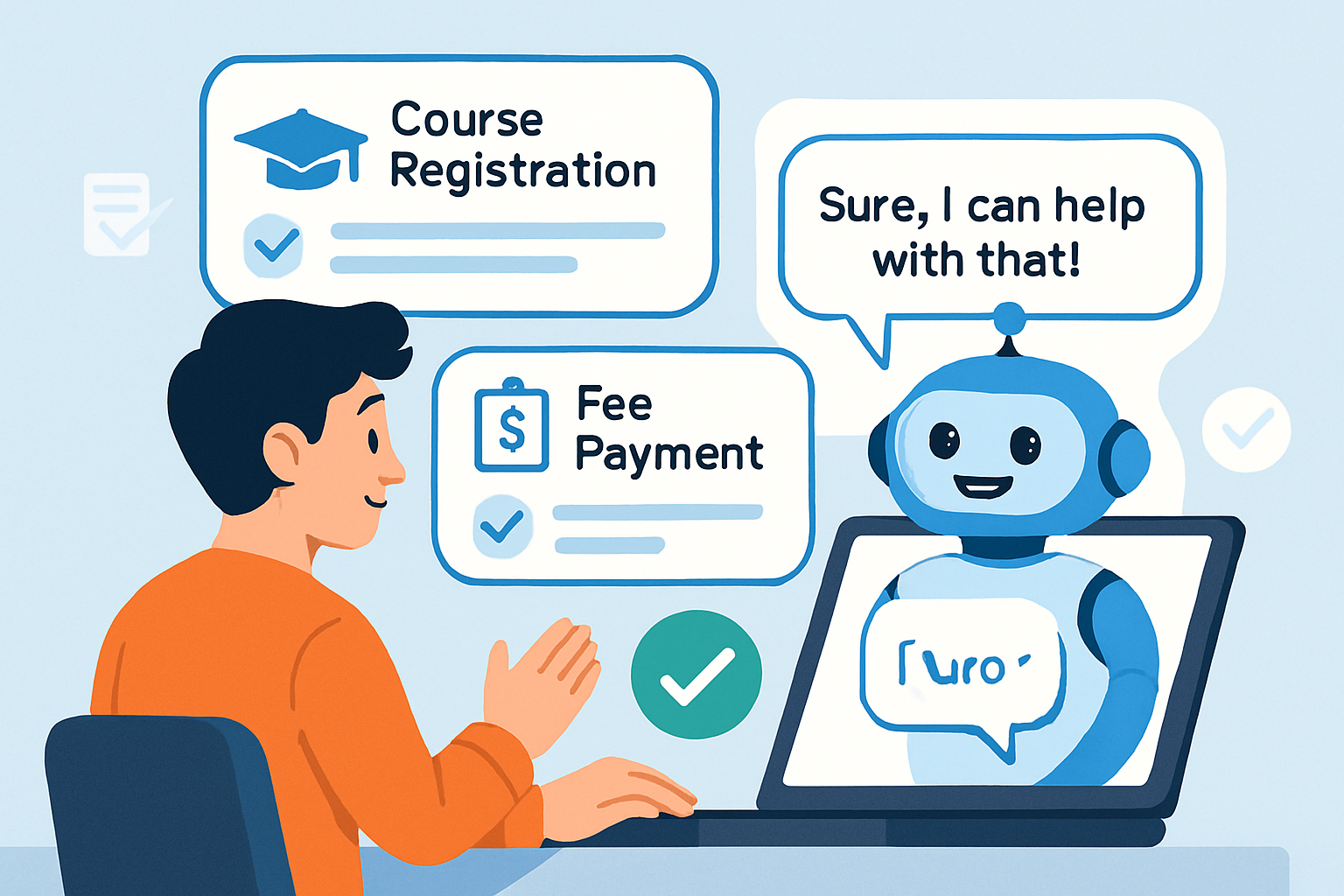
For example, a student can use the campus chatbot to get an immediate response when they ask a question about payment options rather than calling the office. This ensures constant, accurate information, avoids email overload, and boosts up the response time.
Customised Advice for Academic Achievement
Chatbots currently are more than just standard FAQs. Campus chatbot support can offer specific assistance through integration with student information systems.
A chatbot might suggest students to relevant workshops, recommend tutoring sessions based on academic performance, or remind them about future assignment deadlines. In addition to saving time, this student assistance automation encourages a more specific and encouraging learning environment.
Making Campus Access Easier
It can be tough to locate offices, classrooms, or other facilities, particularly for new students. Chatbots that are linked to campus maps are able to provide full directions to any place on campus.
The chatbot will give students thorough directions when they ask questions. During the first month of the semester, when students are still becoming familiar with the campus, this is very useful.
Enhancement of Health
While they can be useful in connecting students with mental health, chatbots cannot replace a trained counsellor.
A chatbot support system on campus may plan therapy sessions and provide guidance on personal cleanliness. Chatbots make it easier for students who need help by giving them instant availability to resources, such as those who do not have enough confidence to ask staff members of the college.
Helping Students from Other Countries
From understanding visa requirements to changing to new academic systems, international students can face extra challenges. Campus Chatbots can assist users in multiple languages, walk them through legal documents, and describe local regulations.
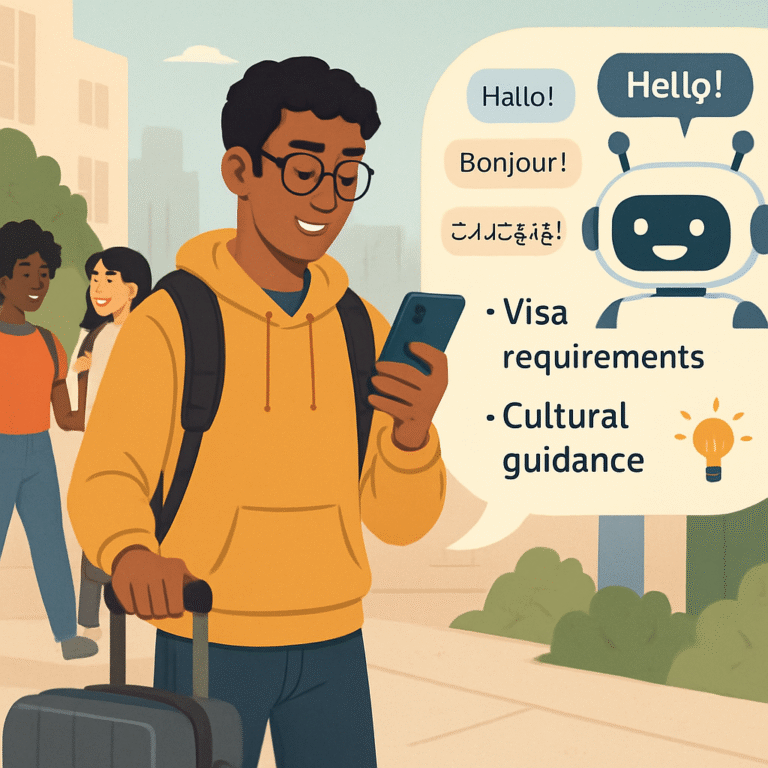
These chatbots help international students integrate seamlessly into campus life by providing accurate, culturally sensitive information through student help automation.
Receiving Feedback and Improving Services
An effective campus chatbot support collects insightful feedback in addition to offering helpful responses. After a discussion, a chatbot could ask whether the student’s query was correctly addressed or make suggestions to enhance the user experience.
Organisations can identify continuing issues, improve their processes, and ensure that students’ needs are consistently met by using this feedback structure.
Conclusion
Campus chatbot support has transformed higher education in a time when speed and flexibility are vital. Universities can offer 24/7 support, increase productivity, and make campus life intriguing through the use of student help automation technology.
Campus Chatbots ensure that students have access to the assistance they require while freeing up human staff for insignificant impact tasks like answering routine questions and assisting students through complex processes. These AI-powered assistants will have greater influence on how student support is provided in the future as technology grows further, making campuses more intelligent, more connected, and more welcoming to students.
References-
1. “Ultimate Guide to Ai Chatbots in Education”,https://www.learnwise.ai, (online). Available: https://www.learnwise.ai/guides/ultimate-guide-to-ai-chatbots-in-education
2. “The Role of AI Chatbots For Higher Education Success”, https://element451.com (online). Available: https://element451.com/blog/chatbots-in-higher-ed-what-you-should-know
FAQs on Campus Chatbot Support and Student Help Automation
1. What is campus chatbot support in higher education?
Campus chatbot support refers to AI-powered virtual assistants integrated into university or college systems to help students with academic, administrative, and campus-related queries. These chatbots operate 24/7, providing instant, reliable answers to questions about course registration, exam schedules, fees, campus services, and more. Unlike traditional support systems that rely heavily on staff availability, chatbots ensure continuous, automated assistance that improves accessibility and student satisfaction.
2. How does campus chatbot support benefit universities and colleges?
Student help automation reduces repetitive workloads for staff, improves the efficiency of administrative processes, and ensures students receive timely responses. Universities save time and resources by letting chatbots handle routine queries while staff focus on complex cases. Automation also enhances communication consistency, eliminates delays caused by email overload, and helps institutions provide personalized academic guidance, campus navigation, and multilingual support for international students.
3. Can campus chatbot support really provide immediate student assistance?
Yes, one of the strongest advantages of campus chatbot support is immediate assistance. Students often need help outside office hours, and chatbots are available round-the-clock to address concerns. Whether it’s asking about exam dates, library timings, or course requirements, students can access accurate information instantly without waiting for office staff. This reduces stress and enhances the overall student experience.
4. What kind of administrative inquiries can chatbots simplify?
Campus chatbots are particularly effective at handling repetitive administrative tasks such as course registration steps, tuition fee payment options, scholarship eligibility queries, document requests (like transcripts or ID cards), and exam schedule notifications. By automating these inquiries, universities reduce long queues in administrative offices and create faster, more reliable communication channels for students.
5. How do campus chatbot support offer customized academic advice?
Modern campus chatbots integrate with Student Information Systems (SIS) and Learning Management Systems (LMS). Through these connections, they analyze student performance, identify areas of improvement, and provide tailored guidance. For instance, a chatbot may remind a student about upcoming assignments, recommend tutoring services if grades are slipping, or suggest workshops based on career interests. This personalization encourages academic success and builds a supportive learning environment.
6. Can chatbots help new students navigate the campus?
Absolutely. Many universities link chatbots with interactive campus maps. A student can simply type, “Where is the engineering block?” and receive clear, step-by-step directions. For new or international students, this is extremely useful, especially during the first weeks of a semester. It minimizes confusion, saves time, and makes the campus experience smoother and more welcoming.
7. Do campus chatbot support replace human staff in student support services?
No, chatbots do not replace human staff but rather complement them. While chatbots excel at managing repetitive, frequently asked questions, they cannot replace the empathy, critical thinking, and problem-solving skills of human advisors. The goal of campus chatbot support is to handle routine tasks efficiently while freeing up staff members to focus on complex or sensitive issues that require human intervention.
8. Can campus chatbot support student health and wellness?
Yes, chatbots can play a vital role in enhancing student health by scheduling counseling or medical appointments, providing mental health resources and helpline contacts, reminding students about hygiene or wellness practices, and sharing stress management tips. Although chatbots cannot replace professional healthcare providers, they lower barriers by giving students immediate, confidential access to resources, especially for those who feel uncomfortable asking staff directly.
9. How do chatbots assist international students on campus?
International students often face challenges such as visa regulations, adapting to new academic systems, and cultural adjustments. Campus chatbots can provide multilingual support, explain local rules, guide students through legal documentation, and even share tips for adjusting to life in a new country. This makes integration smoother and reduces the stress of navigating unfamiliar systems.
10. Are campus chatbots support available in multiple languages?
Yes, many advanced chatbot platforms include multilingual functionality. This is particularly useful for diverse campuses where international students may prefer communication in their native language. By breaking down language barriers, multilingual chatbots ensure inclusivity, making all students feel supported and understood.
11. How do chatbots collect feedback from students?
Campus chatbot support often includes built-in feedback mechanisms. After resolving a query, the chatbot may ask: “Was this answer helpful?” or “Would you like to rate your experience?” This feedback is then analyzed by the institution to improve chatbot responses and refine campus services. It creates a continuous feedback loop where student experiences directly shape service improvements.
12. Are chatbot responses always accurate and reliable?
Campus chatbot support accuracy depends on the quality of programming, data integration, and training. When integrated with verified university databases, chatbots can provide precise, up-to-date information. However, if not maintained properly, responses may be outdated or incomplete. Regular updates and human oversight are essential to ensure chatbots remain reliable sources of information.
13. What are the challenges of implementing campus chatbots?
Some challenges include high initial setup and integration costs, resistance from staff or students unfamiliar with AI technology, ensuring accuracy through regular updates, protecting sensitive student data from security risks, and balancing automation with the need for human empathy. Universities that address these issues strategically can maximize the benefits of student help automation.
14. Do campus chatbots protect student privacy?
Yes, responsible chatbot systems follow strict data protection regulations like GDPR and FERPA. Universities must ensure that chatbot interactions are encrypted, confidential, and limited to necessary data usage. Transparency about how student information is stored and used builds trust, making students more comfortable with digital support systems.
15. What does the future of campus chatbot support look like?
The future of campus chatbot support is highly promising. As AI evolves, chatbots will become even more intuitive, predictive, and personalized. Future developments may include integration with voice assistants like Alexa or Google Assistant, AI-driven predictive support that identifies struggling students early, emotional intelligence capabilities to detect stress or frustration, and deeper integration with academic planning tools. These advancements will make campuses more intelligent, student-centered, and efficient in delivering support.
Penned by Nishant Bajaj
Edited by Sneha Seth, Research Analyst
For any feedback mail us at [email protected]
Transform Your Brand's Engagement with India's Youth
Drive massive brand engagement with 10 million+ college students across 3,000+ premier institutions, both online and offline. EvePaper is India’s leading youth marketing consultancy, connecting brands with the next generation of consumers through innovative, engagement-driven campaigns. Know More.
Mail us at [email protected]