
Topics: Campus sustainable markets
What’s the first thing that comes to mind when you envision a typical college campus? Maybe packed classrooms, stacks of assignments, and frazzled students gobbling down bite-sized cafeteria fare between classes. Now envision a different vision—a campus sustainable market filled with locally grown fresh fruits and vegetables, hot-fresh-baked delights, and green goodies, run and sold by students. This is what this is all about: student-run sustainable food markets that operate as a true student green business—not just about food, but about fostering a culture of responsibility, innovation, and community..
5 Game-Changing Benefits of Student-Run Green Food Markets
Why Sustainable Food Markets Are Important?
The world of today is faced with two giant issues: climate change and unsustainable consumption. Wastage of food to plastic packaging, anything we eat, it is strangulating the world beyond our imagination. The world is being shaped by what we eat, how it is produced, and through which process it ends up on our plate.
These sustainable food markets reverse that trend. They are the leaders in locally produced fruit and vegetables, organically produced crops, and waste reduction. They provide jobs for students, thereby becoming change agents and teachers. They are not shoppers, but stakeholders in a greener future.
The Student-Run Advantage
You might ask why the students are indeed conducting these markets. The reason is quite straightforward: they create energy, imagination, and excitement. Students are most eager to experiment and open-minded towards new things. They are drawn to sustainability and would love to be able to see and sense the difference.
Running a sustainable food market teaches them more than just environmental responsibility. It sharpens entrepreneurial skills, encourages teamwork, and builds leadership skills. From procuring products to running stalls, every step demands creativity and problem-solving. And on top of that, it provides that extra sense of satisfaction—being able to contribute to something good.
What Does a Student-Run Sustainable Market Look Like?
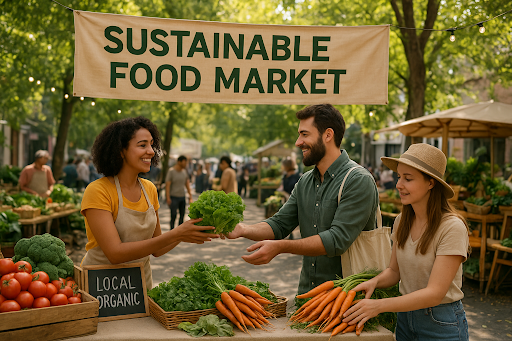
Imagine this: A row of colourful stalls beneath trees on campus.
They have one containing fresh vegetables and fruits that they have harvested from the neighbourhood gardens in their freshest condition. They have another containing vegan treats and cold beverages, which had been prepared by the students. They also have a refilling station for the grains and spices, where the customer can reload his/her containers. Trapped, and they also have a composting facility where the students can transform waste food into fertile soil. The world outside awakens. Students are busy, informed, and enlightened regarding the source of their lunch. It’s not shopping—it’s a journey. It’s connected: to the world, to farmers, and to others.
Steps to Create One on Campus
It is easier than it is to build a sustainable food market and have it student-driven. It is easy: do this:
Build a Core Team: Collect students of like minds who desire to be more sustainable.
Team Up with Locals: Employ local farmers to sell pesticide-free, fresh produce.
Schedule an Organization: Schedule the market every fortnight or month.
Reduce Waste: Students must use reusable bags and containers.
Add Education: Provide short workshops on wasteful consumption, sustainable consumption, and composting.
Celebrate Diversity: Prepare food that is either traditional or culturally grown sustainably.
The Ripple Effect on Campus and Beyond
What starts as a humble student assignment can become viral on an entire campus. Green food markets bring green methods of doing business into the mainstream. They make people start thinking about daily habits-getting rid of plastic, buying fruits and vegetables locally, or waste-not, want-not. Those small habits that all sum up to an awful lot in the aggregate become a culture of sustainability that diffuses far beyond the campus itself.
And the best part about them? They are weavers. They show us that sustainability is not about a singular great event but a series of small, considerate acts shared.
So the next time you swing by campus to grab lunch, consider it: rather than wrapped goodness in plastic bags, you’ve got fresh greens from a salad directly from the farm, a refill cup of lemonade, and a smile from a student like you who wants to live in a cleaner world. That’s the kind of world student-owned sustainable food markets are aiming towards—and it starts with us.
Conclusion
Campus sustainable markets demonstrate the power of small changes to make a big difference. They blend fresh food, green practices, and student leadership not only to transform campus culture but also to influence community members’ new habits. These markets have become experiential models for the new generation in entrepreneurship, environmental awareness, and teamwork, often serving as incubators for student green business initiatives.
They enable today’s students to become the future green leaders and activists by connecting local agriculture, sustainable lifestyles, and student creativity.
References
[1] T. Stone, J. Thompson, K. Rosentrater, and A. Nair, “Environmental Benefits of Small- and Medium-Scale Vegetable Production Compared to Conventional Large-Scale Methods,” Journal of Sustainability (Selection for 2021 Editor’s Choice), Iowa State University, 2022. [Online]. Available: Report highlights how local production—typical of campus sustainable markets—dramatically reduces greenhouse gas emissions, energy use, and packaging waste. College of Agriculture and Life Sciences
[2] Y. Yu et al., “FoodWise: Food Waste Reduction and Behavior Change on Campus with Data Visualization and Gamification,” arXiv, Jul. 2023. [Online]. Available: Showcases a campus-based sustainability project that supports student green business initiatives by encouraging waste-conscious behavior using interactive tools and incentives. arXiv
FAQ’s
Q1. What are campus sustainable markets?
Campus sustainable markets are student-run initiatives that provide fresh, locally sourced, and eco-friendly food products on college campuses. They combine entrepreneurship with environmental responsibility, allowing students to engage with sustainability while learning practical business and teamwork skills.
Q2. Why are campus sustainable markets important?
Campus sustainable markets are important because they promote local agriculture, reduce food and packaging waste, and teach students environmentally responsible habits. They encourage a culture of sustainability on campus and inspire students to consider their impact on the environment.
Q3. Who runs campus sustainable markets?
Campus sustainable markets are primarily run by students, often with guidance from faculty or local farmers. Students manage everything from procurement and logistics to marketing and sales, gaining hands-on experience in running a small, green business.
Q4. How do campus sustainable markets support sustainability?
These markets support sustainability by sourcing locally produced fruits, vegetables, and other products, reducing transportation-related emissions. They minimize single-use packaging, promote reusable containers, and often include composting facilities to handle food waste responsibly.
Q5. What types of products are sold at campus sustainable markets?
Products at campus sustainable markets include fresh fruits and vegetables, vegan treats, cold beverages, grains, and spices. Many items are grown organically or sourced from nearby farms, ensuring quality, freshness, and environmental friendliness.
Q6. How do students benefit from running campus sustainable markets?
Students gain entrepreneurial skills, teamwork experience, and leadership opportunities. They learn problem-solving, event management, and customer engagement while making tangible contributions to environmental sustainability on campus.
Q7. Can campus sustainable markets influence student habits?
Yes. Campus sustainable markets encourage students to reduce plastic use, buy locally, and adopt sustainable consumption habits. They help students become more conscious of their environmental footprint and inspire similar green practices in their daily lives.
Q8. How are campus sustainable markets organized?
Typically, students form a core team and collaborate with local farmers. They schedule markets weekly, biweekly, or monthly, plan logistics, manage stalls, and coordinate educational workshops to raise awareness about sustainability and waste reduction.
Q9. Are campus sustainable markets financially sustainable?
Yes. By selling fresh produce and eco-friendly products, these markets generate revenue while covering costs. Some operate on a low-profit or break-even model to focus on educational and environmental objectives rather than maximizing profits.
Q10. How do campus sustainable markets educate students?
Many markets incorporate workshops, signage, and interactive sessions on topics like composting, sustainable consumption, and the environmental impact of food production. This educational component ensures students understand the importance of their green actions.
Q11. Can campus sustainable markets create community impact beyond campus?
Definitely. By sourcing locally and demonstrating sustainable business practices, these markets create awareness in the surrounding community. They inspire local residents, farmers, and organizations to adopt greener practices and support environmentally responsible initiatives.
Q12. What challenges do campus sustainable markets face?
Challenges include coordinating with local suppliers, managing seasonal product availability, ensuring student participation, and educating customers about sustainable practices. Overcoming these obstacles helps students develop problem-solving and project management skills.
Q13. How do campus sustainable markets reduce waste?
Markets reduce waste by promoting reusable containers, composting food scraps, and encouraging students to buy only what they need. Many implement zero-waste policies and actively measure their environmental impact to improve sustainability practices.
Q14. How can other campuses start their own sustainable markets?
Other campuses can start by forming a motivated student team, partnering with local farmers, scheduling regular market days, and incorporating educational programs. Starting small and focusing on sustainability goals ensures long-term success and student engagement.
Q15. What is the overall impact of campus sustainable markets?
Campus sustainable markets transform college culture by combining entrepreneurship, sustainability, and student leadership. They empower students, reduce environmental impact, and create a ripple effect that encourages greener habits, both on campus and in the broader community.
Penned by Deepika
Edited by Shashank Khandelwal, Research Analyst
For any feedback mail us at [email protected]
Transform Your Brand's Engagement with India's Youth
Drive massive brand engagement with 10 million+ college students across 3,000+ premier institutions, both online and offline. EvePaper is India’s leading youth marketing consultancy, connecting brands with the next generation of consumers through innovative, engagement-driven campaigns. Know More.
Mail us at [email protected]