
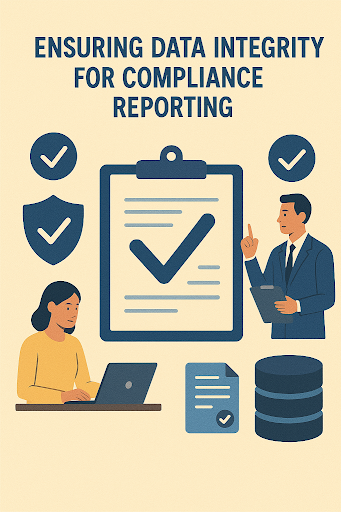
4 Proven Strategies to Ensure Data Integrity for Compliance Reporting
Nowadays, data is the core that keeps companies running. As a result, authorities are setting tougher and tougher rules that companies have to meet regarding the accuracy, security, and openness of their data handling processes. Probably the biggest part of meeting such requirements is offering data integrity compliance.
Data integrity compliance means the following: The organizations, standards, and regulations that have been set for the purpose of ensuring that data are not changed, corrupted, or lost, and that the original, accurate, and reliable data are maintained throughout the whole data lifecycle, supported by robust audit trail management.
Challenges in Data Management
One of the major aspects of data integrity compliance that highlights the issue of compliance reporting is the direct link between them. The organizations are required to produce true reports for the regulators, stakeholders, and auditors.
Even a little discrepancy in these reports could lead to severe sanctions, damage to the reputation, and even a possible decrease in business development. So, delivering credible information for compliance reporting is a requirement both for regulatory matters and as a competitive advantage.
Importance of Audit Trail Management
One of the primary problems the businesses encounter is the enormous amount and intricacy of the data gathered from various digital channels, databases, and operational systems. To keep the data clean, strong frameworks are necessary, which have to shield the data against illegal access, mistakes made by humans, and the malfunctioning of the system.
Some measures that people use around the world comprise access control based on the role, encryption, automated validation, and real-time monitoring. These security measures from different programs ensure that information is up to date and trustworthy.
Role of Emerging Technologies
Another essential feature that cannot be left out is the management of the audit trail. Audit trails are sequential records that describe every access, change, and transfer of information. Good performance of the audit trail and management functions ensures openness, as it gives a traceable record of all the actions linked with the data. This, in turn, not only builds trust with the regulatory authorities but also makes it easier for the organizations to uncover irregularities, recognise the occurrence of security breaches, and bolster the practice of accountability.
Properly functioning audit trails can be a great support for internal checks, external inspections, and forensic inquiries; thus, they become the organizations’ tool to meet the requirements of the law.
Building Strong Data Governance Policies
Innovative technologies like blockchain and AI-powered analytics are providing an additional boost to data integrity compliance frameworks. By way of example, blockchain permits the creation of unalterable records that are very difficult to change, whereas AI tools facilitate anomaly detection and predictive risk management. As a result, these technologies offer a higher level of accuracy and even lower the chances of compliance risks in reporting processes.
For the organizations to be sure they are on the right track in terms of data policies, they need to create data governance policies that will guarantee the continuity of compliance. It is important for the organisations to define the responsibilities, educate the staff, and set up regular monitoring and reporting systems for achieving this goal.
Fostering an environment of compliance among employees is equally necessary as implementing security measures. Periodic inspections, evaluation of risks, and the ongoing development of the organization’s positive traits, amongst which trust and business/legal compliance are some of the entities that benefit from regulatory expectations.
Conclusion
First and foremost, to be in compliance with integrity data is a must-have in order to accurately report compliance. A data governance program with solid being at its core, advanced security provisions, and, among others, an efficient data integrity compliance and audit trail management, organizations will be able to reduce the possibility of occurrence of negative consequences, improve the confidence of stakeholders and keep pace with their regulatory requirements. Compliance reporting will be a major driver for data integrity as regulatory environments become more and more stringent.
FAQs:-
Q: What is the main objective of maintaining reliability in organizational data?
A: The main objective is to ensure that information remains authentic, consistent, and trustworthy throughout its lifecycle—preventing any form of alteration, corruption, or loss.
Q: Why is accurate information essential for official reports?
A: Because reports submitted to regulators, stakeholders, and auditors must reflect the truth. Even minor inaccuracies can lead to penalties, reputational loss, and reduced stakeholder confidence.
Q: What is the purpose of keeping detailed records of data activity?
A: Detailed activity records create a transparent history of all actions—access, modification, and transfer—helping organizations trace accountability and detect unauthorized changes.
Q: What steps can businesses take to maintain reliable information?
A: They can implement measures like controlled user access, encryption, automated validation tools, real-time monitoring, and regular system checks to reduce human and technical errors.
Q: How do advanced technologies improve data reliability?
A: Tools like blockchain create unchangeable logs of data, while AI-driven analytics identify unusual patterns and predict risks, reducing the chances of reporting errors.
Q: Why are clear internal rules vital for maintaining trustworthy information?
A: Clearly defined internal rules assign responsibility, standardize procedures, and ensure consistent handling of information across departments—building a culture of accountability.
Q: How do well-documented activity records help during audits?
A: They serve as verified proof of data accuracy, simplifying internal checks, external inspections, and investigations by offering a clear trail of actions.
Q: What ongoing practices strengthen information reliability in organizations?
A: Continuous monitoring, regular policy reviews, employee awareness programs, and timely risk assessments help organizations stay aligned with evolving compliance expectations.
References
[1] M. Rouse, “Data integrity,” Tec Target, 2023. [Online]. Available: https://www.techtarget.com/searchdatamanagement/definition/data-integrity
[2] U.S. Food and Drug Administration (FDA), “Data Integrity and Compliance With Drug CGMP,” Guidance Document, Dec. 2018.
[3] International Organization for Standardization, “ISO 27001: Information Security Management,” ISO, 2022.
[4] G. Hinson, “Audit trail in information systems,” ISACA Journal, vol. 6, pp. 33–39, 2021.
Penned by Sampriti Sen
Edited by Shashank Khandelwal, Research Analyst
For any feedback mail us at [email protected]
Transform Your Brand's Engagement with India's Youth
Drive massive brand engagement with 10 million+ college students across 3,000+ premier institutions, both online and offline. EvePaper is India’s leading youth marketing consultancy, connecting brands with the next generation of consumers through innovative, engagement-driven campaigns. Know More.
Mail us at [email protected]