Writing is no longer an activity confined to the academies or the world’s literary giants. Nowadays, not only bloggers and content creators but also independent authors are becoming the driving forces of public debates on digital platforms. Still, there is one hurdle common to writers in all fields: how can non-academic writers enhance their working skills, trustworthiness, and prominence without having a formal institutional backing?
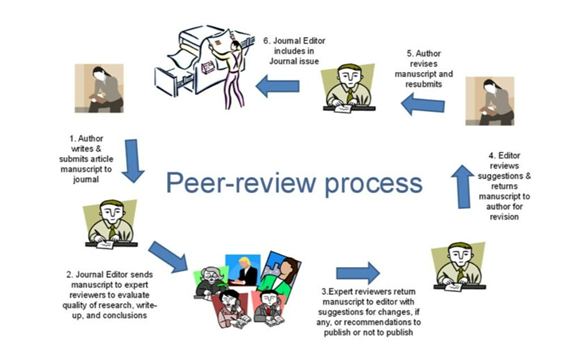
Peer review network for non-academic writers publishing represents the solution. It is a mechanism that allows writers to share the stages of their draft, solicit opinions, and polish their text through the collective critique. Together with public critique systems, these networks encourage accountability and increase the quality of the product in a way that can be to the advantage of all writers, no matter their level.
7 Powerful Ways Peer Review Networks Empower Non-Academic Writers
1. Building Communities of Trust
Peer-reviewed networks establish venues where writers can share their ideas without the fear of being judged. In contrast to traditional gatekeepers, these communities highly value interpersonal relationships formed as a result of teamwork over rivalry; thus, developers of the constructive critique process become nourished by it.
2. Encouraging Continuous Improvement
Non-academic writers frequently have no regular feedback in the absence of academic structures. Peer review network publishing can be considered as a solution due to the fact that it helps a writer to get input on the clarity, style, and originality of the text. This process of continuous feedback leads to the long-term improvement of skills.
3. Democratizing Feedback Through Public Critique Systems
Private reviews are beneficial, yet public critique systems hold the advantage of an added level of accountability. Open debates about the material not only uncover the strengths but also attract the different points of view into the revision stage. Such a democratization of points of critique permits writers to connect with larger audiences.
4. Increasing Credibility in Digital Spaces
The content that has been checked is more trusted by the readers. Authors who take part in the activities of peer review network publishing systems display such involvement to their readers, and hence they are able to communicate a high degree of transparency and an aspiration for good quality. This trustworthiness may be transformed into the extension of readership as well as the enhancement of authors’ professional careers.
5. Expanding Creative Horizons
Peer input exposes authors to the new methods of writing, new genres, and new viewpoints. From the boldness to do storytelling in the various styles to the skill of creating content that complies with the requirements of a search engine, these communities not just only challenge but also encourage writers to think beyond their comfort zone, thus becoming more creative and innovative.
6. Reducing Isolation Among Writers
Writing can oftentimes be a very lonely process and result in creative exhaustion. Peer networks are like virtual support groups for writers, where they exchange the different types of encouragement, share the resources, and even celebrate each other’s successes. These relationships maintain the motivation and make the writing journey more pleasurable.
7. Preparing Writers for Professional Opportunities
Getting involved in structured public critique systems develops one’s resilience. Writers acquire the skills to handle critique, to find the truth in what is said, and to revise efficiently—skills which are very important in professional publishing and freelance careers. From this perspective, peer review networks are not only training grounds but also launchpads.
CONCLUSION
Peer review network for Non-Academic writers publishing and public critique systems are game-changing implements for non-academic writers who are dealing with the digital ecosystem that keeps on expanding. They keep us honest and provide community and credibility—the three key drivers necessary for growth in creative industries.
The use of peer review as a means of feedback is no longer the prerogative of the scholarly community only but is being progressively acknowledged as a practice that—by empowering all the writers in their process of skill improvement, by connecting them with the readers, and by credentialing their professional level—helps them to attain their goals. The evolving digital platforms that continue to mix academic and non-academic content further push the trend of peer review being an important factor in securing quality and collaboration.
REFERENCES
[1] “Supporting Coordination and Peer Editing in Students’ Online Collaborative Writing Processes,” International Journal of Artificial Intelligence in Education, 2024. [Online]. Available: https://link.springer.com/article/10.1007/s40593-024-00450-w
[2] “Learning together through collaborative writing: The power of peer feedback and discussion in doctoral writing groups,” Studies in Educational Evaluation, vol. 83, Dec. 2024, Art. no. 101379. [Online]. Available: https://doi.org/10.1016/j.stueduc.2024.101379
Penned by Vaidika Solanki
Edited by Abhinav Asthana, Research Analyst
For any feedback mail us at [email protected]
Transform Your Brand's Engagement with India's Youth
Drive massive brand engagement with 10 million+ college students across 3,000+ premier institutions, both online and offline. EvePaper is India’s leading youth marketing consultancy, connecting brands with the next generation of consumers through innovative, engagement-driven campaigns. Know More.
Mail us at [email protected]