7 Reasons that Students Do 3D Printing Art — Turning Ideas Into Things You Can Hold
For art and design students, the excitement is in the transformation — you start with a rough sketch or a half-formed idea in your head, and within hours (or after an overnight print), you’re holding the finished object. That’s the pull of student 3D printing art, often powered by makerspace technology. It takes ideas off the page and into your hands, letting you spin them around and see how they work in real life.
That “Still Feels Like Magic” Moment
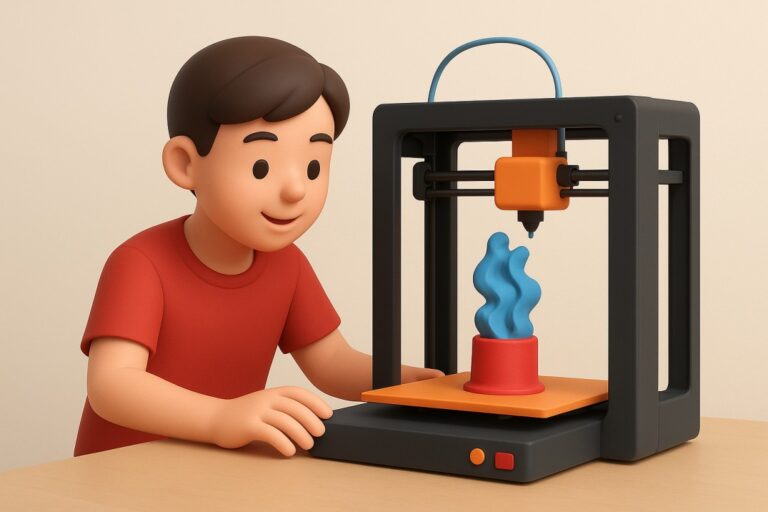
Sure, it’s just a machine following instructions, but watching it work — layer by layer, turning nothing into something — still feels special. Even students who spend hours in the lab can’t help gathering around to watch a complicated design finish. It’s part tool, part performance.
From Idea to Prototype in a Day
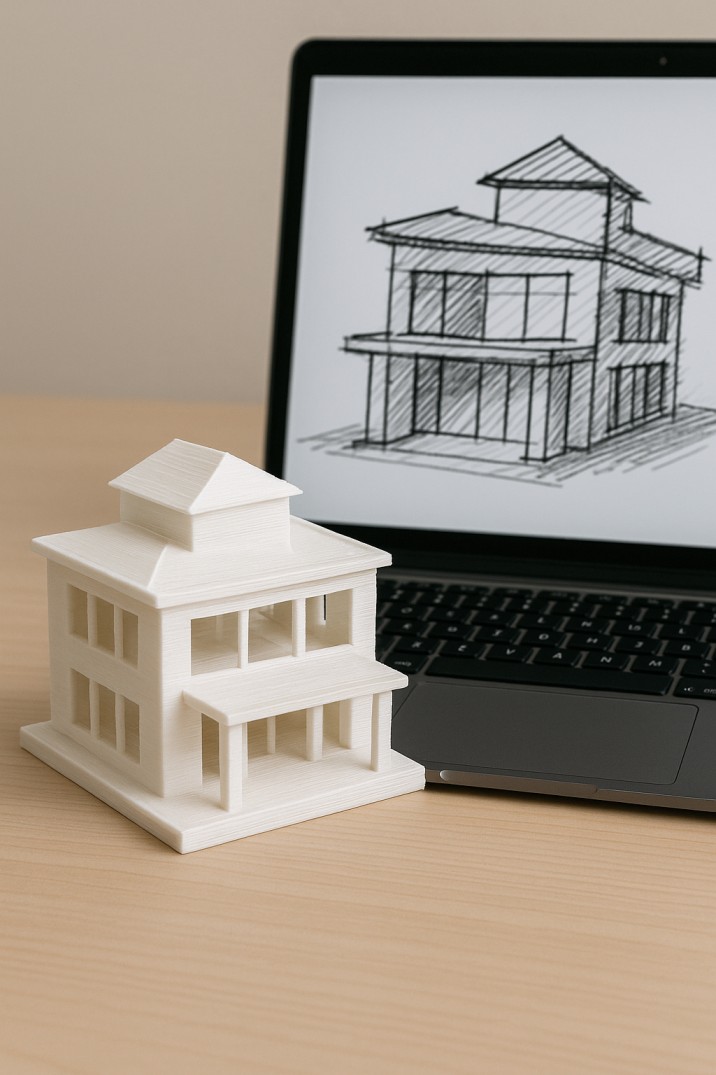
Whether it’s a chair, sculpture, or a scale model of a building, printing a prototype means you can spot problems early. On a screen, everything fits perfectly. In reality? A joint might be too weak or the balance might be off. One student printed a mini sculpture only to see it couldn’t stand — a quick digital fix solved it before committing to the final build.
Why It Saves Time and Money
Traditional model-making uses wood, clay, or metal. Mistakes there can be costly. With makerspace technology and affordable filament, you can try multiple versions without draining the budget. Want a new style halfway through? Edit the file, hit print again.
Digital Meets Handmade
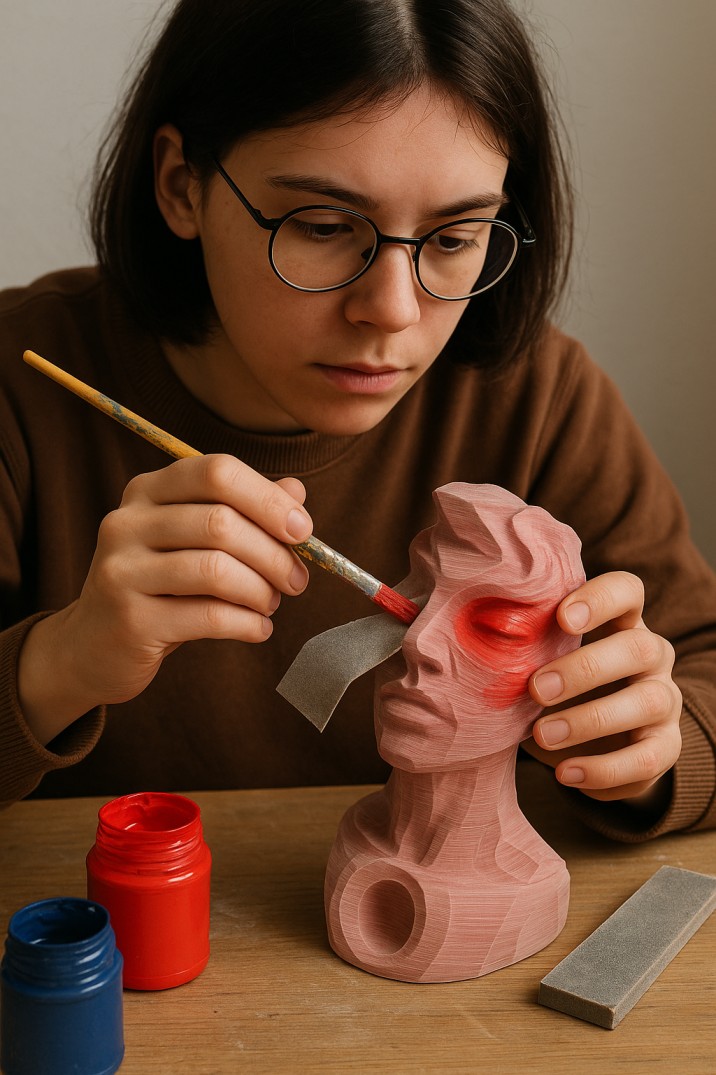
For many, printing is just step one. Students sand, paint, and mix printed parts with other materials. The blend of machine precision and hand-finishing often makes work stand out — proving 3D printing is a creative partner, not a replacement.
Collaboration Gets Interesting
In shared labs, unexpected teamwork happens. An architecture student might partner with an art student to make a model visually striking. A sculpture student might work with an engineering student to make a piece move. Makerspace technology encourages these crossovers, sparking projects that wouldn’t exist otherwise.
Fail Fast, Learn Fast
Not every print works. Supports snap, measurements miss, or designs flop. The upside? You find out in hours, not weeks. Every “fail” is just a step toward the next, better version.
A Skill That Sticks
Digital fabrication isn’t going anywhere. From product design to fashion to installation art, the ability to take an idea from file to physical object is a real advantage. Employers notice when you can merge creative vision with technical skill.
Student 3D printing art isn’t just about impressive presentations — it’s about testing ideas in the real world. Some prints come out flawless. Others wobble. But once you’ve held something you imagined in your hands, it’s impossible not to start planning the next creation.
Conclusion: How 3D Printing Makes Student Ideas Real
3D printing in schools is more than just a new thing — it changes how students make, learn, and work together. From quick making of models to mixing computer skills with old-style craft, this tech lets students try and fail quickly, learn fast, and try new big things. Whether it’s art, building design, or making things, 3D printing connects dreams to real life while saving time and stuff used.
As places to make things grow and skills in making with computers become a must for jobs in the future, students who get good at 3D printing are ahead. The wonder isn’t just in the machine but in how it lets students bring ideas to life with designs they can touch, check, and make better — a skill that lasts forever.
References:
[1] Xometry, “3D Printing for Education: Importance and Benefits,” 2024. [Online]. Available: https://www.xometry.com/resources/3d-printing/3d-printing-for-education/ Xometry
[2] Wikipedia page on “Uses of 3D Print Tech,” 2025. [Web]. Up at: https://en.wikipedia.org/wiki/Applications_of_3D_printing from Wikipedia.
[3] No named writer, piece on “Fast Model Making,” T&F online, 2024. [Web]. See it here: https://www.tandfonline.com/doi/full/10.1080/14703297.2024.2346554
[4] Wikipedia article, “Fast Model Making,” 2025. [Online]. Link: https://en.wikipedia.org/wiki/Rapid_prototyping
[5] Makerspace blog, “8 good things maker ed brings to kids, teachers, and towns,” 1st MakerSpace, 2025. [Online]. Read at: https://1stmakerspace.com/blog/8-ways-maker-education-benefits-students-educators-and-communities
[6] Choice Literacy, “Exploring student innovation in the library’s makerspace,” Choice360, 2024. [Online]. Available: https://www.choice360.org/libtech-insight/exploring-student-innovation-in-the-librarys-makerspace/
[7] Demco Ideas Blog, “Why makerspaces?” 2025. [Online]. Available: https://ideas.demco.com/blog/why-makerspaces/
[8] Ultimaker Learn, “3D printing in education: from classroom to the workplace,”
- [Online]. Available: https://ultimaker.com/learn/3d-printing-in-education-from-classroom-to-the-workplace/
FAQs
1. What is student 3D printing art?
Student 3D printing art refers to the use of 3D printing technology by students to create artistic or design-based projects. Instead of relying only on traditional mediums like clay, wood, or metal, students use digital models to print sculptures, prototypes, or mixed-media pieces. This approach allows young artists to bring digital concepts into the physical world quickly and with creative flexibility.
2. Why is 3D printing becoming popular in art and design education?
3D printing is popular in schools and colleges because it bridges technology with creativity. For art and design students, it means ideas can move from sketch to object without complex manufacturing tools. Student 3D printing art projects show how technology is not just for engineers — it’s also a creative tool for artists.
3. How do students get started with 3D printing art projects?
Most students begin by learning basic 3D modeling software such as Tinkercad, Blender, or Fusion 360. Once they design a model, they use a 3D printer in their school’s makerspace or lab. Beginners often start with small projects like keychains, figurines, or abstract sculptures before moving to larger or more complex pieces of student 3D printing art.
4. What materials do students use for 3D printing art?
The most common material is PLA filament, which is affordable and easy to print with. For more advanced student 3D printing art, materials like ABS, resin, or even recycled filaments are used. These allow students to experiment with different textures, finishes, and strengths for their art projects.
5. How does 3D printing improve creativity for students?
3D printing allows students to test, fail, and redesign quickly. Instead of worrying about wasting expensive traditional materials, they can print multiple prototypes. This freedom helps creativity because students can experiment more. Many who work on student 3D printing art find that mistakes often lead to new design ideas.
6. What role do makerspaces play in student 3D printing art?
Makerspaces provide shared access to 3D printers, design software, and collaborative environments. They encourage students from different fields — art, engineering, architecture — to work together. Makerspace technology not only supports student 3D printing art but also sparks interdisciplinary projects that blend creativity and problem-solving.
7. Can student 3D printing art be combined with traditional methods?
Yes, many students blend 3D printed pieces with hand-painting, sanding, or adding other materials like wood, clay, or fabric. This combination makes the final work stand out, proving that 3D printing doesn’t replace traditional art but complements it.
8. What challenges do students face with 3D printing art?
Some common challenges include prints failing, measurements being off, or support structures breaking. Student 3D printing art often requires patience, as students must learn to troubleshoot technical errors while still focusing on artistic expression.
9. How does 3D printing save money for students in art and design?
Traditional sculpting or model-making often uses expensive supplies. With affordable filaments, students can create multiple versions of their art without worrying about high costs. Student 3D printing art projects can be revised and reprinted at a fraction of what traditional trial-and-error methods would cost.
10. What are some examples of student 3D printing art projects?
Examples include abstract sculptures, wearable jewelry, furniture models, architectural prototypes, and interactive installations. Some students even print modular designs that can be combined into larger pieces. Each project shows how student 3D printing art can turn imagination into something tangible.
11. Is 3D printing only for advanced students?
Not at all. Many schools introduce 3D printing at the beginner level. Even young students can design simple shapes and print them. Over time, they build skills to create more complex projects. Student 3D printing art is open to all skill levels, from hobbyists to professionals in training.
12. How do students use 3D printing for collaboration in art?
In group projects, one student might design the 3D model while another focuses on painting or assembly. Collaboration in student 3D printing art allows multiple talents to merge into a single final product, often resulting in unique cross-disciplinary work.
13. How does 3D printing prepare students for future careers in design?
Industries like product design, fashion, and architecture increasingly use digital fabrication. Students who practice 3D printing now gain a valuable skill that employers recognize. Having experience in student 3D printing art means being comfortable merging creative vision with modern tools.
14. What are the benefits of failure in 3D printed art projects?
Failure is often part of the process. When prints break, students learn about structure, balance, or material limits. Instead of weeks of wasted work, they get feedback in hours. This “fail fast, learn fast” approach makes student 3D printing art an excellent learning tool.
15. Why does student 3D printing art feel like magic to many learners?
Watching a machine build something layer by layer feels exciting, almost magical. For students, the thrill comes from holding an object they imagined just hours before. That sense of wonder keeps student 3D printing art popular, as it blends technology with creativity in a way that feels fresh and inspiring.
Penned by Apeksha S
Edited by Shashank Khandelwal, Research Analyst
For any feedback mail us at [email protected]
Transform Your Brand's Engagement with India's Youth
Drive massive brand engagement with 10 million+ college students across 3,000+ premier institutions, both online and offline. EvePaper is India’s leading youth marketing consultancy, connecting brands with the next generation of consumers through innovative, engagement-driven campaigns. Know More.
Mail us at [email protected]
Penned by Names
Edited by Ritika Sharma, Research Analyst
For any feedback mail us at [email protected]
Transform Your Brand's Engagement with India's Youth
Drive massive brand engagement with 10 million+ college students across 3,000+ premier institutions, both online and offline. EvePaper is India’s leading youth marketing consultancy, connecting brands with the next generation of consumers through innovative, engagement-driven campaigns. Know More.
Mail us at [email protected]
Penned by Names
Edited by Ritika Sharma, Research Analyst
For any feedback mail us at [email protected]
Transform Your Brand's Engagement with India's Youth
Drive massive brand engagement with 10 million+ college students across 3,000+ premier institutions, both online and offline. EvePaper is India’s leading youth marketing consultancy, connecting brands with the next generation of consumers through innovative, engagement-driven campaigns. Know More.
Mail us at [email protected]