
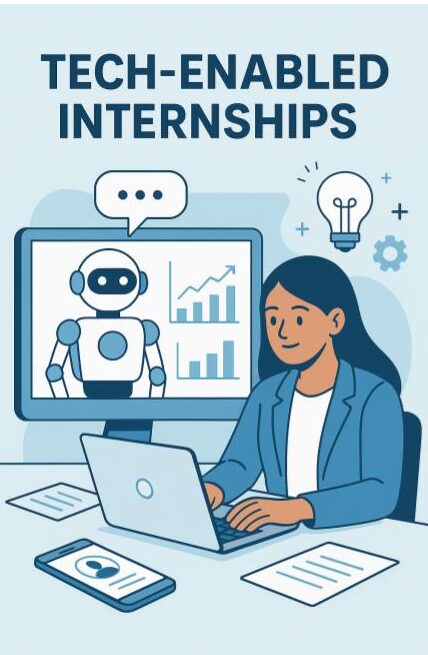
Topic: Tech-Enabled Internships
Why Tech-Enabled Internships Are Popular
Internships used to mean showing up, making copies, taking notes, and maybe learning by watching. Now things are different. With everything moving online, a tech-enabled internship is basically the new normal. Students log in, join meetings, push code or content, and sometimes never meet the team in person. It feels weird at first, but honestly, it also feels practical. You learn the tools people actually use. You learn how work flows in a way a textbook can’t teach, creating a real workforce pathway from campus learning to professional experience.
What “Tech-Enabled” Actually Means
Don’t confuse it with just “remote.” It’s more than that. A tech-enabled internship uses project boards, chat channels, shared docs, and tracking tools. Think Slack, Trello, Miro, Google Drive, GitHub — whatever the team uses. Tasks are assigned online, feedback is written, and files are shared. It trains you to be organized in a digital world. And you learn to communicate fast, which is huge. In short, the setup mimics a real workplace. You get practice with the same digital habits companies expect.
How It Builds a Workforce Pathway
The main point is this: these internships are part of a workforce pathway. They are not just a one-off credit or resume line. They connect what you learn at uni to what you’ll do on day one at a job. Employers can see how you handle digital collaboration, and students can test if the role fits them. It becomes a bridge — small steps that lead from campus projects to real responsibilities. A good internship can open doors: jobs, references, and confidence. That’s why many schools now encourage them.
Day-to-Day Stuff (and why it matters)
Daily life in a tech-enabled internship is weirdly normal once you adjust. Wake up. Check messages. Join a stand-up. Fix a bug or write a short report. Share work on a board. Get feedback. Repeat. You learn time management fast because tasks are visible and deadlines are sticky. You learn to write clear messages — because miscommunication online blows up. You also practice remote teamwork, which is a real skill now. It’s not glamorous, but it’s real.
Benefits and Problems (both exist)
Benefits: you get flexibility, you can intern for companies far away, and you build skills employers actually want. Companies gain access to wider talent pools and can test potential hires.
Problems: bad internet, lonely work, or vague tasks make the experience poor. Some interns get little mentorship. Some projects are either too easy or too hard. Universities and firms need to align. Students need prep — a little digital readiness training goes a long way.
Quick Example — small story
Like my friend Riya — she did a tech-enabled internship from her hometown. No travel. She worked with a small edtech team. Her job was simple: test quizzes, prepare quick reports, and make small changes. After two months, they offered her part-time work. She learned project tools, got real references, and the internship became her actual pathway to a job. Real story. Not clean, not perfect, but it worked.
Conclusion
Tech-enabled internships are not perfect, but they are powerful. They create a practical workforce pathway from campus to career. If you do one, be ready to work digitally, ask questions, and manage your time. It’s messy sometimes, but that’s the point — you learn by doing, not just by reading. A tech-enabled internship can change how you see work and make the jump to a job feel a little less scary.
References
[1] J. Allen and R. van der Velden, The Transition from Higher Education to Work. Springer, 2019.
[2] M. Oliver, “Work-integrated learning in the digital age,” Journal of Education and Work, vol. 34, no. 3, pp. 310–325, 2021.
[3] Internships.com, “Trends in tech-enabled internship programs,” 2022. [Online]. Available: https://www.internships.com/career-advice/tech-internships
[4] A. Sharma, “Building workforce pathways through virtual internships,” Campus Review, Aug. 2023.
[5] E. Jackson, “Digital internships and the future of work experience,” Higher Education Policy Blog, Jan. 2024.
FAQ on Tech-Enabled Internships
Q1. What are tech-enabled internships?
Tech-enabled internships are internships supported by digital tools like Slack, Trello, or GitHub. These programs allow students to work, collaborate, and deliver tasks online, preparing them for modern workplace environments.
Q2. How do tech-enabled internships differ from traditional internships?
Unlike traditional internships that focus on physical presence, tech-enabled internships rely on digital collaboration, remote teamwork, and real-time project tracking.
Q3. Why are tech-enabled internships important for students?
They create a workforce pathway by connecting academic knowledge with professional digital skills, making students more employable.
Q4. What skills do students gain from tech-enabled internships?
Students gain remote collaboration, time management, digital communication, and hands-on project skills, which are all highly valued by employers.
Q5. Can tech-enabled internships lead to jobs?
Yes. Many companies use tech-enabled internships as a way to evaluate potential hires. Strong performance often leads to job offers or extended roles.
Q6. What tools are commonly used in tech-enabled internships?
Popular tools include Slack, Google Drive, Trello, Miro, GitHub, and Zoom. These platforms help manage projects, communication, and deadlines.
Q7. Are tech-enabled internships flexible for students?
Yes, they offer flexibility since students can work from anywhere. This allows access to opportunities that might otherwise be location-restricted.
Q8. Do universities support tech-enabled internships?
Many universities encourage or partner with companies to create digital internship programs, ensuring students get structured and supervised experiences.
Q9. What challenges do students face in tech-enabled internships?
Common issues include poor internet connectivity, vague task assignments, and lack of mentorship, which can limit learning outcomes.
Q10. How do tech-enabled internships benefit companies?
Companies gain access to diverse talent pools, save costs on physical space, and test future employees in real-world digital workflows.
Q11. Are tech-enabled internships suitable for all fields?
While most common in tech, media, and business, many industries now adopt digital internships, including education, healthcare, and design.
Q12. How can students prepare for a tech-enabled internship?
Students should learn basic digital tools, practice clear written communication, and be ready to manage tasks independently in an online setting.
Penned by Apeksha S
Edited by Shashank Khandelwal, Research Analyst
For any feedback mail us at [email protected]
Transform Your Brand's Engagement with India's Youth
Drive massive brand engagement with 10 million+ college students across 3,000+ premier institutions, both online and offline. EvePaper is India’s leading youth marketing consultancy, connecting brands with the next generation of consumers through innovative, engagement-driven campaigns. Know More.
Mail us at [email protected]