

Introduction: TED Circles Student
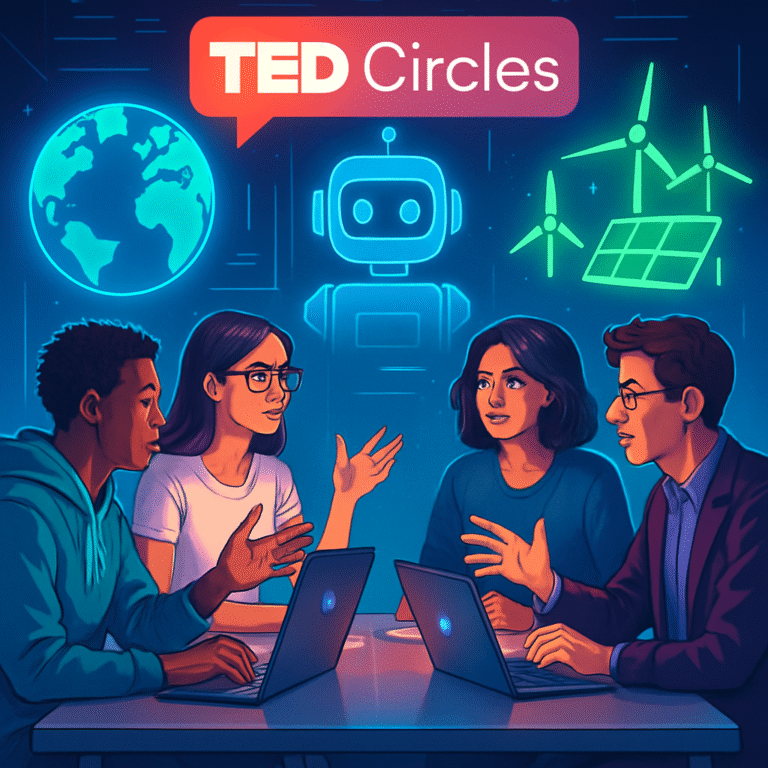
Students are looking for more than just conventional education in the present technologically connected world. They look for discussion, innovation, and deep logical and personal growth. TEDx, a worldwide initiative that promotes small-group discussions around diversified and intriguing TED Circles, is one such platform that is becoming more and more popular. When these online, student-led conversations take place, they build a friendly atmosphere where multiple points of view coexist and enable participants to dig deeper into subjects that go beyond to textbooks.
Online TED Circles discussions led by students have shown themselves to be more than mere recreational activities; they are a driving force behind leadership development, campus involvement, and critical thinking. These discussions turn TED content viewers into active knowledge contributors by giving students the authority to plan and moderate.
This article explores seven impactful ways in which student-led TED Circles promote idea exchange on campus and why every institution should encourage this movement.
Promoting Collaborative Education Outside of the Classroom
The development of a collaborative learning environment is one of the most potent results of student-led TED Circles. In contrast to lectures, where information is imparted from instructor to pupil, TED Circles are based on reciprocal dialogue. Deeper engagement with the material is frequently the result of students taking charge of the conversation.
- Instead of learning specified responses, participants share lots of viewpoints.
- Business students and engineers can all learn from each other through these discussions.
- Discussions become more welcoming when students from various campuses can participate through online platforms.
- This cooperative model is similar to real-world problem-solving, which requires a variety of viewpoints.
Developing Public Speaking and Leadership Capabilities
It takes preparation, self-assurance, and communication skills to lead a TED Circle discussion. Students who offer their services as hosts gain knowledge about:
- Set up questions to help during the conversation.
- Encourage students to share their opinions and ideas.
- Make sure the discussion remains relevant by describing the main points.

This develops managerial skills and public speaking conviction over time, which are critical for both professional and academic success. Students can practice in a secure, encouraging setting at TED Circles before taking on more significant public roles.
Fostering an Exchange of Ideas Culture on Campus
Universities frequently find it difficult to foster an environment where candid discussion is regarded as highly as academic success. This gap will be filled by student-led TED Circles, which increase an atmosphere that promotes curiosity.
Students have lengthy discussions about equity in society, the long-term viability, innovation, and mental wellness.
By removing time and location issues, online discussions promote participation from a wider variety of students. As these discussions become more common, they support a welcoming, polite, and creative campus culture.
Strengthening International Relationships and Digital Collaboration
Discussions in online TED Circles are not restricted to a single campus. Discussions can become an interactive classroom when students welcome people from all over the world.
Online participation is made simple with tools like Zoom, Google Meet, or Microsoft Teams.
Global awareness is increased, and perspectives are expanded by access to various points of view. Students build a globally connected network of individuals that reaches well beyond their campus by combining technology and conversation.
Including Real-World Concerns in Academic Life
From artificial intelligence to climate change, TED Talks address important topics. Students incorporate real-world relevance into classroom instruction when they bring these talks to TED Circles.
- Students studying business may talk about the morality of automation.
- Discussions on human behaviour could be debated by psychology majors.
- Students studying environmental science may examine sustainable solutions.
By motivating students to connect theory to practice and apply what they have learned in the classroom to social problems, these conversations improve academic pursuits.
Conclusion
Students’ Online TED Circles conversations offer an interesting combination of education, teamwork, and leadership. They allow students to network with others, improve their communication skills, and share their opinions. Also, they allow students to turn ideas into reality, bringing about changes on campus.
Institutions can produce graduates who are not only academically proficient but also socially conscious and globally aware by embracing this culture driven by students’ idea exchange. TED Circles ultimately serve as a reminder that any discussion has the capacity to light up a movement.
References
- “Pros and Cons of TEDx Talks”, https://www.scribd.com/. (online). Available: https://www.scribd.com/document/645924910/Pros-and-Cons-of-TEDx-Talk
- “What Students Can Learn from Giving TEDx Talks”, https://www.kqed.org/. (online). Available: https://www.kqed.org/mindshift/38544/what-students-can-learn-from-giving-tedx-talks
FAQs
1. What is a TED Circles student discussion?
A TED Circles student discussion is a small-group conversation led by students, centered around watching and analyzing TED Talks. Unlike traditional lectures, these sessions are designed to be interactive, where every participant contributes ideas, questions, and reflections. They aim to transform passive viewers of TED content into active thinkers and knowledge sharers, encouraging meaningful engagement and collaboration.
2. How are TED Circles different from TEDx events?
While TEDx events are independently organized conferences with live speakers, TED Circles student sessions are much smaller and focus on discussion rather than presentations. In a TED Circle, participants watch a short TED Talk and then engage in guided dialogue about its themes. The emphasis is on collective learning, inclusivity, and idea exchange rather than on public speaking to large audiences.
3. Why should students participate in TED Circles?
Students benefit from TED Circles student activities in several ways. They improve communication and critical thinking skills, connect with peers across different academic backgrounds, engage in open dialogue about real-world issues, and gain leadership experience if they serve as hosts. These advantages make TED Circles an excellent complement to academic learning and personal growth.
4. What role does a student host play in a TED Circle?
The TED Circles student host is responsible for organizing the session, selecting an appropriate TED Talk, and guiding the discussion. Their duties include asking thought-provoking questions, encouraging participation, and keeping the conversation on track. By moderating discussions, hosts gain valuable leadership and public speaking skills in a supportive, low-pressure environment.
5. How do TED Circles students encourage idea exchange on campus?
TED Circles student sessions create a culture of dialogue where students from different disciplines share perspectives. For example, engineering students may discuss technology’s ethical implications while business students focus on its economic impact. This diversity of viewpoints fosters collaboration, encourages critical reflection, and strengthens the campus culture of innovation and curiosity.
6. Can TED Circles student discussions be held online?
Yes. In fact, many TED Circles student groups use platforms like Zoom, Google Meet, or Microsoft Teams to conduct online sessions. This format allows participation from a wider audience, including international students or alumni. Virtual TED Circles also break down location barriers and promote inclusivity in idea exchange.
7. How do TED Circles students build public speaking confidence?
Leading or even participating in a TED Circles student session requires articulating thoughts clearly, responding to different viewpoints, and engaging in respectful debate. Over time, this improves confidence in public speaking. Students practice expressing themselves in smaller groups, which prepares them for larger speaking opportunities like TEDx events or professional presentations.
8. What kinds of topics are discussed in student-led TED Circles?
The range of topics is vast and often depends on the chosen TED Talk. Common themes in TED Circles student discussions include sustainability and climate change, artificial intelligence and ethics, mental health and well-being, equity, diversity, and inclusion, and innovation and entrepreneurship. These topics connect classroom theory with real-world challenges, making discussions engaging and relevant.
9. How do TED Circles connect students internationally?
Through online participation, TED Circles student discussions can include peers from different campuses and countries. This global exchange broadens perspectives, exposes students to cultural diversity, and helps them build international networks. It reflects the interconnected nature of today’s academic and professional world.
10. Do TED Circles contribute to academic success?
Yes. While not a replacement for formal coursework, TED Circles student activities encourage deeper critical thinking, collaboration, and real-world application of knowledge. For instance, psychology students might discuss behavioral science talks, while business students may debate talks on automation or leadership. This reinforces classroom learning and helps students develop applied knowledge.
11. What skills can students develop through TED Circles?
Participation in TED Circles student discussions builds critical thinking, leadership and facilitation, collaboration and teamwork, cross-cultural communication, and empathy and active listening. These soft skills are crucial for career readiness and complement academic expertise.
12. Are TED Circles only for university students?
No. While TED Circles student programs are popular on campuses, they can also be organized by professionals, community groups, or schools. However, student-led circles are unique because they empower young leaders to take charge of discussions, fostering creativity and peer-to-peer learning in an academic setting.
13. How do TED Circles impact campus culture?
By encouraging open dialogue, TED Circles student groups foster a culture of curiosity, respect, and creativity on campus. Instead of focusing solely on grades and exams, students engage with real-world issues, promoting a holistic academic environment. Over time, this creates a vibrant and welcoming space where diverse voices are heard and valued.
14. What resources are needed to start a student-led TED Circle?
Starting a TED Circles student group requires minimal resources: access to a TED Talk video (free on TED’s official site), a discussion platform (physical room or virtual meeting tool), a willing host or facilitator, and a group of engaged students ready to exchange ideas. With these basics, any campus can successfully run TED Circles and encourage meaningful discussions.
15. What is the future of TED Circles in education?
The future of TED Circles student programs looks promising. As more institutions embrace digital learning and global collaboration, TED Circles will likely expand across campuses worldwide. They will play a greater role in connecting academic study with real-world challenges, empowering students to become not just learners, but active contributors to social and intellectual progress
Penned by Nishant Bajaj
Edited by Sneha Seth, Research Analyst
For any feedback mail us at [email protected]
Transform Your Brand's Engagement with India's Youth
Drive massive brand engagement with 10 million+ college students across 3,000+ premier institutions, both online and offline. EvePaper is India’s leading youth marketing consultancy, connecting brands with the next generation of consumers through innovative, engagement-driven campaigns. Know More.
Mail us at [email protected]