
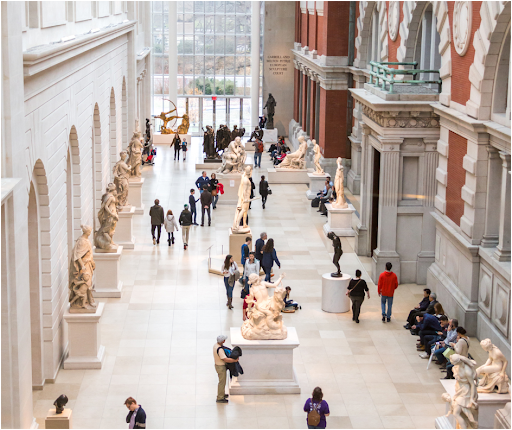
India’s premier provider of cutting-edge museum solutions to both new and existing traditional museum customers. The museum combines interactive technologies, exhibits, and one-of-a-kind visitor experiences, all within a traditional physical museum building. These innovations enhance visitor participation and complete engagement by leveraging the latest digital technologies and trends.
A museum is nothing but an innovative, different, and unforgettable experience for visitors. Has been a leader in the museum field in India and is involved in a number of high-value projects that are successfully transforming the old-style museums into modern, lively, and fun places for visitors of all ages.
Corporate Experience Centres
By using a wide range of interactive technologies, Corporate Experience Centres are able to tell the history, the journey and the main achievements of the organisation as well as its leaders. The Experience Centres can either be made physically or digitally, or even a combination of the two, where the users can be part of an interactive, immersive and compelling experience. Besides this, Corporate Experience Centres are a reflection of the brand, mission, vision, and values of the organisation. These experience Centres serve as a platform to present and promote the organisation to the visitors, customers and stakeholders.
Traditional Museums
Accessibility (AKA Inclusivity)
Usually, traditional museums are not properly accessible to all visitors, especially those with disabilities related to mobility or senses.
Limited Engagement
On account of the fact that most artefacts in traditional exhibits are only observed by the visitor, traditional exhibits can be less engaging than other alternatives.
Limited Preservation
There is a possibility that the most sensitive artefacts may become less preserved due to their exposure to light, moisture, or other natural factors, thus they may not be available to new visitors.
Location
The visitor has to come to the museum’s physical location, which restricts access to only those living in areas with a museum and having the possibility to travel there, and people who live far away or don’t have the opportunity to travel.
Replication
Replication has been a problem for traditional museums in terms of recreating their experiences for those outside of their audiences, as the costs of doing so, both financially and logistically, can be quite high regarding setting up new works and additional locations.
Cost
A lot of money is required to keep up a physical building as well as its exhibits and artefacts.
Digital Museum
Added Engagement
The Museum offers interactive formats and digital experiences which create a positive engagement experience for all ages.
Added Access
Digital and virtual experiences lower the barrier to participation for people with mobility or sensory difficulties.
Protection & Preservation
The best way for museums to keep the most fragile artefacts is through a digital version. Digital versions have a much smaller risk of damage or wear and tear than do environmental factors.
Data
The Museum is equipped with the necessary data and analytics tools that allow the Museum to make informed, accountable decisions and enhance the visitor experience based on real-time input for action.
Promotion on Social Media
The Museum uses social media to promote exhibitions and events through which they create buzz, attract more visitors, and facilitate discussions.
Universal Experience
Digitally enabled experiences and virtual visits invite anybody anywhere in the world to participate thereby dissolving geographical constraints and enlarging their audiences.
Best Free Virtual Tours of Indian Museums
National Museum, New Delhi
Meet with some 200,000 Indian and foreign artefacts of varied kinds via the museum’s online exhibitions. An absolutely incredible collection of Indian art and handiwork going back 5,000 years is waiting for you to explore starting with the arts of Deccan and the pieces of Santal musical traditions, some bronze masterpieces, copper and bronze age objects from the middle Ganga valley, Arabic and Persian inscriptions and pottery from ancient Peru to the many arts of Deccan and remnants of Santal musical traditions, there is a priceless treasure of Indian art and craftsmanship dating back 5,000 years for you to discover.
Indian Museum, Kolkata
It is the oldest and the largest multipurpose museum not only in the subcontinent but the entire Asia-Pacific region, and you simply cannot overlook it when it comes to the most spectacular museums of India to visit, even if only virtually. Its virtual gallery is full of more than one hundred fascinating and curious objects that have been collected from different parts of the country and exhibited in various galleries of the museum. Go there to find out more.
Salar Jung Museum, Hyderabad
Experience the digital galleries and exhibitions of a globally top-used museum to explore one of the largest museums in the world physically. What makes the vast collection that claims to have more than one million antiques and art objects so unique is the fact that most of it is the private collection of the Salar Jung family, hence it is the largest single collection of artworks in the world.
Best Free Virtual Tours of International Museum
Musée du Louvre, Paris
Travel back in time with a detailed online tour of a globally renowned museum. The tour covers the whole range of the Louvre from the Egyptian Antiquities to the remains of the Louvre Moat and exhibitions at the Petite Galerie, as well as Galerie d’Apollon, so the list of things to see is almost endless and certainly very impressive.
Metropolitan Museum of Art, New York
With an art collection that is considered one of the best in the world, this museum of international fame gives you the opportunity to discover its beautiful art and building in a new and engaging manner through six award-winning brief videos that have a total viewership of over 11 million times.
Vatican Museum, Vatican City
In no way can the virtual tour be compared to the live visit of the Grand Place; however, to get a glimpse of the gigantic structure of the Vatican, along with the famous Sistine Chapel, one can take any of the seven immersive online tours available on its website, which gives you a 360° view.
Conclusion
Virtual field trips are an effective method to capture the students’ interest by involving them in more genuine learning experiences. Still, similarly to real field trips, virtual field trips ought not to be only single events. Instead, these trips have to be integrated into subsequent learning. We can achieve this in one manner by being deliberate about constantly referring back to the field trip experiences when they apply to other learning activities.
Frequently Asked Questions (FAQ)
Q1. What is a virtual museum and why is it important today?
A virtual museum allows people to explore curated collections online, making art, history, and culture accessible to anyone regardless of location.
Q2. How does a virtual museum improve accessibility?
A virtual museum removes physical barriers by offering digital navigation, screen-reader compatibility, and flexible viewing for people with mobility or sensory challenges.
Q3. Can a virtual museum provide an engaging experience like a traditional museum?
Yes. A virtual museum uses interactive visuals, 3D views, audio guides, and storytelling, making the overall experience immersive and enjoyable.
Q4. How does a virtual museum help in preserving fragile artefacts?
A virtual museum displays high-quality digital replicas so the original objects don’t suffer damage from light, humidity, or handling.
Q5. Does a virtual museum benefit students and teachers?
Absolutely. A virtual museum supports learning by offering multimedia explanations, guided tours, and themed collections that enhance classroom activities.
Q6. What technologies are used to build a virtual museum?
Tools like 3D modelling, virtual reality, augmented reality, and high-resolution scanning are commonly used in creating a virtual museum.
Q7. Is a virtual museum cost-effective compared to a physical museum?
Yes. A virtual museum reduces expenses related to building maintenance, security, and preservation, making it more budget-friendly.
Q8. Can a virtual museum reach a global audience?
Definitely. A virtual museum is accessible from anywhere in the world, allowing millions of people to visit without geographical limitations.
Q9. How does a virtual museum support cultural preservation?
By digitising artefacts and stories, a virtual museum ensures that cultural heritage remains available to future generations in a safe, sharable form.
Q10. Will virtual museum experiences continue to grow?
Yes. With rapid technological advancements, the virtual museum model is expanding and expected to become even more immersive in the coming years.
References
[1] FusionVR, “Museum Experience Centers.” [Online.]
Available: https://www.fusionvr.in/museum-experience-centers
[2] Avid Open Access, “Leverage virtual field trips to engage students in authentic learning experiences.” [Online.]
Available: https://avidopenaccess.org/resource/leverage-virtual-field-trips-to-engage-students-in-authentic-learning-experiences/
[3] 3D-ACE, “Virtual Museum.” [Online.]
Available: https://3d-ace.com/blog/virtual-museum/
[4] FabHotels, “Virtual tour of museums from around India & the world.” [Online.]
Available: https://www.fabhotels.com/blog/virtual-tour-of-museums-from-around-india-the-world/
Penned by Surya Elango
Edited by Komal Rohilla, Research Analyst
For any feedback mail us at [email protected]
Transform Your Brand's Engagement with India's Youth
Drive massive brand engagement with 10 million+ college students across 3,000+ premier institutions, both online and offline. EvePaper is India’s leading youth marketing consultancy, connecting brands with the next generation of consumers through innovative, engagement-driven campaigns. Know More.
Mail us at [email protected]