
In the era of more time in front of the screen, a student book club will turn into a refreshing and creative task in comparison to most activities involving a screen. A book club not only enables students to socialize with each other but also enables them to see the world through the eyes of others as they acquire the lifetime interest of reading.
It does not really matter the kind of school or organization that you are part of, you can easily build a successful book club through a little bit of planning and dedication. Frequent reading enhances critical thinking, empathy, and cross culture understanding, which are important in education and the world today where concentration levels are deteriorating.
Book club: Steps to Get Started:
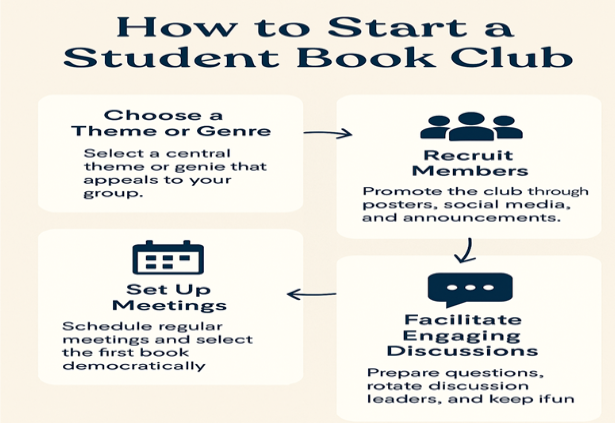
The initial thing that must be done is to pick a genre or subject. Modern historical fiction, fantasy or self-help? Once this is done, likeminded members will be recruited. You may even change the subject of it each month to make it fresh and exciting and to meet the needs of the many.
Disseminate the name, take advantage of social networking sites, flyers or a call at school or college occasion. The benefits of word of mouth, inviting friends, and peers, is another way of generating interest. We limit the number of people present in the group to a manageable set of 6\8 people so that the discussion remains active and everyone gets an equal chance to express his ideas.
Hold every fortnight, if at all feasible, and determine whether you would like to meet in person or online. A mix of both will fit mixed schedules and demands. Decide democratically on the books so that everyone remains interested. Make use of online polls or book suggestion boxes to make it easier. Have each alternate meeting with a different member to avoid it being boring and provide a chance for leadership for all. To make the discussion more enhanced, having a reading guide ready and shared for each book, such as lists of characters and themes, can make a difference.
Pre ask questions in order to prepare the discussion to be engaging and leave space for members to respond back with personal insights. Pose questions that connect the read to daily issues or your life. Don’t lose the fun introducing themed snacks, arrange author meetups, or design reading challenges with little prizes such as bookmarks or book vouchers. Point games for weekly attendance, reading completion, and participation in class discussion surprisingly enough can work extremely well.
And still having a members’ reading journal or online blog to track and document reading habits is always a good idea. These can be included in individual portfolios or even contributed to school literary magazines.
Label your active members or top discussion contributors to make it fun. Provide monthly shout outs, certificates, or even rewards to instill an ethos of appreciation. You can also consider co-operating with the local bookstores, libraries, or publishing companies. They can provide you with space in places, book deals, or even speakers. You need to consider getting mini grants or obtaining funding through your school organization so that you can have bigger events.
Creating a leadership or committee structure—a president, event coordinator, and note taker, for example—can also serve to organize and provide students with the ability to practice cooperative leadership. Rotate jobs every now and then so that each has an opportunity to really contribute and learn new skills.
Also think about expanding your club beyond reading; view movie adaptations of the books, go to book fests, or host mini writing workshops. These activities provide variety and the opportunity to invite potential new members who can then become avid readers. Asking members to send in book reviews, discussion questions, or artwork inspired by reading can also increase participation and imagination even further. The submissions can be compiled into a quarterly zine or newsletter.
The shared use of Google Drive, Discord board, or internet bulletin board may make all members aware of meeting agendas, progress, and readings. By providing a regular, warm, and creative space, the members will be motivated to remain active and involved in each session.
Additionally, one can invite alumni, local authors, or citizens who are interested in literature or publishing as a profession to be a guest speaker during sessions. This would be good experience and career advice for members who are interested in allied professions. Guest speakers bring fresh ideas and will certainly become more interested in reading and writing. You can even organize co-sessions with clubs or schools to facilitate networking and knowledge sharing. Keep a history of your club using photos and member suggestions to motivate future generations and perhaps even establish the club as a tradition.
Building a Long-Term Reading Culture
Student-led clubs always rely on sustainability. For a book club to survive, it must be more than a post-school activity—it must be a community. A way to make it so is through the implementation of shared rituals. Starting each session with a quote of the day from something read or ending it with “next read” spoilers is one of them. It provides it with predictability and excitement. You might also incorporate book club activities within school events or awareness days, e.g., hosting a “Read a thon” event during National Reading Week or collaborating with the school drama club to present excerpts from best sellers.
Instill mechanisms for feedback in which the members can reflect on what works and what does not. A mid semester survey or informal feedback session after meetings would assist in giving better fitting of the experience. The old members can guide the new ones, sharing tradition and advice, so that the club is perpetuated. There can be a repository of lists of books, reading guides, and points of discussion on the internet that can be handed over to successive batches.
Alumni can also stay involved either on social media or through virtual meetings, adding consistency and experience to the club. These sustained efforts position the club solidly in school life and provide its influence with greater longevity than its original founders.
Lastly, celebrate your club’s milestones. If your 10th book, your anniversary date, or your very first outside collaboration, find ways to commemorate them. Celebrations leave members proud of what they’ve achieved and further instill emotional attachment to the club.
A student book club encourages camaraderie, leadership development, and better communication skills in addition to reading. It provides a space for self expression, education, and community. With a bit of determination, common interest, and innovative structuring, your book club has the potential to become a student gem and permanent legacy within your school community. Your book club can grow into something greater than a venue where individuals congregate; it can become an esteemed institution that inspires readers for future generations of students by setting high standards of inclusive involvement, long term growth, and ongoing innovation.
Frequently Asked Questions (FAQs)
1. What is the main purpose of starting a student reading club?
A reading club creates a community where students can share ideas, improve comprehension, and explore diverse perspectives while enjoying literature.
2. How many members should a student reading club ideally have?
Around 6–8 members works best. This ensures lively discussions where everyone gets a chance to speak and no one feels left out.
3. Can a reading club work in both online and offline formats?
Yes. Many clubs use hybrid formats—meeting in person when possible and switching online when schedules or distance create challenges.
4. What types of genres or themes are good to start with?
Genres like modern fiction, fantasy, self-help, or even alternating monthly themes help keep sessions exciting and inclusive for all members.
5. How often should a student reading club meet?
Meeting every two weeks is a great rhythm. It gives members enough time to read while keeping the group connected regularly.
6. What can make discussions more engaging?
Pre-prepared guiding questions, character maps, or linking stories to real-life experiences help make conversations lively and meaningful.
7. How can fun elements be added to a reading club?
Including themed snacks, organizing challenges, offering small rewards like vouchers, or arranging creative activities keeps members enthusiastic.
8. Is it possible to connect reading clubs with the local community?
Absolutely. Partnering with libraries, publishers, or authors brings professional insights, sponsorships, and fresh inspiration to students.
9. Do students benefit academically from joining such clubs?
Yes. Regular participation enhances critical thinking, empathy, concentration, and cross-cultural understanding—all valuable for education.
10. Can members document their journey in a meaningful way?
Maintaining journals, blogs, or online spaces for reviews and reflections is a powerful way to track growth and creativity.
11. How does leadership work in a student reading club?
Rotating roles like president, coordinator, or note-taker helps every member practice leadership and organizational responsibility.
12. What extra activities can enrich the club experience?
Watching adaptations, attending festivals, or hosting writing workshops provide variety and encourage broader engagement.
13. How can feedback improve the long-term success of a club?
Regular surveys or informal reflections allow members to adapt the structure, making the club more enjoyable and sustainable.
14. Can alumni or guest speakers contribute to the club?
Yes. Alumni and authors bring fresh perspectives, career advice, and inspiration that strengthen both creativity and motivation.
15. Why is celebrating milestones important?
Marking achievements like anniversaries or completed reads fosters pride, builds tradition, and strengthens the sense of community.
Penned by Harmeet
Edited by Reeya Kumari, Research Analyst
For any feedback mail us at [email protected]
Transform Your Brand's Engagement with India's Youth
Drive massive brand engagement with 10 million+ college students across 3,000+ premier institutions, both online and offline. EvePaper is India’s leading youth marketing consultancy, connecting brands with the next generation of consumers through innovative, engagement-driven campaigns. Know More.
Mail us at [email protected]