
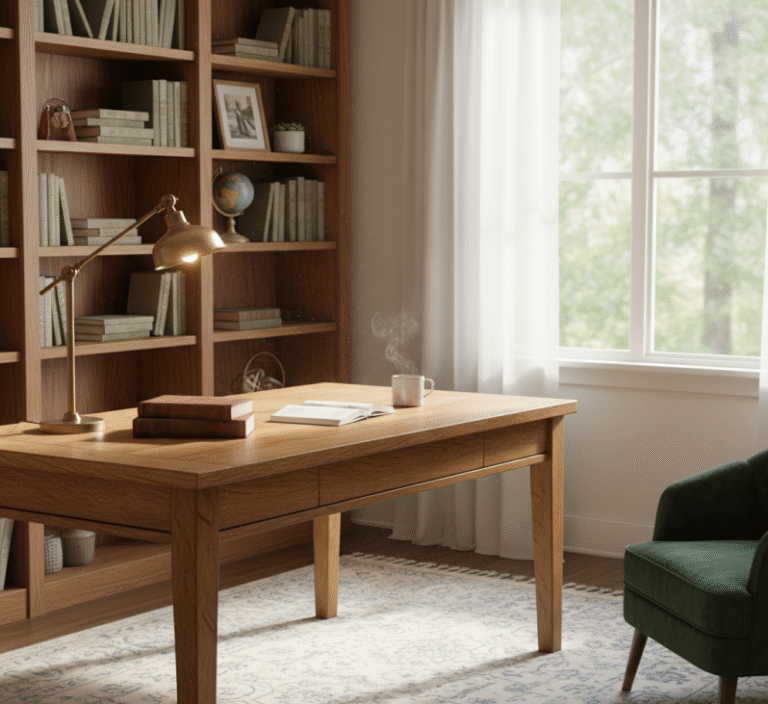
Topics: Quiet Study Space, Productive Study Environment
Introduction
In today’s noisy world, finding a quiet study space feels like a luxury. Whether you’re preparing for exams or working freelance, a peaceful environment helps you stay productive and calm. Distractions like phones, music, podcasts, and videos make it harder to concentrate—so creating or choosing the right space is key to better focus and learning.
4 Qualities of the Perfect Quiet Study Space
1. Proper Lighting
Good lighting is essential for a productive quiet study space. Natural light boosts mood, regulates energy, and reduces eye strain. If that’s not available, warm artificial lighting with adjustable brightness is the next best option. Avoid harsh fluorescent lights, as they often cause fatigue. A desk lamp with a focused beam can also help.
2. Comfy Seating
A productive study space requires comfortable seating. An ergonomic chair with good back and neck support ensures long study sessions without discomfort. Pair it with a clean, uncluttered desk to reduce fatigue and keep your posture healthy.
3. Organized Space
Clutter creates distractions. An organized study space keeps your mind clear and focused. Store only essentials like notebooks, pens, and your laptop on the desk, while using drawers or shelves for other items. A tidy environment builds discipline and improves concentration.
4. Materials Accessibility
Keep all necessary books, notes, stationery, and chargers within reach. A quiet study space should minimize interruptions, helping you maintain flow and efficiency.
Benefits of a Quiet Study Space
Improves memory retention
Boosts creativity and problem-solving
Lowers stress levels
Encourages deep focus and fresh ideas
Where to Find a Quiet Study Space?
Library – Peaceful and distraction-free
Café or Coffee Shop – A calm environment with a cozy vibe
Parks & Outdoors – Nature-inspired focus and relaxation
Home Study Space – Customized to your comfort and needs.
Tips to Identify Your Focus Area
Check noise levels at different times of the day
Use apps to track background noise
Keep essentials like water, chargers, and headphones handy
Switch between 2–3 study locations to stay motivated
Conclusion
A quiet study space is more than just a location—it’s a productivity booster. By ensuring comfort, motivation, and focus, you can create an environment that enhances your learning and overall performance. Whether at home, in a library, or a quiet café, investing in the right space directly impacts your success.
References
- “A Quiet Study Space Promotes Learning”, Framery, Oct. 3, 2024. [Online]. Available:
Link. [Accessed: Sep. 28, 2025].
- “What Makes a Good Study Space?”, Dartmouth Admissions, Nov. 9, 2023. [Online]. Available:
Link. [Accessed: Sep. 28, 2025].
- “Creating Effective Study Spaces to Maximize Organization and Peace of Mind”, Northlake Behavioral Health. [Online]. Available:
Link. [Accessed: Sep. 28, 2025].
- “Top 10 Tips for Creating a Study Space at Home“, Joyce University, Mar. 24, 2022. [Online]. Available:
Link. [Accessed: Sep. 28, 2025].
- “Discover the Benefits of Studying in the Silent and Quiet Study Spaces“, Western Sydney University, Apr. 30, 2024. [Online]. Available:
Link. [Accessed: Sep. 28, 2025].
FAQs
Q1. What is a quiet study space?
A quiet study space is a distraction-free environment that helps students and professionals concentrate better on tasks such as reading, writing, or research.
Q2. Why is it important to have a study environment like this?
It improves focus, boosts memory, reduces stress, and creates conditions where learning and productivity come naturally.
Q3. How can I create a study space at home?
Pick a calm corner, add proper lighting, use a comfortable chair, keep the desk organized, and reduce background noise.
Q4. What are the main benefits of such a study setup?
Benefits include better concentration, improved creativity, higher productivity, lower stress levels, and sharper problem-solving skills.
Q5. Where can I find a peaceful place to study outside home?
Libraries, coffee shops, parks, and campus study rooms are some of the best options for a calm study environment.
Q6. What should I avoid in a study spot?
Avoid clutter, uncomfortable furniture, harsh lights, and constant distractions like phones or social media.
Q7. Is natural light necessary for a productive study environment?
Yes, natural light helps with alertness, reduces eye strain, and improves mood during long sessions.
Q8. Can music be part of my study routine?
Yes, light instrumental music or ambient sounds can help some people, but silence usually works best for deep focus.
Q9. How do I check if a study area is too noisy?
Visit the place at different times of the day, or use apps that measure background noise levels.
Q10. What essentials should I keep nearby while studying?
Keep books, notebooks, stationery, chargers, water, and headphones within reach to avoid losing focus.
Q11. How does a productive study environment boost performance?
It helps you stay consistent, reduces distractions, and allows you to complete tasks more efficiently.
Q12. Can a café work as a good study spot?
Yes, if the café is not too crowded and has comfortable seating, good lighting, and Wi-Fi, it can be a motivating place to study.
Penned by Abhishek
Edited by Reeya Kumari, Research Analyst
For any feedback mail us at [email protected]
Transform Your Brand's Engagement with India's Youth
Drive massive brand engagement with 10 million+ college students across 3,000+ premier institutions, both online and offline. EvePaper is India’s leading youth marketing consultancy, connecting brands with the next generation of consumers through innovative, engagement-driven campaigns. Know More.
Mail us at [email protected]