
Educational Technology Revolution: Transforming Learning for the Future
The Educational Technology Revolution has become one of the most powerful forces transforming how the world learns and teaches. Over the past decade, technology has not only changed communication, healthcare, and business but also reshaped education in ways previously unimaginable. Classrooms that once relied solely on chalkboards, textbooks, and physical presence now thrive on smart boards, cloud-based tools, artificial intelligence (AI), and interactive learning apps.
This Educational Technology Revolution—often called EdTech—represents a blend of innovation, accessibility, and personalization. It has redefined learning as an experience that transcends boundaries, cultures, and even traditional time limits. The transformation continues to accelerate as new tools and platforms emerge, shaping a future in which education becomes more inclusive, engaging, and tailored to each learner’s needs.
1. Understanding the Educational Technology Revolution
The Educational Technology Revolution is not merely the digitization of textbooks or the addition of gadgets to classrooms. It represents a paradigm shift in how education is delivered, experienced, and evaluated. Technology has turned learning into a dynamic, data-driven, and highly interactive process.
From AI-powered tutoring systems to online collaboration platforms, EdTech allows students to learn at their own pace and in their preferred style. For educators, it offers data insights into student progress, helping them refine teaching methods. The result is a learning ecosystem that is more student-centered, adaptive, and future-ready.
Some of the most significant milestones of the Educational Technology Revolution include:
Learning Management Systems (LMS) like Google Classroom, Canvas, and Moodle.
Massive Open Online Courses (MOOCs) such as Coursera, edX, and Udemy.
Artificial Intelligence (AI) and Machine Learning (ML)-based adaptive learning platforms.
Gamified learning modules that make education interactive and fun.
Virtual Reality (VR) and Augmented Reality (AR) for immersive learning experiences.
2. The Rise of Smart Classrooms
A major pillar of the Educational Technology Revolution is the emergence of smart classrooms—interactive environments that blend digital tools with traditional teaching. These classrooms use projectors, digital whiteboards, tablets, and cloud-based software to make learning more engaging.
Imagine a science lesson where students conduct virtual chemistry experiments through simulations or explore the solar system via 3D models. This is the power of smart classrooms—making abstract concepts tangible and learning deeply interactive.
Benefits of Smart Classrooms
Enhanced Engagement: Interactive tools make students active participants, not passive listeners.
Real-Time Feedback: Teachers can instantly assess understanding through live polls or quizzes.
Collaboration: Cloud platforms allow real-time group work and document sharing.
Accessibility: Lessons can be recorded and accessed later, ensuring that no student is left behind.
By fostering these advantages, the Educational Technology Revolution ensures that learning is no longer confined to the four walls of a classroom.
3. Personalized and Adaptive Learning
Perhaps the most transformative outcome of the Educational Technology Revolution is personalized learning—a system in which lessons, exercises, and feedback adapt to each student’s strengths, weaknesses, and pace.
Traditional education often followed a one-size-fits-all model. However, with AI and data analytics, educators can now track student performance in real-time and deliver content suited to individual needs.
Examples of Adaptive Learning in Action
Khan Academy uses algorithms to recommend exercises based on student performance.
Byju’s and Coursera provide lessons adapted to learner progress.
AI tutors analyze learning patterns and suggest targeted improvement areas.
Personalized learning empowers students to learn at their own speed without the pressure of keeping up or slowing down for others. It also boosts confidence, motivation, and retention—core goals of the Educational Technology Revolution.
4. Virtual and Augmented Reality: Learning Beyond the Real World
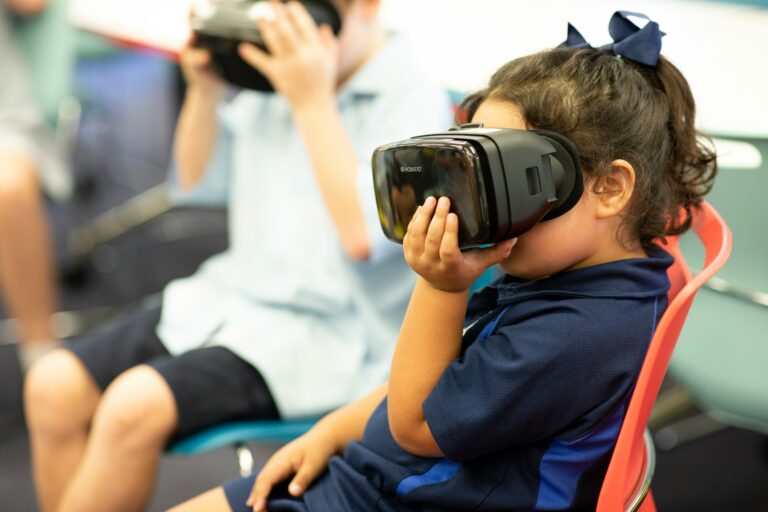
The introduction of Virtual Reality (VR) and Augmented Reality (AR) has opened exciting possibilities in education. Students can now go on virtual field trips, visit historical landmarks, explore inside the human body, or travel through outer space—all without leaving the classroom.
For example:
AR apps like Google Expeditions let students visualize historical events in 3D.
VR labs simulate complex experiments that might be too costly or dangerous in real life.
This immersion enhances comprehension and retention while making education more exciting. The Educational Technology Revolution thus expands the definition of a classroom—from a physical space to a global, even cosmic, experience.
5. Global Connectivity and Collaboration
The Educational Technology Revolution has also fostered global learning communities. Students from different countries can collaborate on projects, share cultural insights, and participate in competitions—breaking geographical barriers.
Key Tools Driving Collaboration:
Google Workspace for Education
Microsoft Teams for Education
Padlet, Miro, and Jamboard for brainstorming and project collaboration
These tools enable teachers to host live sessions, record lectures, and manage digital classrooms efficiently. Parents, too, can monitor progress through integrated dashboards.
This connectivity not only improves learning outcomes but also promotes cross-cultural understanding, preparing students for a global digital economy.
6. Empowering Teachers through Technology
While much focus is on students, the Educational Technology Revolution is equally empowering for teachers. Through AI analytics and cloud-based platforms, teachers can easily monitor student performance, create customized content, and manage classrooms efficiently.
Technology simplifies administrative work, freeing up time for teachers to focus on mentorship and creative instruction. Moreover, professional development opportunities through online teacher training platforms help educators stay updated on evolving teaching methodologies and tools.
The result? A more informed, capable, and technologically confident teaching community that leads the revolution from the front.
7. Challenges in the Educational Technology Revolution
Despite its numerous benefits, the Educational Technology Revolution comes with challenges that must be addressed.
a. Digital Divide
Not all students have equal access to technology or reliable internet. Bridging this gap is crucial to ensure educational equality.
b. Screen Fatigue and Distraction
Prolonged use of screens may cause burnout and affect attention spans. Blended learning strategies can help balance digital and offline learning.
c. Teacher Readiness
Some educators may find it difficult to adapt to new digital tools. Comprehensive training programs are essential to make them comfortable with technology.
d. Data Privacy
With increased data collection comes the responsibility to ensure student privacy and cybersecurity. Institutions must adopt strict data protection protocols.
Overcoming these challenges will make the Educational Technology Revolution more inclusive and sustainable.
8. Preparing Students for the Digital Future
The primary goal of the Educational Technology Revolution is not just to modernize education but to prepare students for the digital workforce.
Today’s careers demand more than academic knowledge—they require digital literacy, problem-solving, adaptability, and innovation. Students learn coding, data analysis, and AI integration early, giving them an edge in tomorrow’s job market.
Digital Skills Developed through EdTech:
Critical thinking and problem-solving
Collaboration through cloud-based projects
Digital citizenship and online ethics
Technical proficiency in AI, robotics, and data tools
The Educational Technology Revolution thus ensures that learners are not only educated but also employable, adaptable, and creative in a rapidly evolving digital world.
9. Artificial Intelligence and the Future of Education
Artificial Intelligence (AI) lies at the heart of the Educational Technology Revolution. AI automates administrative tasks, enables adaptive learning, predicts student outcomes, and even assists in grading.
AI-based chatbots and tutoring systems can provide 24/7 academic support, while predictive analytics can identify struggling students early. With AI integration, education becomes smarter, faster, and more personalized.
However, educators must balance AI efficiency with the human touch—ensuring empathy and emotional understanding remain central to learning.
10. The Road Ahead: Innovation and Lifelong Learning
The Educational Technology Revolution is far from over; it’s only beginning. The next phase will likely feature AI-powered learning companions, fully immersive metaverse classrooms, and lifelong learning ecosystems.
Education will no longer be limited to degrees or age. People will continue learning throughout their lives, guided by digital mentors, smart analytics, and adaptive learning platforms.
In this evolving landscape, institutions, educators, and policymakers must work together to ensure equitable, ethical, and accessible education for all.
Conclusion
The Educational Technology Revolution has permanently changed the face of education. From personalized learning and smart classrooms to global collaboration and digital literacy, technology has brought learning closer, faster, and more efficient than ever before.
While challenges remain—like the digital divide and data security—the benefits far outweigh the drawbacks. Education today is more inclusive, innovative, and adaptive, preparing learners to thrive in a world driven by technology and information.
The future of education will continue to evolve with each technological leap. And as we embrace these innovations, the Educational Technology Revolution will remain the foundation of a smarter, connected, and empowered global learning community.
References
Stanford Graduate School of Education. “How technology is reinventing K-12 education.” Stanford Report, Feb. 2024. [Online]. Available: https://news.stanford.edu/stories/2024/02/technology-in-education Stanford News
U.S. Department of Education, Office of Educational Technology. “Artificial Intelligence and the Future of Teaching and Learning: Insights and Recommendations.” May 2023. [Online (PDF)]. Available: https://www.ed.gov/sites/ed/files/documents/ai-report/ai-report.pdf
FAQs on Educational Technology Revolution
1. What is the Educational Technology Revolution?
The Educational Technology Revolution refers to the rapid transformation of education through digital innovations such as artificial intelligence (AI), virtual classrooms, gamified learning, and online platforms. It is the integration of technology into every aspect of teaching and learning, making education more interactive, personalized, and accessible. This revolution has shifted learning from traditional chalkboard methods to data-driven and student-centered approaches.
2. How has the Educational Technology Revolution changed classrooms?
Classrooms are no longer limited to physical walls. The Educational Technology Revolution has introduced smart classrooms equipped with digital boards, tablets, and cloud tools. Students can collaborate online, access global resources, and engage in virtual labs or AR-based lessons. Teachers can monitor student progress in real time, ensuring every learner stays on track. It has made education more dynamic, inclusive, and globally connected.
3. What are the main benefits of educational technology?
The Educational Technology Revolution provides numerous benefits such as:
Personalized learning based on student needs and pace.
Accessibility to education from anywhere in the world.
Engagement through gamification and multimedia tools.
Efficient assessment and feedback using AI analytics.
Collaboration via digital platforms like Google Workspace and Microsoft Teams.
These advantages make learning more effective and future-oriented.
4. What are some examples of educational technology tools?
Several platforms and tools are driving the Educational Technology Revolution, including:
Learning Management Systems (LMS) – Google Classroom, Moodle, Canvas.
MOOCs – Coursera, edX, and Udemy.
AI Tutors and Chatbots – helping students with personalized support.
AR/VR Apps – Google Expeditions, Nearpod.
Collaboration Tools – Padlet, Miro, and Zoom.
These tools enhance both teaching quality and student engagement.
5. How does technology support personalized learning?
Through AI and machine learning, the Educational Technology Revolution enables adaptive learning experiences. Platforms track student progress, analyze performance data, and suggest tailored exercises or lessons. This ensures that learners neither feel overwhelmed nor bored, helping them learn at their own pace. It increases confidence, comprehension, and motivation among students.
6. What challenges come with the Educational Technology Revolution?
Despite its many advantages, this revolution faces challenges such as:
Digital divide – unequal access to devices and the internet.
Data privacy concerns in online learning platforms.
Teacher readiness – some educators need more digital training.
Screen fatigue from prolonged exposure.
Addressing these issues is essential for making EdTech inclusive and sustainable.
7. How is artificial intelligence shaping the future of education?
AI is a core driver of the Educational Technology Revolution. It automates grading, predicts learning outcomes, and provides 24/7 tutoring assistance. AI-powered analytics can detect when students struggle and suggest interventions early. In the near future, AI is expected to enable fully adaptive and immersive learning environments, revolutionizing how education is delivered.
8. How does educational technology prepare students for the future?
The Educational Technology Revolution equips students with essential digital literacy and critical thinking skills required in the modern workforce. By learning coding, data analysis, and AI tools early, students gain hands-on experience applicable to real-world scenarios. It nurtures creativity, problem-solving, and adaptability — all crucial in a technology-driven global economy.
9. What role do teachers play in this technological transformation?
Teachers are at the heart of the Educational Technology Revolution. They are not replaced by technology but empowered by it. Digital tools help teachers personalize lessons, track student growth, and use interactive methods to boost engagement. Additionally, online teacher training and professional development courses keep educators updated with evolving tools and strategies.
10. What does the future of the Educational Technology Revolution look like?
The future promises even more innovation — metaverse classrooms, AI-driven learning companions, and lifelong learning ecosystems. Education will continue to move toward inclusivity, flexibility, and collaboration. The Educational Technology Revolution is expected to blur boundaries between physical and digital education, making learning a continuous and personalized journey throughout life.
Penned by Tanjal Kapoor
Edited by Reeya Kumari, Research Analyst
For any feedback mail us at [email protected]
Transform Your Brand's Engagement with India's Youth
Drive massive brand engagement with 10 million+ college students across 3,000+ premier institutions, both online and offline. EvePaper is India’s leading youth marketing consultancy, connecting brands with the next generation of consumers through innovative, engagement-driven campaigns. Know More.
Mail us at [email protected]