
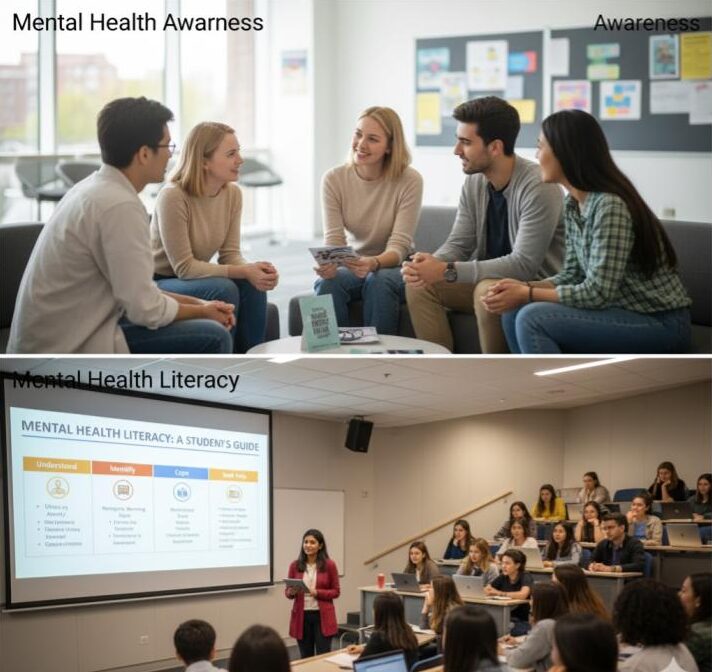
Topic: Mental Health Literacy
7 Top Mental Health Strategies Building Awareness Excellence for University Students
The acceleration of the mental health emergency among university students requires comprehensive mental health literacy programs that equip young adults with knowledge, skills, and tools of psychological well-being while they are in college. Universities increasingly value that additional information about mental health concerns, coping techniques, and support mechanisms can make a real difference in the success, retention, and long-term health of students.
Successful mental health education reaches beyond crisis intervention to focused promotion of well-being, allowing students to recognize warning signs, develop healthy coping responses, and de-mystify psychological difficulties. The value of awareness programs lies in increased realization that emotional well-being among students, far from detracting from academic performance, enhances academic success, personal development, and successful transition into professional careers in increasingly challenging and stressful contemporary settings.
The University Mental Health Landscape
University environments present a range of psychological challenges including academic stress, social adjustment, financial concerns, identity development, and independence. These different types of stress all happening together create risk periods when most mental disorders first emerge or become more severe, making university years high-risk intervention periods.
Prevalence rates of epidemic proportions of depression, anxiety, drug abuse, and other mental disorders among students at universities globally have been revealed. Although precise figures are different from place to place and depending upon the measure, concurrence exists about high percentages of students undergoing clinically significant psychological distress during their university years.
Mental Health Literacy Foundations
Mental health literacy encompasses knowledge of mental health disorders, their causes and treatments, help-seeking behaviors, and coping strategies to enhance overall well-being. Not only does literacy reinforce the determinants of wellbeing understanding, but it also translation knowledge into practice through increased pro-health behavior.
Educational strategies, including formal instruction, peer-to-peer learning, web-based data, and experience-based activities, provide mental health literacy that accommodates varying learning styles and preferred engagement methods. Multi-modal methods allow for more access across student groups with varied needs and preferred learning.
Stress Management and Building Resilience
Competencies such as time management, organisational skill, realistic goal-setting, and prioritization for stress management enable students to manage competing demands without feeling overwhelmed. Such self-managed competencies avoid stress accumulation to the point of becoming hazardous while enhancing quality of life and academic attainment.
Mindfulness and meditation are established methods of stress reduction available to all students at no cost in terms of resources or background. There are measurable benefits from repeated practice of mindfulness including less anxiety, improved focus, improved emotional control, and improved sleep.
Physical foundations such as proper rest, exercise, good diet, and judicious drug use have a lasting positive influence on mental well-being as well as on scholarly productivity. Education that values these relationships reinforces healthy lifestyle habits and experience-based strategies for making effective lifestyle changes.
Recognition and Early Intervention
Early detection of mental illness allows immediate intervention to avert condition deterioration and attendant functional impairment. Education that involves teaching warning signs of frequent conditions equips students to identify emergent alterations in self or others so that they access help sooner and achieve improved outcomes.
Screening measures and self-help materials offer standardized methods of evaluating mental health status and whether or not professional advice should be sought. They decrease the uncertainty of assessment while making frequent checks of mental health a norm as part of everyday self-care comparable to physical health checking.
Promoting Help-Seeking and Anti-Stigma
Mental health literacy is a significant predictor of professional psychological help-seeking attitudes and is positively potent, with partial mediation effects of depression and anxiety. The correlation highlights literacy’s key role in transgressing barriers to access to suitable care when needed.
Stigma reduction efforts through personal experiences, facts, and contact education counteract myths about mental illness by making these experiences human. When peers tell students about mental health problems openly, students know that they are not alone and that seeking help is strength, not weakness.
Accessibility training informing students of services, how to obtain them, and what they can expect from services decreases pragmatic impediments to getting help. Notice of counseling services, crisis hotlines, peer support groups, and community resources in timely fashion allows connection to services.
Peer Support and Community Building
Peer support initiatives leverage the natural tendency of students to seek out friends in times of distress and offer structure and training that ensures peers provide necessary, supportive assistance. Peer support initiatives increase capacity for support beyond professional service while creating caring campus communities.
Mental health champions and ambassadors of public standing who promote wellbeing and drive out stigma are positive role models that inspire people that mental health problems don’t dictate individuals or stop them from reaching their full potential. These champions tend to speak personally using compelling parallels with colleagues.
Digital Mental Health Resources
Internet-based mental health interventions such as internet-based programs, online counseling, self-help websites, and online support groups offer accessible, frequently free, complementary materials for services. These are especially useful to students who are reluctant to seek help in person or who have accessibility issues in terms of location, cost, or time constraints.
Formal self-help interventions with empirically supported efficacy for levels of symptoms that are mild to moderate include evidence-based programs of cognitive behavior therapy, mindfulness training, mood monitoring, or crisis intervention. They are ineffective in substituting professional care for severe illness but can serve as effective first-line treatments or adjunct treatments.
Online screening and assessment instruments assist students in assessing whether consulting would be professionally rewarding as they learn about prevalent mental health issues and their symptomatology. The instruments dispel myths regarding whether experiences necessitate professional intervention while de-mystifying mental health assessment.
Academic Integration and Curriculum Design
Integrating mental health material into curriculum is one method of universalizing such concerns and reaching all pupils including those not represented in extracurricular activities. Integration across a range of subjects illustrates how mental health has relevance in every area as well as contextualization subject-wise.
There are other colleges with specialized mental health literacy programs that explore conditions, treatment, coping, and help-seeking in depth. These programs offer structured, credit-worthy education while building cohorts of informed students who can support peers and be integrated into campus wellbeing culture.
Family and Social Support Networks
Family mental health literacy has the aim of equipping parents and family members with the capacity to support students effectively and additionally be capable of identifying signs which need professional input. Most families also are not mentally health literate in themselves, something that can lead to stigma or inappropriate response upon encountering issues encountered by students.
More constructive relationship abilities such as communication, boundary setting, conflict resolution, and emotional support enhance social networks that are resilient to mental illness. Education focusing on such interpersonal skills enhances well-being as it constructs helping campus communities.
Building social bonding through activity in student organizations, recreational sports, and campus clubs has protective against isolation and the psychological difficulties that ensue from it. Structured programs of connection are especially beneficial to students experiencing social anxiety or interpersonal difficulties.
Transforming Student Wellbeing Through Education and Awareness
Extensive mental health literacy classes can significantly transform the lives of university students by empowering them with the knowledge, skills, and tools essential to their mental well-being. Heightened knowledge regarding mental health issues, coping, and support resources creates university campuses where students feel encouraged to place high value on their well-being without shame or stigma.
As the prevalence of mental illness among college students keeps on rising all over the world, the colleges that invest in extensive mental health education and sensitization programs will be better placed to promote student achievement, retention, and overall development. The models presented here offer suggestions on how to design supportive learning environments where every student can access the information, resources, and assistance needed to maintain psychological well-being throughout college life and transition to a productive professional and personal life.
References
[1] Mental Health First Aid, “Mental health literacy: A vital skill for college success,” MHFA Blog, Feb. 14, 2025. [Online]. Available: https://www.mentalhealthfirstaid.org/2025/02/mental-health-literacy-college-success/
[2] Novak Djokovic Foundation, “The importance of mental health literacy in education,” NDF Blog, Dec. 20, 2024. [Online]. Available: https://novakdjokovicfoundation.org/importance-of-mental-health-literacy-in-education/
[3] Cambridge University Press, “The role of mental health literacy in university students,” Cambridge Journal, Mar. 2024. [Online]. Available: https://www.cambridge.org/core/journals/bjpsych-bulletin/article/role-of-mental-health-literacy
FAQ
Q1. What does mental health literacy mean for university students?
It refers to understanding mental health conditions, recognizing early signs, knowing how to seek help, and developing skills to maintain well-being. For university students, mental health literacy helps them navigate stress, academic pressure, and emotional challenges effectively.
Q2. Why is mental health literacy important in higher education?
Rising academic stress and social transitions make students vulnerable to anxiety, depression, and burnout. Mental health literacy equips them with the awareness and coping tools to manage these challenges, improving both academic and personal outcomes.
Q3. How can universities promote better awareness?
Colleges can offer workshops, peer-led discussions, online resources, and wellness campaigns. By making mental health literacy a part of everyday student life, universities encourage open conversations and reduce stigma.
Q4. What are the main components of mental health literacy programs?
Key components include education about common mental disorders, stress management, mindfulness, early detection, and help-seeking guidance. These elements ensure students not only know about mental health but also apply that knowledge effectively.
Q5. How does mental health literacy reduce stigma among students?
When students learn that mental illness is common and treatable, misconceptions decrease. Sharing real stories, open dialogue, and peer advocacy make it easier to talk about emotions without fear of judgment.
Q6. Are there digital tools that support mental health literacy?
Yes. Online counseling, mobile well-being apps, and self-guided cognitive behavioral therapy programs help students build mental health literacy at their own pace, especially when in-person help is inaccessible.
Q7. How does mental health literacy relate to academic success?
Students with higher literacy levels tend to manage stress better, maintain focus, and achieve higher grades. They balance self-care with studies, which leads to improved performance and reduced dropout rates.
Q8. What role does peer support play in mental health literacy?
Peer mentoring and ambassador programs train students to support one another. This approach builds trust, normalizes seeking help, and creates an inclusive mental health culture on campus.
Q9. Can families be involved in improving student well-being?
Absolutely. Educating families about mental health literacy helps them recognize warning signs and offer meaningful support. This partnership between students, families, and universities strengthens well-being networks.
Q10. How can students practice mental health literacy daily?
They can practice self-reflection, stay connected with peers, seek help early when needed, and make time for rest and mindfulness. These small, consistent actions build resilience and emotional stability.
Penned by Manobal
Edited by Disha Thakral, Research Analyst
For any feedback mail us at [email protected]
Transform Your Brand's Engagement with India's Youth
Drive massive brand engagement with 10 million+ college students across 3,000+ premier institutions, both online and offline. EvePaper is India’s leading youth marketing consultancy, connecting brands with the next generation of consumers through innovative, engagement-driven campaigns. Know More.
Mail us at [email protected]