
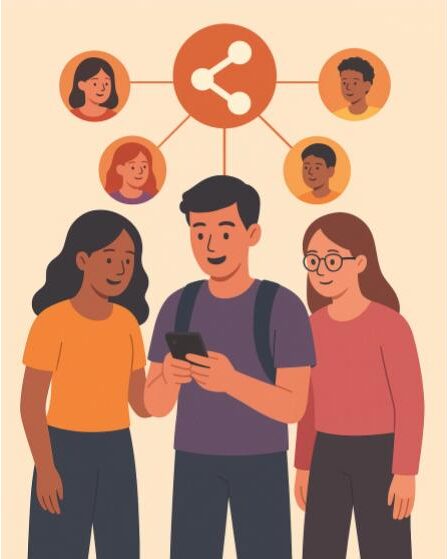
Topic: Student Communities
Introduction
In recent years, student communities have emerged as one of the most lively and rapidly growing spaces for the dissemination of new ideas and products. New campus applications, social initiatives, and meme pages quickly gain immense popularity & all this is because of their proficiency in converting small ideas into flaming successes. Cutting across all initiatives and ideas, the intertwining phenomena of viral marketing and network effects explains the rapid spread of student movements and initiatives and their ability to capture the cultural zeitgeist.
Why Students Drive Viral Growth
Students live in networks of strong and instant connectivity, allowing for rapid communication and powerful social influence. For a tool or concept to take off, it doesn’t require ample marketing spend but it needs to be relevant and relatable and to have the right advocates for dissemination. One student sharing something exciting initiates a chain reaction, which results in exponential adoption.
This environment makes campuses ideal testing grounds for social platforms, startups, and even nonprofit initiatives. Consider the earliest success stories of Facebook and Snapchat, which started in universities and relied on peer-to-peer influence for viral growth.
Viral Marketing in Student communities
Marketing that spurs individuals to promote and advertise products and ideas of their own volition is called viral marketing. Although, within student communities viral marketing might take the following forms:
- Meme campaigns that incorporate student life.
- Applications that incentivize users to invite new users.
- Events or competitions that have shareable moments.
Marketing and advertising that is viral has less reliance on promotions and more on the genuineness of recommendations from acquaintances. Students are more likely to respond and get involved with something when it comes from trusted classmates compared to ads.
The Impact of Network Effect
Simply sharing information does not lead to viral growth; it is the network effect that allows growth to flourish. The network effect is when a good becomes more valuable to its users as more people use it. For students, this could mean:
- a group chat application that becomes more useful when a lot of peers sign up,
- a campus marketplace where the buyer-seller ratio increases, strengthening the platform, or
- a knowledge-sharing forum that receives improvements with every new student participation.
Every new user or participant enhances the experience of the others, forming a self-reinforcing loop. This is why it is common to observe student apps or initiatives to start with slow growth and adoption and then experience sudden growth spurts.
Case Examples of Viral Growth
Facebook’s Origins
Launched in Harvard dorm rooms, Facebook leveraged exclusivity and peer-driven invites to spread across campuses globally.
Duolingo in Student Networks
Language-learning apps like Duolingo thrive in student circles, where users share streaks and progress, creating viral motivation loops.
Campus Activism
Even social causes, such as climate strikes, spread virally among students using shared hashtags, posters, and word-of-mouth. These examples show how viral marketing strategies and the network effect can amplify student energy into movements with real impact.
Challenges in Sustaining Viral Growth
While boosted adoption can create powerful opportunities, sustaining the momentum is not always easy. Students are quick to leave. But to maintain growth:
- Continually add value to the Platforms.
- Sync Campaigns with the trends.
- Communities feel ownership and participation.
Without these, a viral success is short-lived.
Conclusion
The interconnectedness of students and their penchants for sharing information make communities grow virally. The integration of viral marketing methodologies and the network effect allows small, student-run initiatives to expand into global enterprises. Students consistently demonstrate their capability of venturing beyond their roles as consumers to become dynamic agents of change within a society. The responsible tapping of such energy and creativity will bring remarkable changes to campus and beyond.
References
[1] J. Goldenberg, B. Libai, & E. Muller, “Talk of the Network: A Complex Systems Look at the Underlying Process of Word-of-Mouth”
PDF version: “Talk of the Network” (Goldenberg et al.) [Online]. Available: https://business.columbia.edu/sites/default/files-efs/pubfiles/3391/TalkofNetworks.pdf?utm_source=chatgpt.com
[2C. Shapiro & H. R. Varian, Information Rules: A Strategic Guide to the Network Economy Harvard Business School Press / HBP product page: Information Rules [Online]. Available: https://hbsp.harvard.edu/product/863X-HBK-ENG?utm_source=chatgpt.com
FAQ
Q1. What does viral growth in student communities mean?
Viral growth in student communities refers to the rapid spread of ideas, apps, or movements across campuses through peer-to-peer sharing and social influence. It relies on authenticity, engagement, and relatable content rather than traditional advertising.
Q2. Why do student communities play a key role in viral growth?
Students are part of highly connected networks where trends travel fast. A single share or recommendation can trigger a ripple effect, making viral growth in student communities both organic and powerful.
Q3. How does viral marketing work within campus environments?
Viral marketing in student communities often happens through memes, campus events, and social apps. Students share content that feels genuine, helping initiatives gain popularity through personal trust and relatability.
Q4. What is the network effect and how does it support viral growth?
The network effect means that a platform or idea becomes more valuable as more people join it. In student communities, each new participant adds value—whether by contributing ideas, increasing engagement, or expanding visibility.
Q5. Which platforms have benefited from viral growth in student communities?
Examples include Facebook, Snapchat, and Duolingo—all of which started with small student networks. Their success relied on network effects and viral sharing within campuses before expanding globally.
Q6. Can social causes also benefit from viral growth in student communities?
Yes. Many activism campaigns—like environmental strikes or mental health movements—gain traction on campuses. Viral growth in student communities amplifies these causes through shared posts, hashtags, and peer advocacy.
Q7. How can brands or organizations encourage viral growth among students?
They should focus on authenticity, value, and participation. Encouraging user-generated content, creating shareable campaigns, and aligning with student interests are key drivers of viral growth in student communities.
Q8. What challenges exist in maintaining viral momentum?
The biggest challenge is sustaining engagement after the initial buzz. To keep viral growth alive, student initiatives must continue adding value, evolving with trends, and fostering community ownership.
Q9. Why do students respond better to peer recommendations than ads?
Because peer endorsements feel authentic and relatable. In student communities, trust drives viral growth far more effectively than paid promotion or corporate messaging.
Q10. What is the future of viral growth in student communities?
The future lies in merging technology, creativity, and social good. As campuses become more digital, viral growth in student communities will continue shaping innovation, entrepreneurship, and activism worldwide.
Penned by Akshita
Edited by Sushmita Halder, Research Analyst
For any feedback mail us at [email protected]
Transform Your Brand's Engagement with India's Youth
Drive massive brand engagement with 10 million+ college students across 3,000+ premier institutions, both online and offline. EvePaper is India’s leading youth marketing consultancy, connecting brands with the next generation of consumers through innovative, engagement-driven campaigns. Know More.
Mail us at [email protected]