Topics: podcast learning, embracing digitalization
Introduction
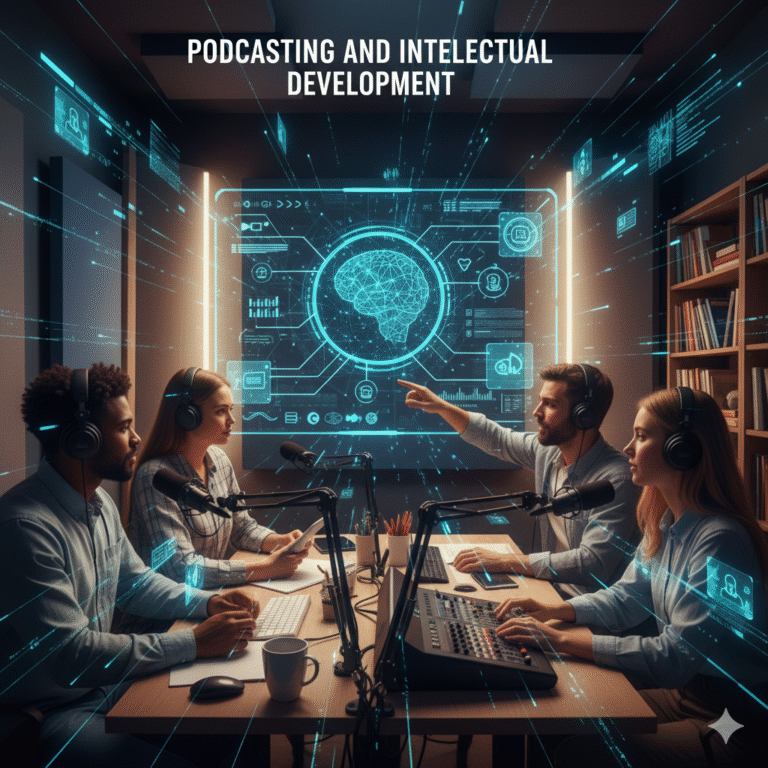
Learning has been changing tools from the times of books and websites. Now podcasts have become a force to reckon within learning and academic achievement for the last decade. Informal, mobile, and interactive, podcasts have the potential to connect students with educators outside the classroom. With schools and universities embracing digitalization, podcasting is changing the production, sharing, and use of knowledge.
Why Does Podcast Learning Work?
Podcasts are audio and therefore very easy to incorporate into current lives. One can listen to it anywhere & anytime be it, at the gym, or while doing drudge work. Podcasts are different from the usual lecture because they are:
On-Demand Access: Students choose when and where to listen.
Portability: Accessible on mobile devices and tablets.
Accessibility: Easy to create and access, even with low internet bandwidth.
Personalization: Students pick topics aligned with their learning goals.
This personalization feature makes podcasting attractive to today’s digitally savvy, multitasking students.
Podcast Learning for Academic Growth
1. Supporting Class Learning
Instructors might offer lectures or other material as podcasts. Absent students can listen, and other students can replay tricky stuff to learn it better.
2. Supporting Self-Learning
Students outside class can listen to ideas with podcasts. History, science journalism, or business are some more knowledge gained by students, leading to overall development.
3. Promoting Critical Thinking and Communication
Through producing their own podcasts, students gain research, narration, and expression of thought skills. This is vital in promoting academic achievement and professional success in communication skills.
4. Encouraging Peer-to-Peer Learning
Student’s own podcasts enable collaboration. Friends interview friends, share class assignments, or debate current news, fostering active learning and participation.
Benefits to Students
Accessibility: Audio is helpful for visually impaired or learning-disabled students.
Retention: Students listen first and take notes later for higher understanding.
Confidence: Speaking in podcast learning formats builds communication confidence.
Networking: Students interviewing teachers, professionals, or alumni gain networking opportunities.
Challenges and Solutions
Technical Barriers: Some students may lack experience with recording tools. Workshops and simple apps can support smoother adoption.
Content Quality: Poor-quality audio reduces engagement. Training in editing and storytelling improves the effectiveness of podcast learning.
Attention Issues: Passive listening can reduce focus. Interactive features such as polls or questions help maintain attention.
Future of Podcast Learning in Academia
The future of podcast learning includes:
AI-based Recommendations: Customized episodes aligned with student learning outcomes
Interactive Audio: Quizzes, polls, and engagement tools
Cross-Border Collaboration: Students from different regions co-creating content
Micro-Podcasts: Short, topic-focused lessons for quick revision sessions
Conclusion
Podcasts has grown beyond entertainment and now plays a vital role in academic development. It supports active learning, creativity, and communication. As technology evolves, podcasts will continue expanding, building connections between classroom knowledge and the real world.
References
[1] “How academic podcasting can change academia and its relationship with society: A conversation and guide,” frontiersin.org. [Online].
Available: https://www.frontiersin.org/journals/communication/articles/10.3389/fcomm.2023.1090112/full
[2] “Peeling the Pod: Towards a Research Agenda for Podcast Studies,” academic.oup.com. [Online].
Available: https://academic.oup.com/anncom/article/47/3/324/7913139?login=false
[3] “Leveraging Podcasts as Academic Resources: A seven-step methodological Guide,” journals.sagepub.com. [Online].
Available: https://journals.sagepub.com/doi/10.1177/16094069241266197?icid=int.sj-abstract.citing-articles.18
FAQs
Q1. What are the main benefits of podcast learning for students?
It helps students learn flexibly, improves focus, and supports multitasking.
Q2. How does podcast learning help with difficult topics?
Students can replay challenging parts and learn at their own pace.
Q3. Can teachers use podcast learning for flipped classrooms?
Yes, teachers can record lessons students listen to before class.
Q4. Does podcast learning support students with disabilities?
Yes, it supports visually impaired and text-challenged learners.
Q5. How can students create podcast learning content?
They can record discussions, interviews, and explanations with simple apps.
Q6. What skills do students gain through podcast learning creation?
They build research, communication, narration, and collaboration skills.
Q7. Why are short episodes popular in podcast learning?
Short clips fit into study routines and help review key ideas quickly.
Q8. How can teachers ensure quality in podcast learning content?
Using clear narration, structure, and basic editing improves quality.
Q9. What challenges do schools face when applying podcast learning?
Technical issues, unfamiliar tools, and inconsistent recordings.
Q10. How can institutions solve technical issues in podcast learning?
Training sessions, easy apps, and simple tools support adoption.
Penned by Himanshu
Edited by Sushmita Halder, Research Analyst
For any feedback mail us at [email protected]
Transform Your Brand's Engagement with India's Youth
Drive massive brand engagement with 10 million+ college students across 3,000+ premier institutions, both online and offline. EvePaper is India’s leading youth marketing consultancy, connecting brands with the next generation of consumers through innovative, engagement-driven campaigns. Know More.
Mail us at [email protected]