
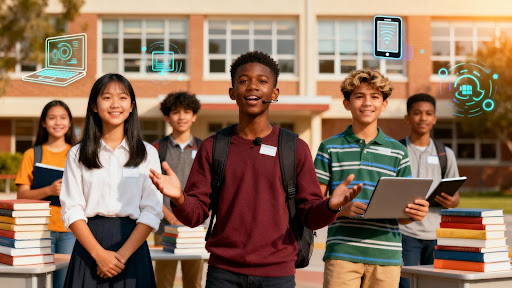
Social enterprise sector has emerged as a powerful tool for driving change in the education sector, connecting youths with each other, youth empowerment and sustainable social impact. These kinds of competitions encourage youths, students, educators and young entrepreneurs to think beyond boundaries and actively participate in solving real world problems. Social contest focus on bringing together students and young innovators to address the challenges in learning. These competitions encourage fresh solutions to the problems and also foster entrepreneurial society by inviting participants to create more sustainable solutions that solve educational problems. Winners also receive mentorship, funding and exposure from which help turning their ideas into ventures that create impact in the society. From resource sharing apps to inclusive learning programs, these contests have projects that make education more accessible and have an impact on the next generation.
Role of contests in Education
Social enterprises contests serve as a starting hub or an incubator for fresh ideas and transform education system and practices. By involving students, young entrepreneurs these kinds of initiatives introduce experiential learning and foster entrepreneurial mindsets. And in return this makes education more responsive towards community needs. Organization like Azim Premji university and international competitions such as the Citizen entrepreneurship competition mainly focus on engaging students to tackle issues like accessibility, equity, equality and quality in learning environments.
How do These Kinds of Contests Work?
The participants submit the proposals which outline education centred social enterprise that specifically addresses challenges such as digital inclusion, resource sharing and youth mentoring. Mentorship, networking and skill development are an integral part of the learning process, often helps in pitching idea to the investors. The winners not only receive monetary awards but also have media coverage and connection to incubators that help transform their ideas into scalable solutions.
Skills and Empowerment for the Next Generation
Through these contests, students will gather skills such as problem solving, project management, budget planning, feasibility analysis, and business planning and communication. Such programmes also foster leadership, creativity and confidence in the individuals, so that they can become change makers in the society. Also, these programmes are centred around global agencies like the sustainable development goals of the United nation which inspire participants to address important issues on a broader scale.
Some Notable Impact and Examples
Some award-winning ideas include alcohol free spaces for the youths, upcycling businesses, and resource sharing platforms for the schools. Many projects continue beyond the contests as these ideas are backed by the investors from various Indian elite institutes such as IIM, IIT and internationally renowned Y-combinator. The ripple effect is seen in the community that directly benefit from these socially driven business models making education more equitable and accessible for all.
Conclusion
In short, these social contests have become essentials for education reform, unlocking the potential of young entrepreneurs and leaders to create sustainable change through innovation and collaboration. By providing practical examples, mentorship and recognition these education contests empower students to become the pillars of the education system that serves diverse communities and prepare future generations for global citizens.
FAQs
Q1. What is the purpose of social contests in education?
Social contests motivate young people to develop solutions that improve learning systems and create real community impact.
Q2. Who can participate in these contests?
Students, educators, and young innovators who want to create meaningful change can participate.
Q3. How do these contests support new ideas?
They offer mentorship, feedback, and exposure so participants can strengthen their ideas and prepare them for real-world application.
Q4. What common themes do participants address?
Most proposals focus on accessibility, inclusion, digital support, youth development, and community-based problem-solving.
Q5. Do winners receive long-term benefits?
Yes, winners often receive funding, media visibility, and access to incubators that help expand their projects.
Q6. What skills do participants develop?
Participants learn problem-solving, project management, budgeting, communication, and leadership.
Q7. How do global frameworks influence these contests?
Many contests align with SDGs, inspiring participants to address education challenges at a national and global level.
Q8. Do projects continue after the contests end?
Yes, many ideas evolve into sustainable initiatives, sometimes even becoming a small social enterprise.
Q9. How do these contests contribute to community impact?
They encourage youth-led solutions that directly benefit local communities by improving education access and equality.
Q10. Can small student ideas grow into larger models?
Absolutely—several student-led innovations have scaled up, with some eventually being recognized as impactful enterprise models.
References:
[1] Swartz Centre for Entrepreneurship, “Social Enterprise Prize,” Carnegie Mellon University, Pittsburgh, U.S.A., 2009. [Online].
Available: https://www.cmu.edu/swartz-center-for-entrepreneurship/social-innovation.htmlazimpremjiuniversity+1
[2] School Enterprise Challenge, “Skills-based learning through social enterprise competitions,” School Enterprise Challenge, 2023. [Online].
Available: https://www.schoolenterprisechallenge.org/sewfonline+1
Penned by Abhishek
Edited by Meghna Chaturvedi, Research Analyst
For any feedback mail us at [email protected]
Transform Your Brand's Engagement with India's Youth
Drive massive brand engagement with 10 million+ college students across 3,000+ premier institutions, both online and offline. EvePaper is India’s leading youth marketing consultancy, connecting brands with the next generation of consumers through innovative, engagement-driven campaigns. Know More.
Mail us at [email protected]