4 Methods of Generative AI in Student Content Creation
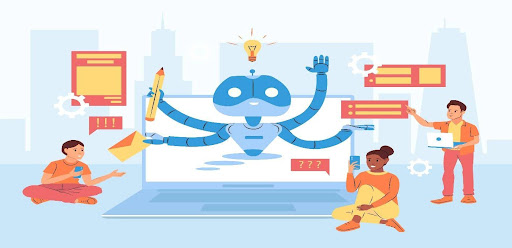
Generative AI is a type of artificial intelligence that has the ability to automatically generate more learning content in the form of notes, quizzes, assignments, and multimedia through identifying patterns in data. It assists learners in the learning process by giving them adaptive and customized learning aids. The main methods include AI content creation:
1. Natural Language Generation
Writes summaries, essays, and explanations in simple, easy-to-understand language as one would be used to with the students.
2. Adaptive Question Generation
It produces the quizzes, practice tests, and mock tests in compliance with the performance of the learners.
3. Interactive Resources
Prepares flashcards, presentations, and concept maps so that the learners can be active in their learning.
4. Multimedia Support
Creates images, audio, and videotapes that are compatible with various learning styles.
3 Generative AI Applicability to Student Learning
1. Time-Saving for Students
Making notes, revision, and searching to get explanations will be time-consuming. Generative AI eliminates this work, generating study materials in an organization at a glance, leaving students with more time to learn than to gather information.
2. Personalized Support in Weak Areas
Each student has areas and or subjects where they perform poorly. The generative AI recognizes the said gaps and generates customized learning materials, such as additional practice questions or simplified explanations that no learner is left behind.
3. Improved Accessibility for All Learners
Not all students learn equally. Some students are visual, some learn by text, and others learn by sound. Generative AI has the capability of producing content in various formats, hence learning is inclusive to a wide range of needs, including learners with disabilities.
4 Benefits of Generative AI for Students
1. Personalization
Prepares personalized study notes and plans based on the needs of every learner.
2. Productivity
Produces content in high quantities, quickly, and in a structured and relevant manner.
3. Cost-Effectiveness
Eliminates the need to have tutoring and additional materials, which are costly.
4. 24/7 Availability
This is the availability of learning materials at all times.
3 Main Risks and Limitations
1. Problem of Accuracy
AI-created content can contain errors or an insufficiency of information.
2. Over-Dependence
The students can be over-dependent on AI rather than on critical thinking.
3. Content bias
AI that is trained on erroneous information can, therefore, promote false assumptions.
3 Privacy Advantages of Generative AI
1. Anonymity
Secures the fact that personal information does not get revealed in the content generated by AI.
2. Regulatory Compliance
Adheres to regulations like GDPR in the safe use of data.
3. Safe Sharing
Allows students and institutions to share AI-generated works in a safe manner.
3 Educational Practical Applications
1. Test Preparation
It creates personalized mock tests, problem booklets, and revision test books.
2. Assignment Assistance
Recommends outlines, explanations, and references to projects.
3. Skills: Simulations and Workouts
Learns how to be analytical and creative.
Conclusion
Generative AI is revolutionizing how students will read and generate educational content, and this is very useful in the context of personalization, efficiency, and availability. It provides students with a way to learn more intelligently, close the gaps in their knowledge, and work with the content in various forms through the creation of adaptive learning materials and student productivity tools. But it can only be fully utilized with a combination of critical thinking, the right direction, as well as verification of truth. When used responsibly, generative AI can emerge as a good friend in the context of contemporary education, improving the learning process and producing self-reliant and self-confident students.
FAQs
Q1. What is generative AI in the context of student learning?
It refers to tools that create study materials like notes, quizzes, and explanations. These systems help students learn faster by generating content automatically.
Q2. How does it help students save time?
It reduces the effort spent on searching for explanations or making notes, allowing learners to focus more on understanding concepts.
Q3. Does generative AI improve learning for weak areas?
Yes. It can detect topics where a student struggles and provide personalized practice questions or simpler explanations.
Q4. Can it support different learning styles?
Absolutely. Generative AI can produce visuals, audio summaries, and text-based materials, making learning accessible for everyone, including students with disabilities.
Q5. What are the risks of relying on it too much?
Students may miss out on developing critical thinking, and the system may sometimes generate inaccurate or biased information.
Q6. Is the data used by generative AI safe?
These tools are designed to protect personal information. Many follow global data safety regulations and allow safe sharing of content.
Q7. How can it be used practically in studies?
Students use generative AI for mock tests, assignments, project ideas, explanations, and improving their analytical skills through simulations.
References
[1] Freepik, “Chatbot customer support flat concept with people chatting with virtual assistant online vector illustration,” Freepik, 2025. [Online].
Available: Chatbot customer support flat concept with people chatting with virtual assistant online vector illustration | Free Vector
[2] E. Chris, M. John, and G. Mercy, “Generative AI for educational content creation,” ResearchGate, Dec. 3, 2024. [Online].
Available: https://www.researchgate.net/publication/386373396_Generative_AI_for_Educationlal_Content_Creation
[3] Eklavvya, “A complete guide on 10 best AI tools for education content creation in 2025,” Eklavvya Blog, Sep. 2025. [Online].
Available: https://www.eklavvya.com/blog/ai-tools-education-content/
Penned by Names
Edited by Ritika Sharma, Research Analyst
For any feedback mail us at [email protected]
Transform Your Brand's Engagement with India's Youth
Drive massive brand engagement with 10 million+ college students across 3,000+ premier institutions, both online and offline. EvePaper is India’s leading youth marketing consultancy, connecting brands with the next generation of consumers through innovative, engagement-driven campaigns. Know More.
Mail us at [email protected]