
Skill First, Degree Second: How India’s Campus Recruiters Are Rewriting Hiring Rules in 2026
Published: July 9, 2026
Key Strategy Takeaways
- Prioritize practical skills over academic credentials to improve campus hiring outcomes.
- Prepare for coding tests, hackathons, and real-world project assessments used by recruiters.
- Build a strong portfolio that demonstrates measurable skills and problem-solving ability.
- Continuously upskill in high-demand technologies to stay competitive in the evolving job market.
- Develop industry-relevant competencies through internships, certifications, and hands-on experience.
- Use online coding and assessment platforms to practice employer-style recruitment tests.
- Encourage colleges to align curricula with current industry requirements and workplace expectations.
- Focus on adaptability and continuous learning as technology rapidly changes job roles.
- Leverage skill-based hiring to compete fairly regardless of college reputation or academic background.
- Balance academic education with practical experience to maximize employability.
- Support transparent and unbiased skill assessment methods for fair campus recruitment.
- Embrace national skill recognition initiatives that value competencies alongside degrees.
- Strengthen communication, teamwork, and critical thinking skills in addition to technical expertise.
- Stay informed about changing campus recruitment trends to prepare effectively for future hiring.
- Treat demonstrable skills and real-world performance as the strongest assets for career success.
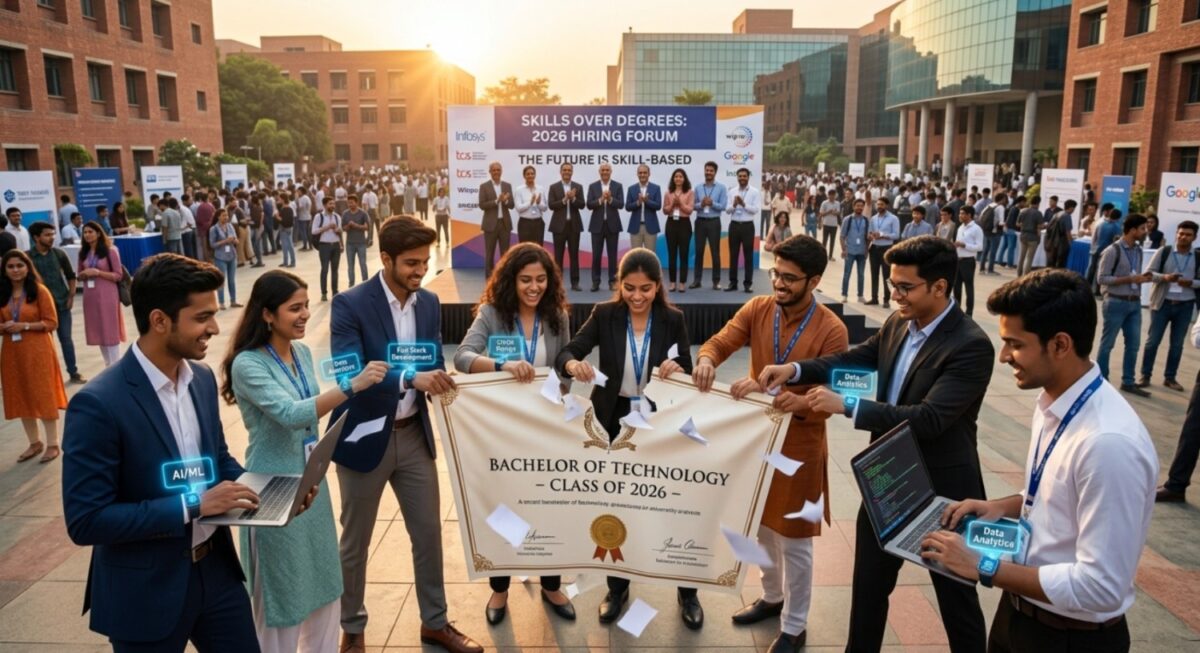
Out front, skill-based hiring grabs attention in college job drives, shoving old diploma rules aside. Talent scouts at leading companies look hard at what applicants can perform never mind their coursework. By 2026, change arrives fast because missing abilities leave high-tier grads shaky when work gets tough.
The Rise of Practical Assessments
Fancy degrees don’t guarantee jobs like they once did. Instead, firms such as Infosys and TCS now test students with real-time coding tasks, hackathons, and simulated projects when visiting campuses. According to a fresh Deloitte report, seven out of ten hiring managers in India care more about proven abilities than marks on transcripts. Take one graduate from IIT Delhi his path into Flipkart opened after mastering a two-day challenge building an app, showing actual performance often outweighs certificates.
Why Degrees Matter Less Now
Every year, India produces vast numbers of college graduates, though fewer than half are seen as job-ready, according to data from ManpowerGroup. Because memorization dominates classrooms, many say students lack the flexibility needed when machines reshape work. Even so, companies including Google and Microsoft growing fast within India are turning to tools like HackerRank during campus drives. By testing actual skills, these systems open doors: newcomers from lesser-known schools can stand equal with those from elite institutes once they show what they can do.
Tech Leads the Change
Out front are big tech firms, yet banking and stores aren’t far behind. Take HDFC Bank they’ve launched fast-track training for data jobs, ignoring traditional degrees altogether. Come 2026, around six out of ten new graduates hired may land roles through skill tests, powered by smart monitoring software. It goes beyond speed this shift prepares workforces for constant change in how tech evolves.
Challenges Ahead
Things do not always go smoothly. While smaller colleges face challenges in setting up proper evaluation systems, concerns also surface about unfairness in machine-based grading. Even so, national efforts such as the National Credit Framework are working to recognize skills just like academic qualifications. As these approaches evolve, hiring teams need to adjust them carefully, keeping a balance between equal opportunity and real achievement.
Out here, college job fairs run on real ability grades fade when actual talent steps in. What matters grows clear once you watch who gets picked: proof of skill beats paper every time.
Frequently Asked Questions
Why are companies focusing more on skills than degrees in 2026?
Companies are prioritizing skills because practical abilities better reflect a candidate’s readiness for real-world work. Through coding tests, project-based assessments, and problem-solving exercises, employers can identify candidates who can contribute immediately, regardless of their academic background.
What is skill-based hiring?
Skill-based hiring is a recruitment approach where employers evaluate candidates based on their practical knowledge, technical abilities, and real-world performance instead of relying mainly on academic degrees or grades.
How does skill-based hiring benefit college students?
Skill-based hiring gives students the opportunity to prove their abilities through projects, coding challenges, internships, and certifications. It allows talented candidates from any college to compete on equal terms with graduates from prestigious institutions.
Are college degrees becoming irrelevant?
No. Degrees still provide a strong educational foundation and remain important for many careers. However, employers increasingly expect graduates to complement their degrees with practical skills and hands-on experience.
In skills-based hiring what recruiters looking for during campus placements?
Recruiters commonly seek technical expertise, problem-solving ability, communication skills, teamwork, adaptability, critical thinking, and proficiency with industry-relevant tools and technologies.
How can students prepare for skill-based hiring assessments?
Students should practice coding challenges, build personal projects, participate in hackathons, complete internships, earn relevant certifications, and regularly solve real-world problems to strengthen their practical abilities that how student can prepare for skill-based hiring
Why are coding assessments becoming common in campus recruitment?
Coding assessments allow employers to evaluate a candidate’s programming knowledge, logical thinking, and problem-solving skills in a standardized and objective way before making hiring decisions.
Can students from smaller colleges succeed in campus recruitment?
Yes. Skill-based hiring assessments give students from smaller or lesser-known colleges the opportunity to compete fairly by demonstrating their abilities instead of relying solely on the reputation of their institution.
How are internships helping students become more employable?
Internships provide practical work experience, improve technical and professional skills, and help students understand industry expectations, making them stronger candidates during campus placements.
Which industries are adopting skill-based hiring the fastest?
Technology companies are leading the shift, followed by industries such as banking, e-commerce, consulting, financial services, and digital businesses that value practical skills and continuous learning.
What role do online assessment platforms play in recruitment?
Online assessment platforms help employers evaluate technical skills, aptitude, coding ability, and problem-solving performance efficiently while ensuring a consistent hiring process for large numbers of candidates.
What challenges does skill-based hiring present?
Some challenges include ensuring fair assessments, reducing bias in automated evaluation systems, providing equal access to training resources, and helping educational institutions adapt to changing hiring expectations.
Citations & References
Deloitte. (2025). India Talent Outlook Report. deloitte.com/in
ManpowerGroup. (2025). India Employment Outlook Survey. manpowergroup.co.in
Economic Times. (2026, Jan 15). “Skill-First Hiring Reshapes Campus Placements.” economictimes.indiatimes.com
OpenAI DALL-E Usage Policy.
Google Gemini Terms for Generated Images.
Transform Your Brand’s Engagement with India’s Youth
Drive massive brand engagement with 10 million+ college students across 3,000+ premier institutions, both online and offline. EvePaper is India’s leading youth marketing consultancy, connecting brands with the next generation of consumers through innovative, engagement-driven campaigns. Know More.
Mail us at [email protected]
Connect Your Brand with Gen-Z
Unlock high-impact youth marketing strategies with EvePaper.
Book Strategy Call