
6 High-Impact Educational Resources for Regional Language Exam Aspirants
Published: August 31, 2026
Key Strategy Takeaways
- Regional-language educational resources can make exam preparation more accessible by helping aspirants understand complex concepts in their preferred language.
- Using reliable study materials, practice resources, and language-specific learning platforms can help aspirants improve their preparation and perform more confidently in competitive exams.
Key Strategy Takeaways
- Regional-language educational resources can make exam preparation more accessible by helping aspirants understand complex concepts in their preferred language.
- Using reliable study materials, practice resources, and language-specific learning platforms can help aspirants improve their preparation and perform more confidently in competitive exams.
If you talk to exam-readiness platforms right now, one piece of advice keeps coming up for 2026 aspirants: stop planning forward from today and start planning backward from your exam date. It’s a small shift in thinking, but it changes everything about how a study calendar gets built, especially for students relying on Regional language resources for their prep. For anyone doing serious Vernacular preparation, pairing that reverse-calendar habit with the right resources makes a real difference, so here are six that are genuinely worth your time.
1. DIKSHA — The Resource Most Students Overlook
DIKSHA, built by the Ministry of Education and maintained by NCERT, is completely free and supports over 30 regional languages, including Hindi, Bengali, Tamil, Telugu, and Marathi. What makes it stand out is that the content isn’t some generic translation job, it’s built directly by state education departments and NCERT, so the quality holds up. If you’re studying in a regional-language medium and haven’t checked this out yet, it’s genuinely one of the strongest free options sitting right there, mostly unused.
2. Entri — Built Specifically for Vernacular Learners
Entri has positioned itself as one of the most dedicated vernacular-focused platforms out there, aimed squarely at students whose first language is Malayalam, Tamil, Telugu, Kannada, or Hindi. The pitch is simple but it matters: for a lot of learners, the real barrier to competitive exams isn’t discipline or access, it’s language, and good content in English doesn’t replace the confidence that comes from understanding something in your own mother tongue.
3. Hindi-Medium Platforms Like Khan Global Studies
For Hindi-medium aspirants specifically, platforms like Khan Global Studies have built a strong following by delivering government exam prep, current affairs, and general studies content entirely in Hindi, with an easy-to-follow teaching style. If you’re prepping for SSC, State PCS, Railways, or similar government exams and English-medium content has been slowing you down, this kind of resource closes that gap without watering down the material.
4. Bilingual NCERT Textbooks and a Personal Glossary
For science-heavy exams like NEET and JEE, students using regional-medium textbooks are increasingly advised to build a bilingual glossary alongside their regular study, spending fifteen to twenty minutes a day translating key scientific terms between their regional language and English. This matters because official answer keys and a chunk of reference material still lean English-heavy, so having that translation muscle built up in advance saves real time and confusion on exam day.
5. Practicing With the Actual Official-Language Papers
It’s easy to forget how many major exams already offer full regional-language versions. CUET 2026 runs in 13 languages, NEET UG 2026 offers 13 language options with bilingual test booklets, and AIBE goes even further with 23 Indian languages. The smartest move is to actually practice with sample papers in your chosen exam language rather than switching to English mocks and translating in your head, since that mental switch under time pressure is exactly what trips people up on the real day.
6. Reverse-Calendar Planning Tools and Templates
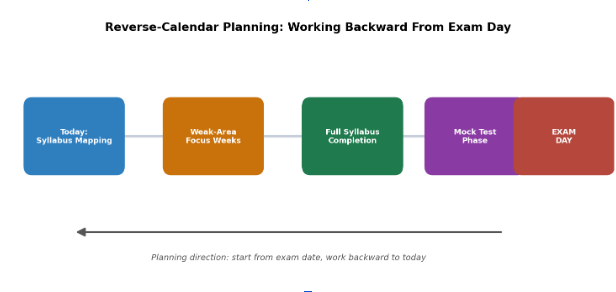
This is the piece tying everything together. Instead of starting from today and hoping the syllabus gets finished in time, reverse-calendar planning starts at the exam date and works backward: two to three weeks for final revision, four to six weeks of full mock tests before that, syllabus completion locked in before the mock phase begins, and weak-area focus sessions built into the earliest weeks once a first mock has flagged the gaps. Several exam-prep platforms now offer templates built exactly this way, and pairing one of these with regional-language study material keeps both your content and your timeline working in sync instead of fighting each other.
Conclusion
None of these six resources work in isolation, and that’s really the point. A free platform like DIKSHA or a dedicated app like Entri gives you strong regional-language content, bilingual glossary work and official-language mock papers get you exam-ready in the language you’ll actually be tested in, and reverse-calendar planning makes sure all of that gets covered with enough runway before exam day instead of turning into a last-minute scramble. For regional-language aspirants especially, that combination of the right resource and the right structure is doing a lot more heavy lifting than most students give it credit for.
Key Takeaways
- Reverse-calendar planning, building a study schedule backward from exam day, has become standard advice for 2026 aspirants across major competitive exams.
- DIKSHA offers free, NCERT-built content in over 30 regional languages and remains one of the most underused resources available.
- Entri is built specifically for vernacular learners in Malayalam, Tamil, Telugu, Kannada, and Hindi.
- Hindi-medium platforms like Khan Global Studies help close the gap for government exam aspirants who struggle with English-heavy content.
- Building a bilingual glossary daily helps regional-medium students bridge the gap for English-heavy answer keys in science exams.
- Major exams including CUET (13 languages), NEET UG (13 languages), and AIBE (23 languages) offer official regional-language papers worth practicing with directly.
References
[1] Entri, “Best Online Learning Platforms in India 2026: Where to Learn in Your Language, Crack Exams & Upskill Properly.” [Online]. Available: https://entri.app/
[2] Learnox, “Best Online Classes App For Students India 2026.” [Online]. Available: https://learnox.in/
[3] Tayari24, “10 Best Exam Preparation Apps for Competitive Exams 2026.” [Online]. Available: https://tayari24.com/
[4] PW Live, “Medium of Question Paper in NEET UG 2026: Language Options.” [Online]. Available: https://www.pw.live/
[5] TopRankers, “AIBE 2026 Languages: List of Mediums Available for AIBE Exam.” [Online]. Available: https://www.toprankers.com/
[6] CUETPro, “CUET 2026 Study Plan & Preparation Strategy: Ultimate Guide.” [Online]. Available: https://cuetpro.com/
Frequently Asked Questions
1. Why are regional-language educational resources important for exam aspirants?
Regional-language resources can make complex concepts easier to understand by allowing students to learn in a language they are more comfortable with.
2. What are regional-language educational resources?
They include study materials, online courses, video lectures, practice tests, books, and other learning content available in languages other than English.
3. Can students prepare for competitive exams in regional languages?
Yes. Many competitive examinations provide language options, and students can use regional-language resources to support their preparation depending on the examination’s language rules.
4. How can regional-language study materials improve exam preparation?
They can help students understand concepts more clearly, reduce language-related difficulties, and allow them to focus more effectively on the subject matter.
5. What types of educational resources are available in regional languages?
Aspirants can find textbooks, video lectures, online courses, mock tests, previous-year papers, practice questions, study notes, and educational apps in various regional languages.
6. Are regional-language resources useful for beginners?
Yes. Beginners can benefit from learning fundamental concepts in a familiar language before progressing to more advanced topics and exam-specific material.
7. Can online educational platforms support regional-language learning?
Yes. Many online educational platforms offer lectures, courses, study materials, and practice resources in multiple Indian languages.
8. How can students choose reliable regional-language study materials?
Students should check the credibility of the educator or platform, the accuracy of the content, syllabus coverage, learner reviews, and whether the material is updated according to the latest exam pattern.
9. Are regional-language mock tests useful for competitive exams?
Yes. Regional-language mock tests can provide practice while helping students become comfortable with questions and instructions in their preferred language.
10. Can regional-language resources help students from rural areas?
Yes. Accessible regional-language resources can reduce language barriers and provide students from different regions with additional opportunities to access educational content.
11. Should aspirants use only regional-language resources?
Not necessarily. Aspirants can combine regional-language resources with English or other resources when useful, particularly when official exam material or advanced reference content is available in another language.
12. How can educational apps help regional-language exam aspirants?
Educational apps can provide convenient access to video lessons, practice questions, mock tests, study notes, and performance tracking in regional languages.
13. How can students improve their preparation using regional-language resources?
Students can create a consistent study schedule, use reliable learning materials, practise regularly, take mock tests, and review mistakes to strengthen their preparation.
14. Are regional-language resources suitable for all competitive exams?
Their usefulness depends on the specific examination. Aspirants should check the official exam guidelines to understand the available language options and requirements.
15. What is the biggest advantage of regional-language educational resources?
The biggest advantage is improved accessibility. Learning difficult concepts in a familiar language can help aspirants understand subjects more comfortably and approach their exam preparation with greater confidence.
Citations & References
[1] Entri, “Best Online Learning Platforms in India 2026: Where to Learn in Your Language, Crack Exams & Upskill Properly.” [Online]. Available: https://entri.app/
[2] Learnox, “Best Online Classes App For Students India 2026.” [Online]. Available: https://learnox.in/
[3] Tayari24, “10 Best Exam Preparation Apps for Competitive Exams 2026.” [Online]. Available: https://tayari24.com/
[4] PW Live, “Medium of Question Paper in NEET UG 2026: Language Options.” [Online]. Available: https://www.pw.live/
[5] TopRankers, “AIBE 2026 Languages: List of Mediums Available for AIBE Exam.” [Online]. Available: https://www.toprankers.com/
[6] CUETPro, “CUET 2026 Study Plan & Preparation Strategy: Ultimate Guide.” [Online]. Available: https://cuetpro.com/
Editorial Verification
Penned By: Aditya Bhardwaj, RESEARCH TEAM
Reviewed By: Divyanshu Tiwari
Connect Your Brand with Gen-Z
Unlock high-impact youth marketing strategies with EvePaper.
Book Strategy Call