
Why Elective Choices Quietly Shape Career Alignment
Published: August 30, 2026
Key Strategy Takeaways
- Elective courses can help students explore interests and discover skills beyond their core academic subjects.
- Choose subjects based on the skills and practical experience they can provide, not just convenience.
- Hands-on projects can help students understand whether they enjoy technical, analytical, creative, or people-focused work.
- Continuing with a subject over multiple years can demonstrate consistency, commitment, and deeper interest.
- Keeping track of projects and achievements can help students build a useful portfolio for future opportunities.
- Avoid selecting subjects only because friends are taking them or because they seem easier.
- Give yourself room to explore, but be willing to commit to areas that genuinely interest you.
- Reviewing what you gained from each course can make future academic choices more purposeful.
Key Strategy Takeaways
- Elective courses can help students explore interests and discover skills beyond their core academic subjects.
- Choose subjects based on the skills and practical experience they can provide, not just convenience.
- Hands-on projects can help students understand whether they enjoy technical, analytical, creative, or people-focused work.
- Continuing with a subject over multiple years can demonstrate consistency, commitment, and deeper interest.
- Keeping track of projects and achievements can help students build a useful portfolio for future opportunities.
- Avoid selecting subjects only because friends are taking them or because they seem easier.
- Give yourself room to explore, but be willing to commit to areas that genuinely interest you.
- Reviewing what you gained from each course can make future academic choices more purposeful.
When the time comes to select electives, the way students choose them is like a lunch table, whatever group is already sitting there. A friend is in the class, the time coincides with a convenient bus stop, or the class is considered the easiest. None of these are incorrect. It’s just a choice that has nothing to do with future direction, even when electives are a treasured morsel of free time during school.
II. WHAT GETS LOST
Course catalogues don’t really help that much. Descriptions are just sales pitches, never telling students what they will be able to do later on. Advisers are overworked to give proper individualized guidance. That’s why convenience is more often a choice than curiosity, until one is forced into a college essay or job interview that looks for a pattern without any foundation.
III. ALIGNMENT IS NOT CERTAINTY
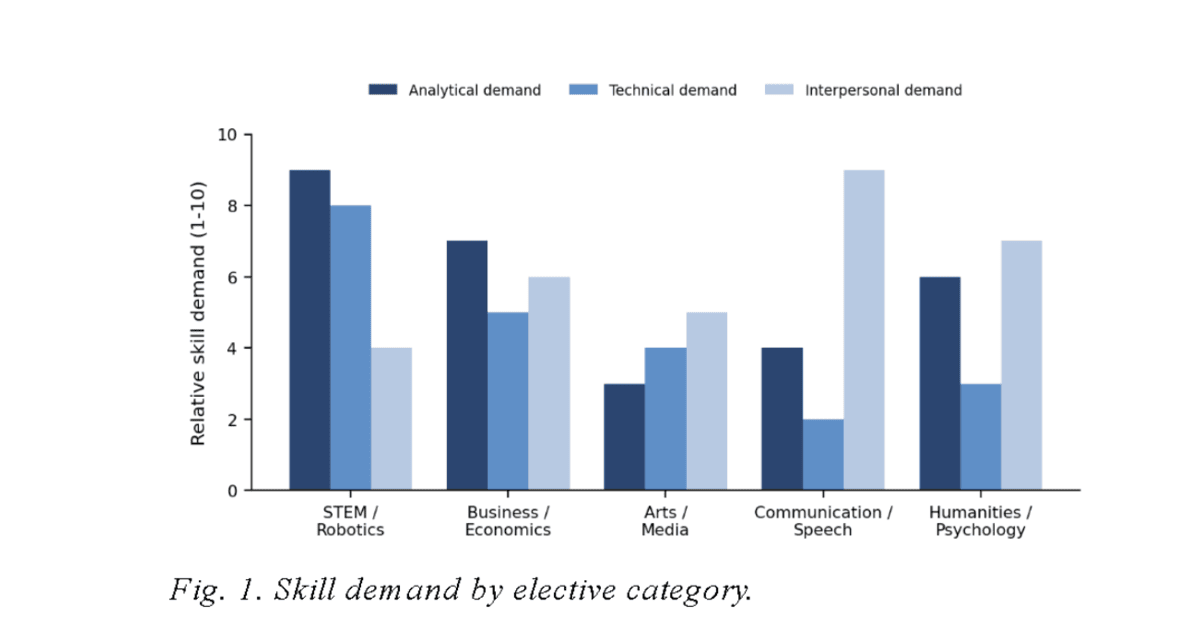
No one anticipates for a fifteen, year, old that they will already have a career in mind. But what works is even better: hands on experiences and tangible results, similar to a robotics class that calls for the student to get through the whole problem without stopping to complete it in a half hour. That is way more relatable to a regular day for a software engineer than any lecture. The material itself is less important than the thought process it engenders, either analytical, technical, imaginative or a people oriented style.
IV. A SHORT, REPEATABLE PROCESS
Three habits make the difference each registration cycle. First, ask what a course leaves you able to do, not what sounds fun; a portfolio outlasts a final exam nobody remembers. Second, choose depth on purpose. A subject taken across two or three years reads as persistence, a trait both admissions committees and hiring managers notice. Third, keep a record of what got built. Grades fade. A working project does not.
V. WHERE ADVICE GOES WRONG
Loading a schedule with rigor for its own sake, copying a friend’s course list, and treating openness as an excuse to never choose all produce the same flat transcript. A little exploration is healthy. Refusing to ever commit, even provisionally, is not.
VI. CONCLUSION
Electives were never filler. They are the part of school where trial and error is cheap, and the feedback is real. The catalog reopens every semester. What separates a wasted slot from a useful one is whether anyone paid attention to the pattern it revealed.
REFERENCES
[1] ASVAB Career Exploration Program – Pathways to Success : Career-Focused Electives.
[2] BigFuture, College Board – How to Choose High School Electives.
[3] College Essay Guy – CEG’s Ultimate Guide for Choosing Your High School Courses.
[4] Excel High School – Choosing the Right Elective Classes.
[5] PrepScholar – Complete List of High School Electives.
Frequently Asked Questions
1. What are elective courses?
Elective courses are subjects that students can choose based on their interests, skills, and academic or career goals rather than being mandatory subjects.
2. Why are elective courses important for students?
They give students an opportunity to explore different interests, develop new skills, and learn about subjects that may connect with their future goals.
3. How should students choose elective courses?
Students should consider their interests, strengths, career possibilities, workload, and the practical skills they can gain from each course.
4. Should students choose elective courses based on their friends?
Friends can influence a decision, but students should prioritize their own interests and goals rather than selecting a course simply because someone they know is taking it.
5. Can elective courses help students discover career interests?
Yes. Exploring different subjects can give students practical exposure and help them identify areas they may want to pursue in higher education or a career.
6. Do elective courses affect college admissions?
They can contribute to a student’s overall academic profile, particularly when the selected subjects demonstrate genuine interest, consistency, and alignment with future academic goals.
7. Are difficult elective courses always better?
Not necessarily. A challenging course is valuable when it matches a student’s interests and abilities. Choosing difficult subjects simply to appear rigorous may not provide meaningful benefits.
8. Can elective courses help students build practical skills?
Yes. Courses involving projects, experiments, presentations, coding, design, or other hands-on activities can help students develop skills they can apply outside the classroom.
9. Should students take the same elective for multiple years?
Continuing with a subject can demonstrate commitment and allow students to develop deeper knowledge, especially when they genuinely enjoy the area.
10. Can elective courses help students build a portfolio?
Yes. Projects, designs, research work, presentations, and other assignments can become useful examples of a student’s abilities and progress.
11. What should students consider besides the course title?
Students should look at the syllabus, practical assignments, skills taught, workload, assessment methods, and what they will actually be able to do after completing the course.
12. Should students choose easy elective courses?
An easier course can be appropriate depending on a student’s circumstances, but choosing solely for an easy grade may limit opportunities to develop useful skills.
13. How many elective courses should a student take?
The ideal number depends on the school’s requirements, available options, workload, and the student’s interests. Quality and meaningful participation are more important than simply taking many courses.
14. Can elective courses improve a student’s confidence?
Yes. Successfully completing projects, presentations, experiments, or other activities can help students become more comfortable applying their skills and sharing their ideas.
15. How can students make better elective choices each year?
Students can review what they enjoyed, what skills they developed, what they created, and what they want to explore next before making their next course selection.
Citations & References
[1] ASVAB Career Exploration Program – Pathways to Success : Career-Focused Electives.
[2] BigFuture, College Board – How to Choose High School Electives.
[3] College Essay Guy – CEG’s Ultimate Guide for Choosing Your High School Courses.
[4] Excel High School – Choosing the Right Elective Classes.
[5] PrepScholar – Complete List of High School Electives.
Connect Your Brand with Gen-Z
Unlock high-impact youth marketing strategies with EvePaper.
Book Strategy Call