
Cash Flow versus Revenue: Why Actual Money Wins Over Profits in Growing Companies
Published: September 22, 2026
Key Strategy Takeaways
- Monitor cash flow alongside revenue to understand the true financial position of a growing company.
- Remember that rising revenue does not always mean there is enough cash available to operate the business.
- Track the timing difference between earning revenue and receiving cash from customers.
- Convert sales into actual cash quickly to maintain healthy cash flow.
- Use cash-flow forecasts to prepare for future business expenses.
- Monitor customer payment cycles to reduce delays between revenue generation and cash collection.
- Avoid assuming that strong revenue automatically means strong financial health.
- Maintain sufficient working capital when revenue is growing rapidly.
- Watch for cash gaps caused by increasing sales and delayed customer payments.
- Understand how rapid revenue growth can increase the amount of cash required to operate.
- Manage inventory carefully so it does not unnecessarily tie up cash flow.
- Review accounts receivable regularly to improve cash collection.
- Set clear payment terms to support predictable cash flow.
- Follow up promptly on overdue invoices to turn outstanding revenue into cash.
- Forecast payroll, supplier payments, rent, and other expenses alongside expected revenue.
- Avoid excessive borrowing simply to cover temporary cash shortages.
- Use positive operating cash flow to support sustainable expansion.
- Evaluate growth plans based on both expected revenue and available cash.
- Monitor whether increasing revenue is actually generating enough cash to fund expansion.
- Maintain a cash reserve to handle unexpected expenses and market changes.
- Negotiate practical supplier payment terms to improve cash flow.
- Consider customer payment terms when evaluating the profitability of new contracts.
- Identify products or services that generate strong revenue but create cash-flow pressure.
- Track cash conversion to understand how efficiently sales become available funds.
- Use monthly cash-flow statements to identify financial pressure early.
- Distinguish between accounting revenue and money actually received by the business.
- Avoid measuring business success using revenue alone.
- Analyze operating cash flow to understand whether core activities are financially sustainable.
- Plan inventory purchases according to expected sales and available cash flow.
- Ensure rapid revenue growth does not outpace working-capital capacity.
- Use realistic sales forecasts when preparing cash flow projections.
- Review large customer contracts for their impact on payment timing and cash flow.
- Maintain financial flexibility by balancing revenue growth with cash availability.
- Use strong cash flow to reduce dependence on expensive short-term financing.
- Monitor expenses as revenue increases to prevent growth from creating unnecessary financial pressure.
- Compare expected and actual cash flow regularly to improve financial planning.
- Build systems that make invoicing and payment collection faster as revenue grows.
- Treat cash management as an essential part of scaling a business.
- Use revenue data to measure demand and cash flow data to assess financial sustainability.
- Focus on converting sustainable revenue into reliable cash flow for long-term business stability.
Key Strategy Takeaways
- Monitor cash flow alongside revenue to understand the true financial position of a growing company.
- Remember that rising revenue does not always mean there is enough cash available to operate the business.
- Track the timing difference between earning revenue and receiving cash from customers.
- Convert sales into actual cash quickly to maintain healthy cash flow.
- Use cash-flow forecasts to prepare for future business expenses.
- Monitor customer payment cycles to reduce delays between revenue generation and cash collection.
- Avoid assuming that strong revenue automatically means strong financial health.
- Maintain sufficient working capital when revenue is growing rapidly.
- Watch for cash gaps caused by increasing sales and delayed customer payments.
- Understand how rapid revenue growth can increase the amount of cash required to operate.
- Manage inventory carefully so it does not unnecessarily tie up cash flow.
- Review accounts receivable regularly to improve cash collection.
- Set clear payment terms to support predictable cash flow.
- Follow up promptly on overdue invoices to turn outstanding revenue into cash.
- Forecast payroll, supplier payments, rent, and other expenses alongside expected revenue.
- Avoid excessive borrowing simply to cover temporary cash shortages.
- Use positive operating cash flow to support sustainable expansion.
- Evaluate growth plans based on both expected revenue and available cash.
- Monitor whether increasing revenue is actually generating enough cash to fund expansion.
- Maintain a cash reserve to handle unexpected expenses and market changes.
- Negotiate practical supplier payment terms to improve cash flow.
- Consider customer payment terms when evaluating the profitability of new contracts.
- Identify products or services that generate strong revenue but create cash-flow pressure.
- Track cash conversion to understand how efficiently sales become available funds.
- Use monthly cash-flow statements to identify financial pressure early.
- Distinguish between accounting revenue and money actually received by the business.
- Avoid measuring business success using revenue alone.
- Analyze operating cash flow to understand whether core activities are financially sustainable.
- Plan inventory purchases according to expected sales and available cash flow.
- Ensure rapid revenue growth does not outpace working-capital capacity.
- Use realistic sales forecasts when preparing cash flow projections.
- Review large customer contracts for their impact on payment timing and cash flow.
- Maintain financial flexibility by balancing revenue growth with cash availability.
- Use strong cash flow to reduce dependence on expensive short-term financing.
- Monitor expenses as revenue increases to prevent growth from creating unnecessary financial pressure.
- Compare expected and actual cash flow regularly to improve financial planning.
- Build systems that make invoicing and payment collection faster as revenue grows.
- Treat cash management as an essential part of scaling a business.
- Use revenue data to measure demand and cash flow data to assess financial sustainability.
- Focus on converting sustainable revenue into reliable cash flow for long-term business stability.
Cash Flow versus Revenue: Why Actual Money Wins Over Profits in Growing Companies
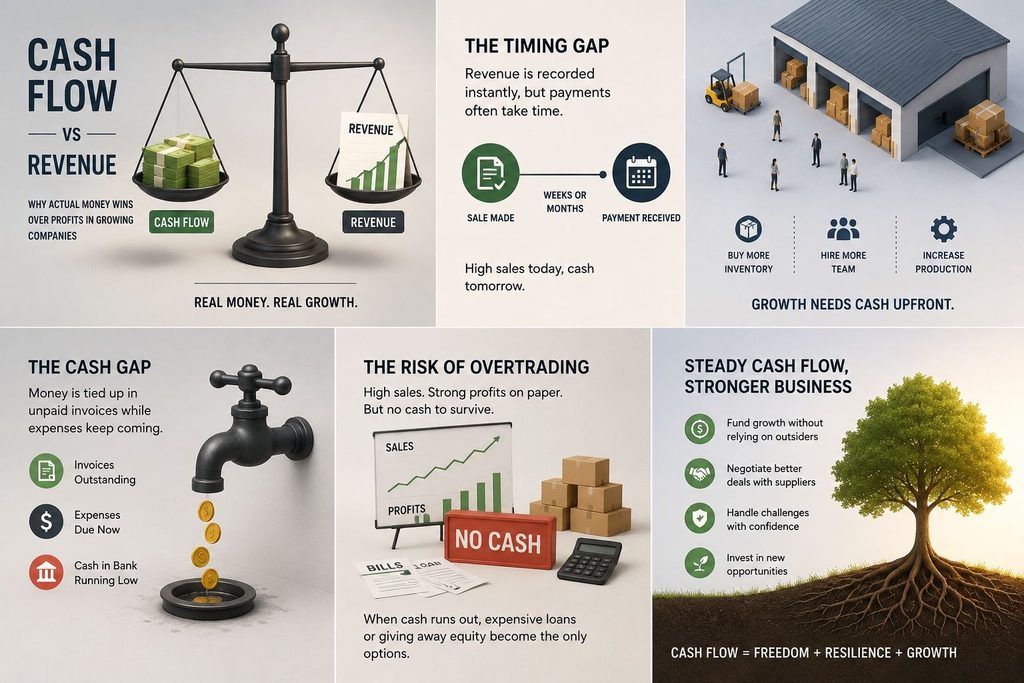
When a company is growing quickly, revenue usually gets all the focus. Sales numbers and rising top-line results often judge success. Behind many exciting growth stories is a hidden truth: revenue alone does not keep the business running. Cash flow the movement of money in and out of bank accounts is what keeps a growing company stable, strong, and ready for long-term success.
The main problem is the time difference between making a sale and getting the money. With accounting rules, revenue is recorded as soon as a deal is made or a service is provided. In real life, customers often take weeks or even months to pay their bills. When orders increase quickly, a company needs cash away buying more stock, hiring more people, and increasing production to meet demand. This situation creates a cash gap, leaving a company with high sales numbers on paper but little money in the bank waiting for payments to come in.
This difference often leads to a problem called overtrading. Growing a business needs money up front. Landlords, electricity companies, and workers do not accept promises of money or unpaid invoices; they need real cash now. A company can be very popular. Show profits on a financial statement but still fail because it ran out of money before customers paid. When money runs out, growing companies often have to take expensive loans or give away company shares just to stay afloat.
Steady cash flow gives freedom to run a business. When a company makes cash from its main activities, it can expand without depending on outside investors or too much debt. It also has the power to get better prices from suppliers, handle sudden market changes, and invest in new chances as they appear. Watching how quickly money comes in from customers ensures that sales are turning into money instead of just numbers on a page.
Revenue shows that customers like what a company sells, but cash flow makes sure the company stays alive enough to meet that demand. While sales numbers show how much people want a product, real financial strength comes from handling money. For any company that wants to grow, making sales is only part of the job. Converting those sales into real cash is what keeps the business going.


Frequently Asked Questions
- What is the difference between cash flow and revenue?
- Why is cash flow important for growing companies?
- How can a company have high revenue but low cash flow?
- What causes a cash gap between making a sale and receiving payment?
- What is overtrading, and how can it affect a growing business?
- Why do growing companies need cash upfront?
- How can delayed customer payments affect business operations?
- How does steady cash flow reduce dependence on loans and investors?
- Why is converting sales into cash important for business growth?
- How can companies improve their cash flow while increasing revenue?
Connect Your Brand with Gen-Z
Unlock high-impact youth marketing strategies with EvePaper.
Book Strategy Call