
Why Community-Based Marketing Is Growing Among Student and Youth Brands
Published: October 8, 2026
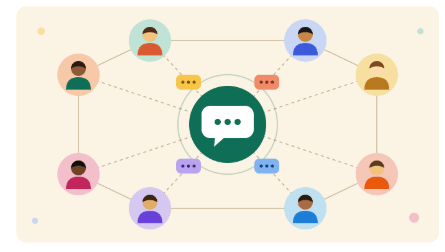
sustainable marketing
Student and youth brands are moving toward community because ads cost more and target worse, friends get trusted over campaigns, and a lot of young people want somewhere to belong, not just something to buy. This piece covers why that’s happening, the forms it takes, and what Glossier, Gymshark, Notion, Internshala and Midjourney actually did with it. Then it gets into what works, what quietly wrecks these efforts, and a framework a small team can run without a budget. The takeaway: community isn’t a channel you turn on. It’s a reason for people to keep showing up, and you need that reason before you promote anything.
Open any college fest sponsor deck or founder thread and you’ll see the word “community” about forty times. Every brand wants one. Most of them mean a WhatsApp group where a discount code goes to die.
That gap is what’s worth looking at. Done properly, community marketing beats a lot of the old playbook for brands aimed at students and young people, and the reasons are pretty concrete. Once you see them, you can tell who’s doing the real thing and who’s just borrowing the word.
Here’s the route: why it’s growing, what shapes it takes, a few brands worth copying (and one worth learning from), then what works, what breaks, and a checklist you can use this week.
Why this is happening now
Ads got expensive and blurrier
Apple’s App Tracking Transparency feature was introduced in iOS 14.5 in April 2021. It significantly complicated the tracking process of users across different apps. As a result, the targeting process within Meta networks became more difficult, while the cost of targeting small business owners increased. Such companies, which usually bid with a small budget against big businesses, are forced to compete for a second of user attention. You don’t win that by spending more. You mostly just lose slower.
Peers beat polish
A friend saying “this app saved my finals” does more than any banner. That’s not new, but feeds have made it louder. Community marketing is really a way of making sure that friend exists and has something to say.
Belonging became part of the product
A hoodie, a study app, a running kit: they all tell people who you hang out with. Give someone a group along with the product and you get a loyalty that a 15% coupon can’t buy. Discounts get you a purchase. A group gets you a Sunday morning.
Money matters too. If you’re bootstrapped, community costs time and attention, and students and early founders happen to have plenty of both. It’s one of the rare cases where being small is an actual edge.
Community versus influencers
People mix these up constantly, so it’s worth pulling them apart. Influencer marketing rents someone else’s audience for a moment. Community marketing builds your own, slowly, and it talks back.
The rented audience is faster, no question. But when the post goes quiet, so does the traffic. A community keeps generating reviews, referrals and ideas long after you’ve stopped posting, which is why the smartest brands use creators to start a community, not to replace one.
The shapes it takes
There’s no single template. Most of what you’ll see is a mix of these:
- Ambassador and campus programs, where students represent the brand locally, run small events and send feedback back up. Red Bull’s student brand manager setup is the old-school version.
- Owned spaces like Discord, Telegram, Slack or WhatsApp (which added a Communities feature in 2022). Cheap to start, and dead within a month if nobody tends them.
- Meetups. Run clubs, workshops, a stall at a fest. Slow and hard to scale, which is exactly why it works.
- Co-creation, where fans vote on colours, test prototypes and write the reviews. People defend things they helped make.
- Community as the product itself.
Good brands blend two or three. Nobody sensible tries all five.
Brands worth studying
Glossier
Emily Weiss started the blog Into The Gloss in 2010, and Glossier didn’t launch until 2014. By then she had years of readers telling her in the comments what they liked and what annoyed them. Glossier kept that habit going with heavy customer feedback, a rep programme for fans and a lot of visible listening on social. Launching to people who already trust you skips the priciest part of launching.
Gymshark
Ben Francis launched the brand in 2012 while he was still studying in Birmingham. It started small, as he would send products to fitness YouTubers and gym enthusiasts with an existing following. The company was built around the image of a community-focused sportswear label. Those athletes felt like crew and not billboards, and you could see the difference on camera. Events and challenges came later, to keep the crowd close.
Notion
Free upgraded plans go to anyone with a student email, and a Campus Leaders programme lets students host workshops and share templates. People love showing off how they’ve set up their notes, so the product spreads on its own. Every shared template is a small ad that nobody had to write.
Internshala and Midjourney
Internshala’s Student Partner programme puts students on campuses as local reps, with certificates and perks for bringing others in. It’s simple, and it fits how student networks in India already work. Midjourney went the opposite way and lives largely inside Discord, where you generate images in shared channels and watch everyone else’s. Onboarding and marketing are the same thing there, which is kind of brilliant.
Online or offline?
Depends where your people already are. If your audience lives in group chats, start in a group chat. If they live on campus, start with a table and a chair. The mistake is picking the place you’d like to run, not the place they already gather.
Offline is slower and stickier. Online scales but is easier to leave. A lot of the best setups use one to feed the other: meet at a fest, keep talking on Discord, meet again at the next one.
What works
Start smaller than feels sensible
Forty people interested in the same thing beats 4,000 who signed up for something you threw out there. Maybe go after a niche audience like first year design students or people training for their first 10K. Small groups develop inside jokes, and inside jokes are the glue.
Give status, not only discounts
If the reward is 10% off, you’ve created a coupon. Early access, a title, a vote on the next product your company makes, and having your name appear in the credits make someone feel like they’re an insider. It’s a little funny how hard people are willing to work for a title, but it’s true.
Turn up in person
A founder at a college stall, or a chai-and-feedback evening with twenty customers, builds trust no post can fake. You’ll also hear things face to face that nobody would ever type into a form. Bring a notebook.
Get members talking to each other
When every conversation runs through your brand account, you’ve built a help desk. The good stuff starts when members answer each other’s questions without you. So introduce people, ask open questions, and then get out of the way.
Make the first ten minutes easy
Newcomers make up their mind fast about a space. A few seconds, a brief welcome message, a link to a starting guide, and a single action to perform (announce yourself, describe your environment) can matter. The most common reason communities dry up isn’t that people stop joining — it’s that people who joined never speak.
Say out loud when you listened
Changed something because a member asked? Announce it. It costs nothing, and everyone else learns their voice counts.
Common pitfalls
- Broadcasting. If nine in ten messages are promos, people mute you. That’s it, that’s the whole failure.
- Opening the space before there is a reason to be in it. Clubhouse is the cautionary tale, with the invite only buzz in early 2021 proving incredibly valuable but falling off rapidly when the novelty wore off and there was little else to engage users with.
- Ignoring the mood. Glossier again, on the other side of the coin. In 2020 criticism of the company from former staff and customers about its workplace culture and racial insensitivities spread through the same channels as their marketing and Weiss stepped down as CEO in 2022. Ownership cuts both ways, if people feel a connection to a brand they will hold it to account if it fails to meet their expectations and that’s healthy if you have the capacity to take that on.
- Free labour for a t-shirt. Ambassador programmes which demand a lot and give very little back quickly sour and the people you burned tend to make the most noise.
- Counting only heads. Member count is a vanity metric, look at replies, repeat attendance, word of mouth and the ratio of people who turn up without being prompted.
- Everything at once. Three platforms, two ambassador tiers and a regular monthly meet up all run by one person are a recipe for an exit by month two.
A practical framework you can actually use
Picture a hypothetical notes app for engineering students. Here’s how the steps would look for it.
- Define one group. Write it in a single sentence, like “second-year engineering students who want side projects.” If you can’t, you’re not ready.
- Name the reason to gather. A shared goal, a skill, a hobby, a problem. Here it might be “ship one small project a month.” The product supports the reason, it isn’t the reason.
- Pick one home base. Use whatever your group already uses. Don’t ask them to install something new for you.
- Recruit your first 20 by hand. DM them, invite them at events, and tell each one why you picked them. Small and personal beats big and generic every time.
- Set a rhythm. One weekly prompt, one monthly meetup or challenge. Consistency matters more than cleverness here.
- Reward participation where people can see it. Feature members, hand out titles, credit ideas by name.
- Review monthly. Who’s active, what got replies, what fell flat, what members keep asking for. Cut what isn’t working.
- Scale last. Add a second group or a campus chapter only when the first one runs on its own energy.
A quick sanity check before you start: if you vanished for two weeks, would the group keep talking? If yes, you’ve got a community. If no, you’ve got an audience, which is fine, but call it that.
20 Key Takeaways About Sustainable Marketing
- Sustainable marketing focuses on building lasting relationships with customers rather than relying only on short-term advertising campaigns.
- Community-based marketing can support sustainable marketing by creating stronger connections between brands and their audiences.
- Student and youth brands are increasingly exploring communities because traditional advertising can be expensive and less effective at building trust.
- Peer recommendations can often feel more authentic to young consumers than conventional advertising.
- Sustainable marketing is not simply about creating a community space; brands need to give people a meaningful reason to participate.
- Small, highly engaged communities can be more valuable than large audiences with little interaction.
- Campus ambassador programmes can help brands build local relationships while gathering feedback from student audiences.
- Owned communities on platforms such as WhatsApp, Discord, Telegram, or Slack can provide brands with direct relationships with their customers.
- Offline events, workshops, meetups, and campus activities can make sustainable marketing more personal and memorable.
- Co-creation allows community members to influence products, ideas, designs, and experiences, strengthening their relationship with a brand.
- Sustainable marketing should focus on participation rather than simply promotion.
- Giving community members recognition, early access, influence, or status can encourage deeper engagement than discounts alone.
- Brands should create opportunities for members to communicate with one another instead of making every interaction dependent on the brand.
- A strong onboarding experience can help new community members participate instead of becoming inactive immediately after joining.
- Brands should demonstrate when customer feedback has influenced a decision because visible listening builds trust.
- Sustainable marketing requires consistency; regular prompts, events, discussions, and activities can keep communities active.
- Measuring community health requires more than counting members; brands should examine participation, repeat engagement, referrals, and attendance.
- Over-promoting products can damage a community by turning it into a promotional channel rather than a valuable space.
- Sustainable marketing requires brands to invest in genuine relationships and provide value even when there is no immediate purchase.
- The strongest community-based sustainable marketing strategies create a reason for people to keep showing up, not merely a reason to buy once.
30 FAQs About Sustainable Marketing
1. What is sustainable marketing?
Sustainable marketing is an approach focused on creating long-term value and meaningful relationships with customers rather than relying primarily on short-term promotions and sales.
2. How does community marketing support sustainable marketing?
Community marketing builds ongoing relationships between customers and brands, which can encourage loyalty, advocacy, feedback, and repeat engagement over time.
3. Why is sustainable marketing important for student brands?
Students often respond strongly to peer recommendations, shared experiences, identity, and belonging. Sustainable marketing allows brands to build relationships around these factors instead of depending entirely on advertising.
4. Is community marketing a form of sustainable marketing?
It can be. When a community provides genuine value and continues to function beyond individual campaigns, it can become an important part of a sustainable marketing strategy.
5. Why are young consumers important for sustainable marketing?
Young consumers often interact with brands across social media, communities, events, creators, and peer networks. Building authentic relationships across these spaces can create longer-term engagement.
6. How does sustainable marketing differ from traditional advertising?
Traditional advertising often focuses on reaching customers with promotional messages, while sustainable marketing places greater emphasis on long-term relationships, trust, value, and ongoing engagement.
7. Can a small community support sustainable marketing?
Yes. A small group of highly engaged members can generate conversations, referrals, feedback, and ideas that may be more valuable than a much larger but inactive audience.
8. Why is community engagement important in sustainable marketing?
Engagement indicates that people are receiving value from the community rather than simply being passive members.
9. How can brands build sustainable communities?
Brands can begin by identifying a specific audience, defining a shared purpose, choosing an appropriate community platform, recruiting initial members personally, and creating a consistent rhythm of activities.
10. What role do campus ambassadors play in sustainable marketing?
Campus ambassadors can help brands establish local relationships, organise events, collect feedback, and introduce products to student networks.
11. Are discounts enough to build a sustainable community?
Usually not. Discounts can encourage purchases, but recognition, access, participation, influence, and belonging can provide stronger reasons for people to remain engaged.
12. How can brands make community members feel valued?
Brands can recognise members publicly, provide early access, give them meaningful roles, involve them in decisions, and clearly acknowledge their contributions.
13. Why is co-creation useful in sustainable marketing?
Co-creation allows customers to participate in developing products or experiences. This can strengthen ownership, engagement, and loyalty.
14. What is the role of peer recommendations in sustainable marketing?
Peer recommendations can make brand messages feel more authentic because people often trust experiences shared by friends and other community members.
15. How is community marketing different from influencer marketing?
Influencer marketing generally uses another person’s existing audience, while community marketing aims to develop an ongoing network of people connected to the brand or shared interest.
16. Can social media support sustainable marketing?
Yes. Social media can help maintain conversations, share community stories, encourage participation, and connect members, provided that the brand does not turn every interaction into a promotion.
17. Why should brands choose platforms their audiences already use?
Requiring people to adopt a new platform can create unnecessary friction. Sustainable marketing works better when participation is easy and takes place where the target audience already spends time.
18. How can offline events support sustainable marketing?
Meetups, workshops, campus events, clubs, and other physical activities can create deeper relationships and experiences that are difficult to replicate through advertising alone.
19. What makes a community sustainable?
A sustainable community has a clear purpose, active participation, consistent value, member-to-member interaction, and enough organic energy to continue without constant promotional activity.
20. How can brands prevent a community from becoming inactive?
Brands should establish a regular rhythm, encourage member interaction, welcome newcomers, ask useful questions, recognise contributions, and continually provide a reason to participate.
21. Why is excessive promotion bad for community marketing?
If most community messages are advertisements, members may lose interest, mute notifications, or leave because the community no longer provides value beyond selling.
22. What are the biggest mistakes in sustainable marketing?
Common mistakes include focusing only on member numbers, over-promoting products, launching communities without a clear purpose, demanding excessive unpaid work, and trying to manage too many platforms at once.
23. How should brands measure sustainable marketing?
Useful measures include engagement, repeat attendance, member conversations, referrals, word of mouth, contribution rates, retention, and the number of people who participate without being prompted.
24. Is member count a good sustainable marketing metric?
Member count alone is not enough. A community with thousands of inactive members may be less valuable than a smaller group with frequent conversations and strong participation.
25. How can brands use customer feedback in sustainable marketing?
Brands can collect feedback through conversations, events, surveys, and community discussions and then demonstrate how that feedback influenced products, services, or decisions.
26. Why is transparency important in sustainable marketing?
Communities create closer relationships between customers and brands. Being transparent about decisions, expectations, rewards, and problems helps protect that trust.
27. Can sustainable marketing work with a small budget?
Yes. Community marketing can be relatively cost-effective because it can rely on direct relationships, member participation, referrals, small events, and existing communication platforms rather than large advertising budgets.
28. How long does it take to build a sustainable brand community?
There is no fixed timeline. Sustainable communities usually develop gradually through consistent participation, trust, useful experiences, and ongoing interaction.
29. What is the relationship between community and brand loyalty?
A strong community can create emotional connections, shared identity, and repeated interactions that encourage customers to remain connected with a brand beyond individual purchases.
30. What is the future of sustainable marketing for student brands?
Student brands are likely to combine digital communities, campus activities, ambassadors, creators, events, and co-creation to build longer-term relationships rather than depending exclusively on paid advertising.
One Marketing Question
How can student and youth brands use sustainable marketing to build authentic communities, strengthen customer loyalty, and create long-term brand growth?
Connect Your Brand with Gen-Z
Unlock high-impact youth marketing strategies with EvePaper.
Book Strategy Call