
7 Step Guide to Hosting a Successful Hybrid College Fest in 2026
Published: October 12, 2026
Key Strategy Takeaways
- The hybrid college fest involves both online and offline attendance, enabling colleges to cater to those students who are unable to attend the college physically.
- Planning of a hybrid event necessitates planning for both the groups and not just live streaming of the physical event.
- The technical aspect planning includes internet connectivity, audiovisuals, live streaming, registrations, and technical assistance.
- Interactive components like live question-and-answer sessions, voting, discussion forums, and virtual networking will assist in maintaining the interest of the remote students.
- Accessibility must be considered during the initial stages of planning, which includes accessible venues, platforms, captions, and other means of participating.
- It is necessary to budget for hybrid events because hybrid events increase the outreach but, on the other hand, also create technology and staffing needs.
- Post-event feedback and follow-up enable the organizers to evaluate participation and plan further student events.
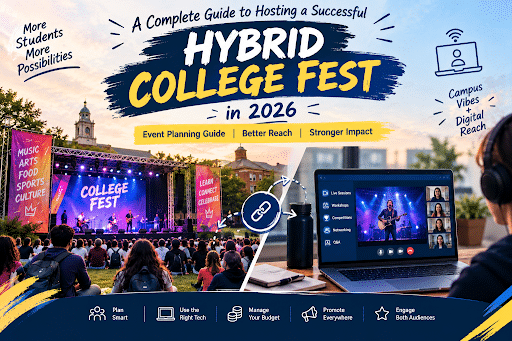
Table of Contents
Key Strategy Takeaways
- The hybrid college fest involves both online and offline attendance, enabling colleges to cater to those students who are unable to attend the college physically.
- Planning of a hybrid event necessitates planning for both the groups and not just live streaming of the physical event.
- The technical aspect planning includes internet connectivity, audiovisuals, live streaming, registrations, and technical assistance.
- Interactive components like live question-and-answer sessions, voting, discussion forums, and virtual networking will assist in maintaining the interest of the remote students.
- Accessibility must be considered during the initial stages of planning, which includes accessible venues, platforms, captions, and other means of participating.
- It is necessary to budget for hybrid events because hybrid events increase the outreach but, on the other hand, also create technology and staffing needs.
- Post-event feedback and follow-up enable the organizers to evaluate participation and plan further student events.
INTRODUCTION
College festivals have been changing really fast due to the need by students for events that incorporate physical participation along with technology. In 2026, it is evident that the hybrid college fest will prove to be a viable choice for colleges wanting to increase participation at affordable costs through the fusion of physical and virtual components of the event.
This event planning guide explains the key considerations for organising an engaging festival that serves both on-campus and online participants.
What Is a Hybrid College Fest?

A hybrid college fest is one where both physical and virtual events take place during one festival.
Those physically present at the event venue will engage in cultural events, sports, exhibits, and competitions, whereas those not present at the physical venue will participate in online events such as webinars, gaming competitions, and quizzes, among others.
The benefits include widening the scope of the festival without necessitating all attendees to come physically.
Start With Clear Objectives
Successful event planning starts with setting objectives for the festival. The organizers need to determine whether the emphasis of the festival will be on cultural engagement student connections, competitions, entrepreneurship, entertainment, or any combination of these elements.
After establishing the objective, the activities involved can be segmented into physical, virtual, and hybrid activities.
Build a Balanced Event Schedule
An effective event planning tool must have a good schedule. Activities that are physical include stage shows, fashion shows, sports, and on-campus exhibits. The online activities may include gaming competitions, quiz contests, and skill-based sessions.
There are some activities that can be both online and offline at the same time. For instance, there can be a speech in an auditorium where students from other colleges participate in the session through streaming video.
Organizers can also refer to the IEEE guide to planning hybrid events for additional scheduling and engagement considerations.
Choose the Right Technology
Technology forms the very foundation of a hybrid college fest. Organizers require efficient livestreaming technology, a registration system, a method of communicating, and an online competition platform.
Before the festival, you need to test out your technology. Try out your microphones, your cameras, your Internet, your streaming link, and your backup technology. Having a team of technicians on standby for the whole event could be useful.
Plan the Budget Carefully
One of the major advantages of a hybrid event is the potential for balancing exposure and cost. It is possible for the organizers to reduce physical costs while reaching the audience from outside the local university through technology.
Nonetheless, there are also costs associated with the use of technology. The Internet, broadcasting tools, software, technicians, venue, advertisement, rewards, and contingency costs will have to be considered.
Promote Across Multiple Channels
The promotion campaign should begin some weeks before the festival starts. Social media, college societies, email marketing, and student representatives may help with the distribution of information.
Social media marketing is very important for a hybrid festival because the online participants may be from different places or universities. Information on the time of the event, rules of participation, and other aspects must be provided on the registration page.
As part of the event planning guide, organizers should also promote the online participation options clearly so that remote students understand how to register and join.
Keep Participants Engaged
The ideal hybrid college fest is one that makes the online members feel engaged and not as an afterthought. The live poll, Q&A, digital competition, virtual networking rooms, and various games can be used for increased engagement.
Additionally, the organizers need to get feedback from the participants after every significant event.
Conclusion
The hybrid approach enables institutions of higher learning to blend the campus atmosphere with the virtual one. If handled in the right way, the hybrid fest at a college does not necessarily have to depend solely on physical attendance.
All the planning required for the success of this event is good budgeting, sound technology, proper timing, and good promotion. This guide stresses the significance of considering both online and offline attendees as equal elements of the entire event.
For further practical context, colleges can explore Synovia, a hybrid inter-college fest on EvePaper.
Frequently Asked Questions
1. What is a hybrid college fest?
A hybrid college fest combines on-campus activities with virtual events, allowing students to participate in cultural performances, competitions, workshops, and online activities.
2. How do you organize a successful hybrid college fest in 2026?
Start by setting clear objectives, preparing a budget, scheduling online and offline activities, selecting suitable technology, promoting the event, and collecting participant feedback.
3. What are the benefits of hosting a hybrid college fest?
A hybrid college fest expands participation beyond campus, improves accessibility, offers flexible attendance options, and helps colleges connect with students from other institutions.
4. What technology is needed for a hybrid college fest?
Essential technology includes livestreaming software, online registration tools, reliable internet connectivity, audiovisual equipment, virtual event platforms, and technical support.
5. How much does it cost to organize a hybrid college fest?
The cost depends on the venue, event size, technology, performers, marketing, staffing, and prizes. Organizers should prepare a detailed budget with contingency funds.
6. How can colleges promote a hybrid college fest?
Colleges can promote their festivals through Instagram, YouTube, student societies, email campaigns, campus ambassadors, college websites, and collaborations with student communities.
7. What are the best marketing strategies for a college fest?
Effective strategies include social media campaigns, teaser videos, countdowns, student-generated content, influencer collaborations, referral campaigns, and partnerships with relevant brands.
8. How can colleges attract more students to a hybrid college fest?
Offer engaging competitions, attractive prizes, interactive online sessions, clear registration instructions, early promotions, and activities that appeal to different student interests.
9. How can sponsors benefit from a hybrid college fest?
Sponsors can gain brand visibility through event banners, social media promotions, sponsored competitions, livestream mentions, digital booths, and direct engagement with student audiences.
10. How can colleges measure the success of a hybrid college fest?
Colleges can evaluate registrations, physical and virtual attendance, audience engagement, social media reach, sponsor visibility, participant feedback, and overall spending against the budget.
Citations & References
[1] IEEE, “Going Hybrid,” IEEE Digital Events. [Online]. Available: IEEE Hybrid Events Guide. [Accessed: Sep. 26, 2026].
[2] Arizona State University, “Hybrid Events—Event Planning Guide,” ASU Engineering. [Online]. Available: ASU Hybrid Events Planning Guide. [Accessed: Sep. 26, 2026].
[3] Zoom, “The Complete Guide for Hybrid and Virtual Campus Events,” Zoom. [Online]. Available: Zoom Campus Events Guide. [Accessed: Sep. 26, 2026].
[4] I. Kuchma and M. Ševkušić, “EIFL Checklist: Organizing a Hybrid Event,” EIFL Open Access Programme, May 2026. [Online]. Available: EIFL Hybrid Event Checklist. [Accessed: Sep. 26, 2026].
[5] A. L. Doran et al., “Planning virtual and hybrid events: Steps to improve inclusion and accessibility,” Geoscience Communication, vol. 7, no. 4, pp. 227–244, 2024. [Online]. Available: Geoscience Communication article. [Accessed: Sep. 26, 2026].
Connect Your Brand with Gen-Z
Unlock high-impact youth marketing strategies with EvePaper.
Book Strategy Call