
Hostel Hacks: How to cook Healthy Meals with Limited Equipment
Published: October 16, 2026
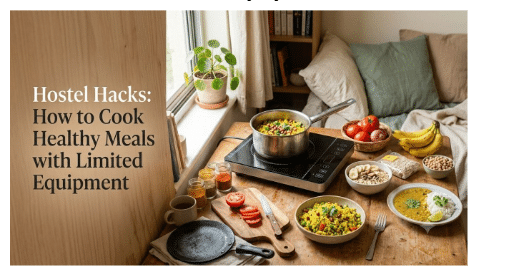
Image source: Google Gemini (AI-Generated)
One thing hostel life can teach you is – Cooking. When you are in a hostel and you are away from your home kitchen you cannot have a home-cooked meal every day. Sometimes the mess food will not be worth eating. Sometimes you will be too lazy to come out and go to a restaurant.
You can eat healthy and save a lot of money. Even If you just have a small room and a few basic tools, you can find quick recipes to prepare your own meals.
Start With What You Have
You do not need to buy lots of cooking utensils when you start cooking. Firstly, find out the rules about what you can use in your hostel. Not all hostels have a communal kitchen and some restrict the use of cooking equipment or open flames.
You can prepare simple everyday meals using a microwave or induction cooker, along with a few basic utensils and food containers. Keeping too many ingredients doesn’t really help when you have very little space for storing things. Begin with ingredients you already love such as oats, poha, rice, dal, peanuts and roasted chana. You can prepare many recipes with these ingredients.
Easy Meals for Days When You Do Not Feel Like Cooking
As we all know after a long day in class and or studying no one wants to be in the kitchen for an hour or so.
Some quick recipes are in order:
- Easy one – oats with banana and milk – cook oats in a microwave oven or cooker as detailed on the pack. Or, if savoury – poha (if you are able to access a permitted cooking stove).
- A quick lunch or dinner option is dal and rice, served with some vegetables.If you don’t have a kitchen, you can prepare a ‘puffed’ sandwich with cucumber, tomato and a filling!
- Even a simple chana salad can taste good. Take cooked chickpeas and chop fresh veggies, lemon juice, and a bit of salt and prepare this at home. This recipe does not require much effort and can be made within no time; just keep your cooked foods in the right place.
No need to keep adding something new to the equation every day. Once you have found three or four foods that you can live with everyday of your life will be much easier.
Eating Well Without Costly Prices
The food could also be a concern for the students even before you can reach the middle of the month. It would seem more convenient for you to simply call for take outs whenever you can but it is extremely not feasible.
Another step you can take is to buy ingredients that you can easily store and use. It could be wise to select your preferred seasonal fruit and vegetables and ingredients like dal, chickpeas, oats and peanuts.
You can also add things to what you already eat. For example, if you are already having rice and dal for your meals then add to this a vegetable or a curd if you are eating it along with it. If you are eating biscuits for your teatime then keep a banana or some roasted chana with you.
It can also be cheap and good for you! Cooking healthy food doesn’t mean spending a lot of money or following lots of food rules, it simply means making your daily meals a little bit richer and more balanced.
A Bit of Planning Can Save a Lot of Time
One disadvantage of hostel life is that meals are not always available when you need them. You might have an early class in the morning, homework to complete or an exam to prepare for the next day.
Attempt to prepare a couple of dishes before the week starts. You do not need to prepare a week by week menu but having your food choices prepared for several days in advance can save you time and effort.
Store your dried foods in clean air tight containers and purchase fresh foods in amounts that you will use. If you own a refrigerator you may store potentially perishable foods in the refrigerator following instructions for food safety. If you do not have a refrigerator then do not keep cooked foods for long periods.
One awesome trick I do is I buy one ingredient and prepare in different ways. For instance, I buy veggies to prepare poha, yet I’ll add the veggies to a cooked dish, and the chickpeas can go into a salad or however else you can prepare them.
Remember Food Safety
You might be tempted to skimp on good hygiene when space is tight. But, as well as the ingredients you’re using, the cleanliness of your pots and pans and your own hands while you prepare food are just as vital.
Under no circumstances should cooked food be kept outside the fridge, eg, in a buffet line, for a long time (and this includes the hot season). Particular attention must be paid to rice, dals, milk and all dairy products. In the absence of a refrigerator at the hostel, make small quantities of rice, eat them after cooking.
Make use of the right vessel and see to it the food is cooked similarly. Follow the directions that come with the item and also do not utilize the device in a way that is not encouraged by the manufacturer.
But there are some easy things you can do to help keep food fresh and to help prepare food safely.
Make It a Habit: Not Just Another Job
You don’t have to switch everything around at once. Try doing just one thing and go slowly. Make your own breakfast a few times a week, carry around a piece of fruit or a biscuit in your bag, or take some time to learn how to cook something that doesn’t require the kitchen at the hostel.
Some days you may feel like grabbing fast food or eating whatever is available and that’s totally fine. The idea is to keep a few healthy options on hand. Not to say you’re going to try and make everything that is cooked to be perfect.
Initially, you may find that these little modifications will help you to view preparing and eating healthy meals are not just a chore – but more of a natural part of the daily routine.
Final Thoughts
Food can be a challenge especially when you are living in a hostel. Hostel life is very busy, there’s very limited space, loads of plans, and not a lot of money – which means cooking in a hostel is a little bit more awkward, if you’re someone who can’t quite look after himself or herself.
It’s totally achievable – with a few ingredients and a bit of guidance. There’s no need for a dedicated kitchen or to be a pro chef to make a food choice that feels more comfortable. Use what you have, keep it simple, make it manageable and it will all work out.
Even a simple home- cooked meal can help you to get through the day.
References
[1] Viagio, “10 Cheap, Healthy Meal Ideas to Make in a Hostel,” Viagio Travel Blog, Jun. 2025 [Online]. Available: https://www.viagio.com/blog/article/10-cheap-healthy-meal-ideas-to-make-in-a-hostel
[2] HI Canada, “20 Easy Meals to Make in Hostel Kitchens (When You Hate Cooking Around Strangers),” Hostelling International Canada, Jun. 2025 [Online].
[3] Instacuppa, “Electric Kettle Recipes: 20 Quick Meals for Hostel, PG & Office,” Instacuppa Blog, Apr. 2026 [Online].
Available: https://instacuppastore.com/blogs/main-page/electric-kettle-recipes-20-quick-meals-hostel-pg-office
[4] NZ Pocket Guide, “7 Easy Hostel-Friendly Microwave Recipes,” NZ Pocket Guide, Aug. 2022 [Online]. Available: https://nzpocketguide.com/7-easy-hostel-friendly-microwave-recipes/
[5] BBC Good Food, “25 Quick and Easy Microwave Recipes” [Online].
Available: https://www.bbcgoodfood.com/howto/guide/what-cook-without-cooker
[6] USDA Food Safety and Inspection Service, “Keep Food Safe! Food Safety Basics” [Online].
Hostel Cooking Hacks: 20 FAQs, 20 Key Takeaways, and 1 Core Marketing Question
1. 20 Frequently Asked Questions (FAQs)
These FAQs target the primary keyword “hostel cooking hacks” and related search terms to help improve SEO, answer students’ common questions, and make the article more discoverable online.
1. What are the best hostel cooking hacks for students?
The best hostel cooking hacks include preparing simple meals with basic equipment, choosing affordable ingredients, reusing ingredients across recipes, planning meals in advance, and keeping cooking utensils clean.
2. How can I cook healthy meals in a hostel with limited equipment?
You can prepare simple meals using permitted appliances such as a microwave or induction cooker. Try oats, poha, dal, rice, vegetable sandwiches, and chickpea salads, depending on the equipment available.
3. What are some easy hostel cooking hacks for beginners?
Start with simple recipes such as banana oats, vegetable sandwiches, poha, and chickpea salad. Choose meals with a few ingredients and minimal preparation.
4. How can I eat healthy food in a hostel on a budget?
Buy affordable staples such as oats, rice, dal, chickpeas, peanuts, and seasonal vegetables. Combine these with fruit, curd, or other available nutritious foods to make meals more balanced.
5. What are the easiest meals to cook in a hostel room?
Easy options include oatmeal, microwave-friendly meals, vegetable sandwiches, chickpea salads, and simple rice-and-dal meals when suitable cooking equipment is available.
6. Can I cook food in a hostel without a kitchen?
Yes, depending on hostel rules and the equipment permitted. You may be able to prepare no-cook meals such as sandwiches and salads or use an authorised communal microwave.
7. What basic cooking equipment should I keep in a hostel?
Start with a plate or bowl, spoon, reusable food containers, and a few basic utensils. Add a microwave-safe bowl or other equipment only if your hostel permits the relevant appliance.
8. How can I save money on food while living in a hostel?
Plan meals, buy ingredients you can use in multiple recipes, choose seasonal produce, and keep affordable snacks such as fruit or roasted chana available.
9. What are some healthy breakfast ideas for hostel students?
Try oats with milk and banana, fruit with curd, or poha with vegetables if permitted cooking equipment is available.
10. How can I prepare quick meals after college?
Keep a few simple recipes in your routine, use ingredients that require little preparation, and plan meals around your available equipment. This can reduce the time and effort needed after classes.
11. How can I cook healthy meals without spending too much time?
Choose recipes with few ingredients, wash and prepare vegetables when convenient, and use the same ingredients in several meals to minimise preparation.
12. Which affordable ingredients are best for hostel cooking?
Oats, rice, dal, chickpeas, peanuts, roasted chana, seasonal fruits, and vegetables are useful options. Choose quantities that suit your budget, storage facilities, and eating preferences.
13. How can I prepare meals without a refrigerator in my hostel?
Make small portions and eat cooked food promptly. Buy perishable ingredients in quantities you can use quickly, and avoid storing cooked rice, dal, dairy products, or other perishable foods at room temperature for extended periods.
14. How can I keep food fresh in a hostel room?
Store dry ingredients in clean, airtight containers. Refrigerate perishable foods when suitable refrigeration is available, and follow food-storage guidance for cooked meals and fresh ingredients.
15. Are electric kettles useful for hostel cooking?
An electric kettle can be useful for heating water for suitable foods and drinks, but it should only be used for its intended purpose and in accordance with the manufacturer’s instructions and hostel rules.
16. How can I maintain food hygiene while cooking in a hostel?
Wash your hands, clean utensils and food-contact surfaces, use safe water, wash fresh produce, and cook food properly. Store perishable foods at safe temperatures.
17. How can I plan meals for an entire week in a hostel?
Select a few easy breakfast, lunch, and dinner options, prepare a shopping list, and choose ingredients that work across multiple recipes. Adapt the plan to your storage facilities and food-safety needs.
18. What are some healthy hostel snacks for busy students?
Fruit, roasted chana, peanuts, and other affordable snacks that suit your dietary needs can be convenient choices between classes.
19. How can I make hostel cooking a daily habit?
Start small by preparing breakfast a few times a week, keeping convenient snacks available, or learning one simple recipe at a time. Gradually build a routine that fits your schedule.
20. Why are hostel cooking hacks useful for students?
Hostel cooking hacks help students prepare simple meals, manage food expenses, make better use of limited equipment, reduce reliance on takeaways, and develop practical cooking skills.
2. 20 Key Takeaways: Hostel Cooking Hacks
These key takeaways summarise the article and can be used in a blog conclusion, infographic, student guide, or social media post.
1. Start with available equipment: Check hostel rules before using a microwave, induction cooker, kettle, or other cooking appliance.
2. Keep cooking simple: Choose recipes that require few ingredients and minimal preparation.
3. Stock affordable staples: Oats, rice, dal, chickpeas, and roasted chana can form the basis of many inexpensive meals.
4. Prepare quick breakfasts: Oats with banana and milk can be a convenient option for busy mornings.
5. Try simple lunches and dinners: Consider vegetable sandwiches, chickpea salads, or rice and dal prepared with permitted equipment.
6. Use ingredients in multiple recipes: Repurpose vegetables and other staples across different meals to reduce waste and save money.
7. Buy seasonal produce: Seasonal fruits and vegetables can offer variety while helping you manage your food budget.
8. Make meals more balanced: Combine staple foods with vegetables, fruit, pulses, dairy, or other suitable protein sources.
9. Plan before shopping: A basic meal plan helps you buy useful quantities and avoid unnecessary purchases.
10. Keep a few reliable recipes: Having three or four easy meals in your routine makes cooking more manageable.
11. Prepare food in suitable portions: Smaller portions can help reduce waste, particularly when refrigeration is unavailable.
12. Store dry ingredients properly: Use clean, airtight containers to protect stored staples from moisture and pests.
13. Follow food-safety practices: Refrigerate perishable food promptly and avoid leaving cooked meals at room temperature for extended periods.
14. Pay attention to rice and dairy: These foods require particular care with storage and temperature control.
15. Keep utensils clean: Wash hands, utensils, and food-contact surfaces before and after food preparation.
16. Use appliances correctly: Follow manufacturer instructions and never use equipment for purposes it was not designed for.
17. Choose convenient snacks: Fruit, peanuts, and roasted chana can be practical options for busy college days.
18. Build habits gradually: Start with one or two homemade meals each week rather than trying to change everything at once.
19. Balance convenience and nutrition: Occasional takeaways are part of student life, but keeping simple, nutritious options available can make everyday choices easier.
20. Focus on consistency, not perfection: You do not need a fully equipped kitchen or complicated recipes to develop useful cooking habits.
3. One Core Marketing Question
Core marketing question
How can students use practical hostel cooking hacks to prepare healthy, affordable, and quick meals with limited kitchen equipment while managing busy college schedules?
Marketing objective: This question identifies the target audience (hostel students), their primary challenges (limited equipment, tight budgets, and lack of time), and the desired outcome (simple, healthy, affordable meals).
It can guide SEO blog content, student lifestyle campaigns, recipe articles, social media posts, and promotions for student-friendly cooking essentials.
Connect Your Brand with Gen-Z
Unlock high-impact youth marketing strategies with EvePaper.
Book Strategy Call