
From Dhanteras to Bhai Dooj: Building a Five-Day Diwali Content Calendar for Your Store
Published: November 13, 2026
diwali content calendar
Diwali is one of the busiest shopping periods of the year, but a store’s festive communication should be about more than announcing discounts. Customers celebrate the festival in different ways, and each day brings its own meaning, mood and shopping needs. A well-planned Diwali content calendar helps a store stay connected with customers throughout the celebrations instead of posting the same promotional message every day.
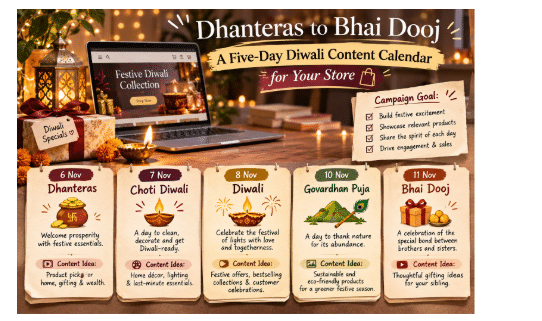
In 2026, the main campaign window runs from 6 to 11 November. The five key content moments are Dhanteras, Choti Diwali, Diwali, Govardhan Puja and Bhai Dooj. Since the festival observances do not fall on five consecutive dates this year, stores can use 9 November for a reminder, a customer post or a short break between major messages.
Start with a Clear Campaign Plan
Before creating posts, decide what the store wants the campaign to achieve. It could be to increase festive sales, introduce a new collection, bring customers into the shop or encourage online orders. The message should remain consistent, while the content changes according to the occasion.
Prepare product photographs, short videos, captions and offer details in advance. Check stock, delivery timelines and store timings before announcing anything. A simple plan makes it easier to publish on time and avoids last-minute confusion.
Dhanteras – 6 November: Focus on New Beginnings
Dhanteras is traditionally associated with prosperity and purchases for the home. A store can use this day to highlight products customers commonly consider during the festive season, such as jewellery, home essentials, electronics, kitchenware or gift items, depending on what it sells.
The post could feature a festive product guide, a limited collection or a warm greeting. Keep the tone positive and helpful rather than making customers feel pressured to buy. A clear offer, price range or store-hours update can make the message more useful.
Choti Diwali – 7 November: Build the Festive Mood
The content on Choti Diwali can be lighter and more visual. Share a short behind-the-scenes video of the store being decorated, a festive display, gift-wrapping ideas or a quick styling suggestion. If the store sells food, clothing or décor, show how its products can become part of the celebrations.
This is also a good time to invite customers to share their preparations or tag the store in their festive pictures. The aim is to create interaction and make the brand feel part of the celebration.
Diwali – 8 November: Share the Main Celebration Message
Diwali is the centrepiece of the campaign, so the store’s main post should feel warm, thoughtful and visually strong. Share a greeting that reflects the spirit of light, happiness and togetherness. A festive photograph or short video can support the message, with a gentle mention of the collection or offer if relevant.
Avoid turning every greeting into a sales pitch. Customers are more likely to connect with a brand when its message feels genuine and gives the celebration space of its own.
Govardhan Puja – 10 November: Highlight Gratitude and Value
Govardhan Puja offers an opportunity to focus on gratitude, care and community. A store can share a message about appreciating customers, employees and local partners. Product-based businesses might also highlight practical items for family gatherings or thoughtful gifts, while keeping the occasion’s meaning in mind.
A short customer thank-you, a local community story or a useful post related to the store’s products can make the content feel more personal.
Bhai Dooj – 11 November: End with Relationships and Gifting
Bhai Dooj centres on the bond between siblings. For the final campaign post, suggest gift ideas for brothers and sisters, create a small gift guide or share a message about celebrating relationships. Offer options at different price points so customers can find something suitable for their budget.
A simple closing message can thank customers for being part of the store’s festive season and invite them to stay connected after the celebrations.
Keep the Campaign Consistent
A successful five-day campaign does not require a large number of complicated posts. Each message should suit the occasion, use clear language and give customers a reason to notice or respond. Use the same visual identity across the campaign so that posts feel connected, but avoid repeating identical designs and captions.
Most importantly, check the festival dates and local observances before scheduling content. With preparation and a thoughtful message for each occasion, a store can turn its Diwali content calendar into a useful customer experience rather than a series of routine advertisements.
References
[1] Drik Panchang, “2026 Hindu Festivals Calendar for New Delhi, NCT, India.” [Online]. Available: https://www.drikpanchang.com/calendars/hindu/hinducalendar.html?geoname-id=8519
[2] Drik Panchang, “Hindu Festivals and Other Significant Days in November 2026 for New Delhi.” [Online]. Available: https://www.drikpanchang.com/festivals/month/festivals-november.html?lang=en&year=2026
[3] News9Live, “Diwali 2026 Five-Day Calendar: Dates and Timings.” [Online]. Available: https://www.news9live.com/lifestyle/spirituality/diwali-2026-calendar-dates-dhanteras-choti-diwali-bhai-dooj-3020535
15 Key Takeaways
1. A well-planned Diwali content calendar helps stores maintain consistent communication with customers throughout the five-day festive celebration.
2. Diwali marketing should focus on more than discounts and promotional offers by incorporating the cultural significance of each festive occasion.
3. Businesses should establish clear campaign objectives, such as increasing festive sales, promoting new collections, attracting store visits and encouraging online orders.
4. Preparing product photographs, videos, captions and promotional details in advance helps businesses avoid last-minute scheduling challenges.
5. Dhanteras is an opportunity to highlight products associated with prosperity and new beginnings, including jewellery, electronics, home essentials and gift items.
6. Choti Diwali content can focus on festive preparations, store decorations, gift-wrapping ideas and behind-the-scenes videos to build customer engagement.
7. Diwali posts should communicate warmth, happiness and togetherness while keeping promotional messages subtle and relevant.
8. Govardhan Puja provides an opportunity for businesses to express gratitude towards customers, employees and local partners through meaningful content.
9. Bhai Dooj is an ideal occasion to promote sibling gifting ideas, personalised gift guides and products across different price ranges.
10. A consistent visual identity across all festive posts helps customers recognise the brand and creates a connected campaign experience.
11. Businesses should adapt their content formats and messaging to suit the mood, traditions and shopping interests associated with each occasion.
12. Encouraging customers to share festive photographs, tag the store and participate in social media activities can strengthen brand engagement.
13. Checking product availability, delivery schedules, promotional details and store timings before publishing helps prevent customer confusion.
14. Businesses should verify festival dates and local observances before scheduling their Diwali content calendar to ensure accurate communication.
15. A successful Diwali content calendar combines festive storytelling, thoughtful promotions, customer engagement and consistent brand communication to create a meaningful shopping experience.
20 Frequently Asked Questions (FAQs)
1. What is a Diwali content calendar, and why is it important for retail businesses?
2. How can businesses create an effective Diwali content calendar for their stores?
3. What are the five key occasions to include in a Diwali content calendar?
4. How can retailers plan their social media content for Dhanteras?
5. What type of content should businesses publish on Choti Diwali?
6. How can brands create engaging Diwali promotional posts without making every message a sales pitch?
7. What marketing opportunities does Govardhan Puja offer to retail businesses?
8. How can stores use Bhai Dooj to promote sibling gifting ideas and festive collections?
9. When should businesses start preparing their Diwali content calendar?
10. Which social media platforms can businesses use to share their Diwali marketing campaigns?
11. What types of photographs and videos work best for a Diwali content calendar?
12. How can businesses maintain consistent branding across different festive posts?
13. How can retailers encourage customers to participate in their Diwali social media campaigns?
14. Why should businesses prepare product photographs, captions and promotional offers before the festive season?
15. How can small businesses create a Diwali content calendar with a limited marketing budget?
16. What should retailers check before scheduling their festive promotional posts?
17. How can businesses use customer-generated content to improve festive engagement?
18. Why is it important to verify festival dates and local observances when planning a Diwali content calendar?
19. How can retailers balance festive greetings, product promotions and customer engagement throughout Diwali?
20. How can a well-planned Diwali content calendar help businesses increase brand awareness and festive sales?
Core Marketing Question
How can retail businesses create an engaging Diwali content calendar that combines festive storytelling, occasion-based promotions and customer interaction to increase brand visibility, strengthen customer relationships and drive festive sales?
Connect Your Brand with Gen-Z
Unlock high-impact youth marketing strategies with EvePaper.
Book Strategy Call