
7 Steps to Organise a Mentoring Camp for Shortlisted Teams in Smart India Hackathon 2026 Pre-Finale
Published: November 15, 2026
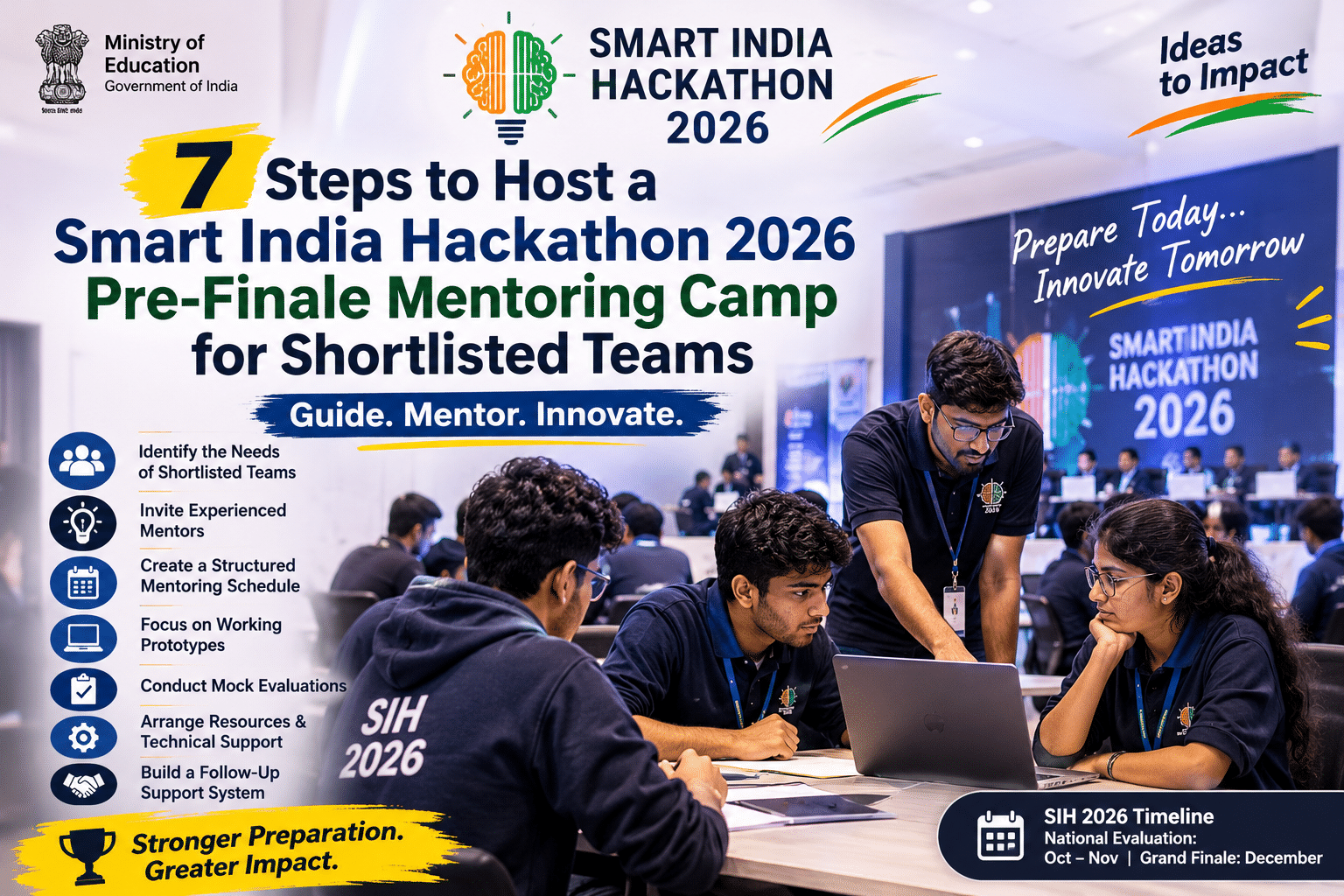
sih mentoring
Introduction
Innovation is a process of developing novel solutions to real world issues. The Smart India Hackathon (SIH) provides students with an opportunity to innovate, work in teams, and display their technical skills.
Preparing for the final round of the competition is extremely beneficial to the shortlisted teams. A well organised mentoring camp will help students develop their prototypes, gain feedback from experts and prepare for the technical assessments.
There are a variety of things to consider when organising a mentoring camp for the Smart India Hackathon. This can help students develop their ideas, overcome technical issues and improve their projects.
7 Steps to Organise a Successful Mentoring Camp for SIH
- Discover What Your Shortlisted Teams Need
Understanding what your participating teams need is the first step to organise a successful mentoring camp. Some teams may need help with technical issues whilst others may need help with prototypes, research or presentations.
Each team should be asked to provide a short summary of their project including what issue they are trying to solve, their solution, how far along they are and what their main issues are.
This will help you structure your mentoring sessions.
- Invite Mentors
Having mentors involved in your mentoring sessions will be key to helping students improve their projects. Inviting mentors such as software developers, startup founders, researchers, faculty members, industry professionals and former hackathon participants will help.
Ensure that you invite mentors based on the problem statements and technical issues facing the teams. For example, if a team are developing a project using artificial intelligence then invite a mentor specialising in machine learning. If a team are creating a solution for agriculture then invite mentors who are experts in this field.
Having mentors with experience in their field will help teams identify any issues, select appropriate technologies and create a more realistic solution.
- Plan a Mentoring Timeline
To ensure your pre-finale campaign is a success, plan a clear timeline for your mentoring sessions. Ensure they have specific activities.
For example:
Day 1 – Project Review & Validation
Day 1 – Technical Mentoring & Prototype Development
Day 2 – Testing, Debugging & User Feedback
Day 2 – Presentation Practice, Demonstrations & Final Feedback
- Focus On Prototypes
Having a working prototype will help to prove that your idea has potential. Encourage teams to develop a prototype to demonstrate how their solution works.
Mentors can help identify any technical issues, improve user experience, test key features and ensure that they are solving the issue they set out to.
Teams should also create back up demonstrations, keep track of their progress and honestly identify any limitations. This will help to make each project more reliable and realistic.
- Mock Assessments
A mock assessment will help students get used to the pressure of presenting their projects.
Invite a group of mentors to assess each team. They can provide feedback on their problem statement, innovation, technical aspects, feasibility and impact.
Provide specific feedback after each presentation. Teams should also practise answering questions on why they chose certain technologies, the cost to implement their solution, how scalable it is and real world applications.
This can help participants feel confident when presenting their ideas and help them prepare for challenging questions.
- Provide Resources & Technical Support
Ensure teams have the resources they need to improve their projects.
This can include reliable internet, laptops, development tools, testing tools, software and appropriate working spaces. Colleges can partner with incubation centres, tech companies, Alumni and innovation clubs to help provide more support. Having a comfortable and well equipped environment will help participants to focus on solving issues without worrying about unnecessary technical issues.
- Create a Support System
You should provide a way for teams to continue receiving guidance from mentors after the mentoring camp. Create a communication group.
Schedule time for teams to receive feedback on their progress, any remaining technical issues and how they are preparing for their presentation.
Teams should leave knowing what they need to do next. This includes any further development, testing, improvements to their presentation and deadlines.
This creates a positive innovation environment and will encourage students to continue developing their ideas.
Why Mentoring is Important Before the Finale in SIH 2026
Having a structured mentoring camp will help students identify any issues with their projects, improve teamwork and prepare for technical assessment. It will also help link their knowledge from education with real world problem solving and industry standards.
If the national assessment is in October/November and the Grand Finale is in December as shown in the proposed timeline then this could be a good opportunity to prepare shortlisted teams. Please confirm the official dates for 2026.
Conclusion
Having a pre-finale mentoring camp for the Smart India Hackathon can be a key step in helping shortlisted students develop their ideas into strong solutions. By inviting the right mentors, planning a structured timeline, improving prototypes, performing mock assessments and providing support colleges can prepare teams well.
A successful pre-finale campaign will encourage innovation, improve technical skills and help students create solutions that can make a real difference.
References
[1] Smart India Hackathon, “Smart India Hackathon Official Website.”, [Online]. Available: https://www.sih.gov.in/
[2] Ministry of Education, Government of India, Ministry of Education, [Online]. Available: https://www.education.gov.in/
[3] All India Council for Technical Education (AICTE), Official Website, [Online]. Available: https://www.aicte-india.org/
7 Steps to Organise a Mentoring Camp for Shortlisted Teams in Smart India Hackathon 2026 Pre-Finale
Introduction
Innovation is a process of developing novel solutions to real world issues. The Smart India Hackathon (SIH) provides students with an opportunity to innovate, work in teams, and display their technical skills.
Preparing for the final round of the competition is extremely beneficial to the shortlisted teams. A well organised mentoring camp will help students develop their prototypes, gain feedback from experts and prepare for the technical assessments.
There are a variety of things to consider when organising a mentoring camp for the Smart India Hackathon. This can help students develop their ideas, overcome technical issues and improve their projects.
7 Steps to Organise a Successful Mentoring Camp for SIH
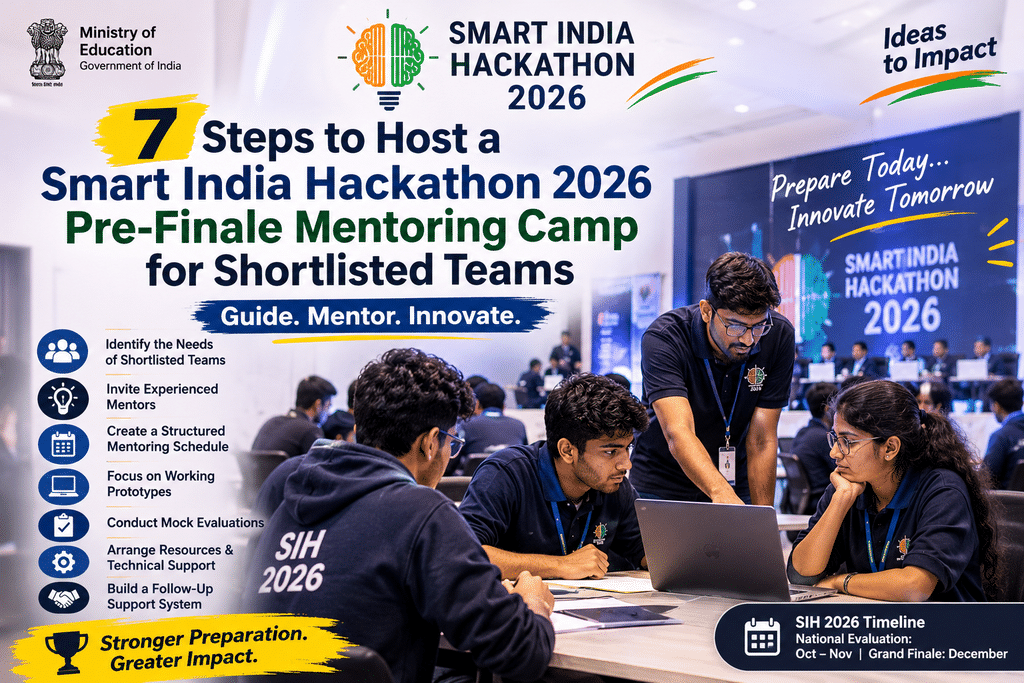
1. Discover What Your Shortlisted Teams Need
Understanding what your participating teams need is the first step to organise a successful mentoring camp. Some teams may need help with technical issues whilst others may need help with prototypes, research or presentations.
Each team should be asked to provide a short summary of their project including what issue they are trying to solve, their solution, how far along they are and what their main issues are.
This will help you structure your mentoring sessions.
2. Invite Mentors
Having mentors involved in your mentoring sessions will be key to helping students improve their projects. Inviting mentors such as software developers, startup founders, researchers, faculty members, industry professionals and former hackathon participants will help.
Ensure that you invite mentors based on the problem statements and technical issues facing the teams. For example, if a team are developing a project using artificial intelligence then invite a mentor specialising in machine learning. If a team are creating a solution for agriculture then invite mentors who are experts in this field.
Having mentors with experience in their field will help teams identify any issues, select appropriate technologies and create a more realistic solution.
3. Plan a Mentoring Timeline
To ensure your pre-finale campaign is a success, plan a clear timeline for your mentoring sessions. Ensure they have specific activities.
For example:
Day 1 – Project Review & Validation
Day 1 – Technical Mentoring & Prototype Development
Day 2 – Testing, Debugging & User Feedback
Day 2 – Presentation Practice, Demonstrations & Final Feedback
4. Focus On Prototypes
Having a working prototype will help to prove that your idea has potential. Encourage teams to develop a prototype to demonstrate how their solution works.
Mentors can help identify any technical issues, improve user experience, test key features and ensure that they are solving the issue they set out to.
Teams should also create back up demonstrations, keep track of their progress and honestly identify any limitations. This will help to make each project more reliable and realistic.
5. Mock Assessments
A mock assessment will help students get used to the pressure of presenting their projects.
Invite a group of mentors to assess each team. They can provide feedback on their problem statement, innovation, technical aspects, feasibility and impact.
Provide specific feedback after each presentation. Teams should also practise answering questions on why they chose certain technologies, the cost to implement their solution, how scalable it is and real world applications.
This can help participants feel confident when presenting their ideas and help them prepare for challenging questions.
6. Provide Resources & Technical Support
Ensure teams have the resources they need to improve their projects.
This can include reliable internet, laptops, development tools, testing tools, software and appropriate working spaces. Colleges can partner with incubation centres, tech companies, Alumni and innovation clubs to help provide more support. Having a comfortable and well equipped environment will help participants to focus on solving issues without worrying about unnecessary technical issues.
7. Create a Support System
You should provide a way for teams to continue receiving guidance from mentors after the mentoring camp. Create a communication group.
Schedule time for teams to receive feedback on their progress, any remaining technical issues and how they are preparing for their presentation.
Teams should leave knowing what they need to do next. This includes any further development, testing, improvements to their presentation and deadlines.
This creates a positive innovation environment and will encourage students to continue developing their ideas.
Why Mentoring is Important Before the Finale in SIH 2026
Having a structured mentoring camp will help students identify any issues with their projects, improve teamwork and prepare for technical assessment. It will also help link their knowledge from education with real world problem solving and industry standards.
If the national assessment is in October/November and the Grand Finale is in December as shown in the proposed timeline then this could be a good opportunity to prepare shortlisted teams. Please confirm the official dates for 2026.
Conclusion
Having a pre-finale mentoring camp for the Smart India Hackathon can be a key step in helping shortlisted students develop their ideas into strong solutions. By inviting the right mentors, planning a structured timeline, improving prototypes, performing mock assessments and providing support colleges can prepare teams well.
A successful pre-finale campaign will encourage innovation, improve technical skills and help students create solutions that can make a real difference.
References
[1] Smart India Hackathon, “Smart India Hackathon Official Website.”, [Online]. Available: https://www.sih.gov.in/
[2] Ministry of Education, Government of India, Ministry of Education, [Online]. Available: https://www.education.gov.in/
[3] All India Council for Technical Education (AICTE), Official Website, [Online]. Available: https://www.aicte-india.org/
Connect Your Brand with Gen-Z
Unlock high-impact youth marketing strategies with EvePaper.
Book Strategy Call