AI generated content audit frameworks
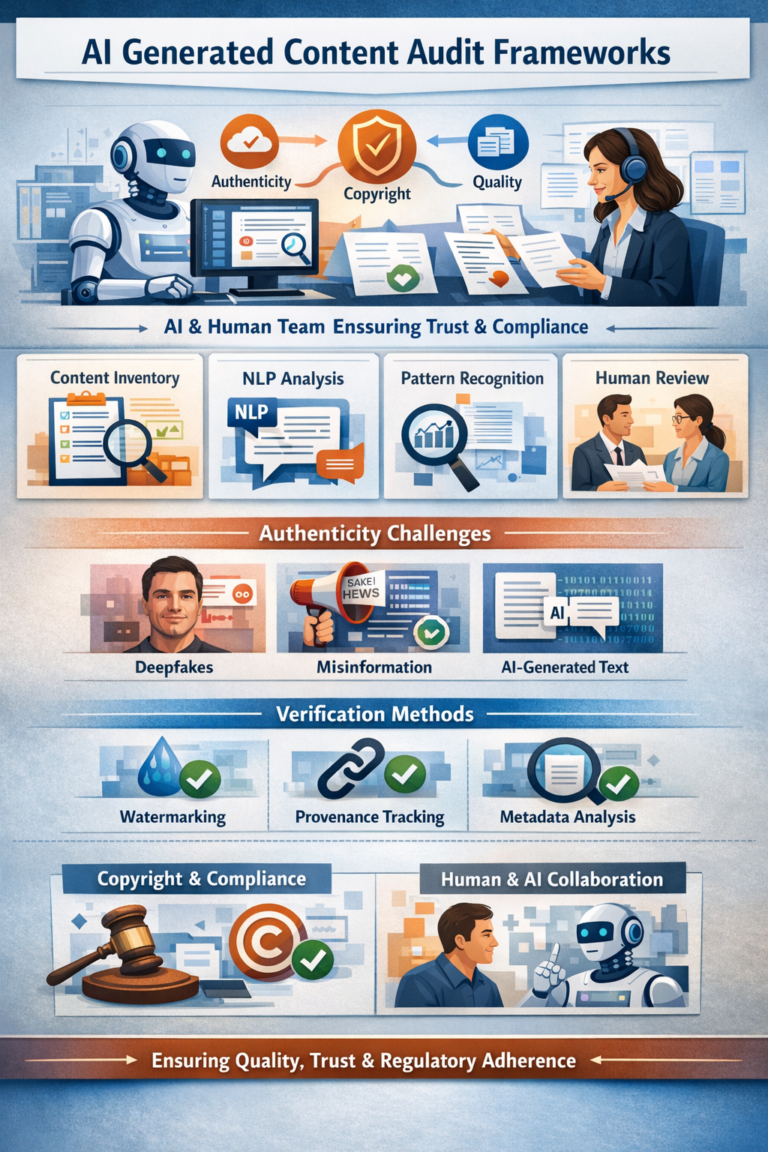
AI generated content audit frameworks are AI-powered systems where AI and a human team, along with advanced tools, work together to ensure the authenticity, copyright compliance, and quality of digital assets using advanced AI analytics. These audit frameworks enable organizations to maintain the trust they’ve earned and comply with regulatory standards in the face of the unprecedented AI content boom.
What Is an AI Content Audit Framework?
An AI-content audit framework is an AI/machine learning system that also involves human moderators and experts. It analyzes various aspects, such as content on a website, document, or any other medium. It checks for relevance, originality, copyright status, and adherence to guidelines. The primary goal is to identify gaps, increase user engagement, and remove content that is either problematic or outdated.
Key Components of AI Content Audit Consulting :
Automated Content Inventory: For a fast and efficient review, AI tools locate and list all digital assets by scanning for duplicate URLs, broken links, and missing metadata.
Natural Language Processing: AI uses NLP to check the language, the theme, the grammar, the relevancy, and the sentiment of the piece. This facilitates the establishment of a consistent brand voice and user experience.
Pattern Recognition: AI looks at the topics, formats, and content strategies that attract an audience and also identifies SEO opportunities for the brand.
Human Evaluation: Subject matter experts make sure that the facts, relevance, and compliance are correct while they also add more profound contextual and regulatory insights.
Authenticity Challenges :
Artificial intelligence content generation causes authenticity to be questioned because it is difficult to separate them from human writing. The issues are:
The difficulty in identifying the AI-generated text makes the deception very likely and hence there is a possibility of losing the trust of people.
Deepfakes and altered content that confuse consumers and create trust issues with the targeted companies.
The manipulation of the public and dissemination of propaganda which negatively impact PUBLIC opinion and the veracity of the information being presented are some of the ways through which AI-generated literature can cause societal issues.
Verification difficulties as the usual way of fact-checking might not be effective when dealing with complicated AI outputs.
Contemporary auditing structures use different technologies such as watermarking, provenance tracking, and metadata analysis, etc. which facilitate the process of confirming that the products of AI are authentic.
Copyright and Attribution Considerations
One of the most important things in the world of legal and ethical content is to ensure that the content is copyright-compliant. AI-assisted audit tools verify the sources, originality, and check for correct attribution of the content, while also indicating potential copyright infringements. At the same time, they define authorship, thus avoiding any writer’s misconceptions about the creator of the material, which is very important for regulatory compliance and public transparency.
Best Practices for AI Content Audits
Adopt AI automation of repetitive tasks while keeping a human expert as a supervisor who is responsible for the final conclusion of the audit with Adopt AI automation for repetitive tasks, while keeping a human expert as a supervisor who is responsible for the final conclusion of the audit regarding accuracy and legal aspects. Utilize state-of-the-art tools to uncover the copying of works of art, fabrication of images and videos, and forgery of bits of information belonging to encrypted files. Stay updated on changes in regulations and R&D (research and development) practices, and regularly update compliance audits.
The organizations may benefit from the following:
- Constructive and substantial content optimization, which involves structure, readability, and AI discoverability.
- Maximization of engagement and regulatory compliance with search standards.
Conclusion
AI audit for content consulting is an aid that constantly seeks quality, authenticity, and compliance in digital assets, which consist of elements necessary for organizations. The frameworks that feature a combination of mechanization, human critique, and stringent copyright practices, along with other such mechanisms, provide enterprises with utmost certainty, thus enabling them to have an edge over others in the ever-changing digital ecosystem.
FAQs:-
Q1. What are AI-generated content audit frameworks?
AI-generated content audit frameworks are structured systems that combine artificial intelligence tools and human expertise to evaluate digital content for authenticity, quality, copyright compliance, and regulatory adherence. They use AI analytics (such as NLP and pattern recognition) alongside human judgment to ensure content is trustworthy and compliant.
Q2. Why are AI content audit frameworks necessary today?
They are necessary because the volume of AI-generated content has increased rapidly. This makes it harder to detect misinformation, copyright violations, and low-quality or misleading material. Audit frameworks help organizations maintain user trust, meet legal obligations, and manage reputational risks.
Q3. How does an AI content audit framework work?
An AI content audit framework scans content using automated tools to analyze originality, relevance, sentiment, and compliance. AI flags potential issues, which are then reviewed by human experts who provide contextual, factual, and regulatory validation before final decisions are made.
Q4. What role does Natural Language Processing (NLP) play in content audits?
NLP analyzes language quality, grammar, tone, sentiment, topic relevance, and consistency with brand voice. It helps detect biased language, misleading claims, duplicated text, and content that does not align with audience expectations or guidelines.
Q5. How do human experts contribute to AI content audits?
Human experts verify facts, interpret complex context, assess ethical and legal risks, and ensure regulatory compliance. They also review AI-flagged content to avoid false positives and provide nuanced judgment that AI systems cannot fully replicate.
Q6. What are the main authenticity challenges in AI-generated content?
Key challenges include difficulty in distinguishing AI-written text from human writing, the rise of deepfakes and manipulated media, potential spread of misinformation or propaganda, and limitations of traditional fact-checking methods when applied to advanced AI outputs.
Q7. How do audit frameworks verify the authenticity of AI-generated content?
They use techniques such as digital watermarking, provenance tracking, metadata analysis, and cross-source verification. These methods help trace content origins, detect manipulation, and confirm whether AI-generated outputs are authentic and unaltered.
Q8. How do AI content audit frameworks address copyright and attribution issues?
They check content against known sources to identify duplication or infringement, verify originality, and ensure proper attribution. These frameworks also clarify authorship (human vs AI-assisted) to support legal compliance and transparency.
Q9. What are the best practices for implementing AI content audits?
Best practices include automating repetitive checks with AI, maintaining human oversight for final decisions, using advanced detection tools for deepfakes and plagiarism, and regularly updating audit processes to align with evolving regulations and research.
Q10. What benefits do organizations gain from AI content audit frameworks?
Organizations benefit from improved content quality, stronger user trust, reduced legal and reputational risk, better SEO and engagement, and consistent compliance with copyright laws and regulatory standards in a rapidly evolving digital environment.
Penned by Mazhar Ali
Edited by Sushmita Haldar, Research Analyst
For any feedback mail us at [email protected]
Transform Your Brand's Engagement with India's Youth
Drive massive brand engagement with 10 million+ college students across 3,000+ premier institutions, both online and offline. EvePaper is India’s leading youth marketing consultancy, connecting brands with the next generation of consumers through innovative, engagement-driven campaigns. Know More.
Mail us at [email protected]