Topics: collaborative education, student peer tutoring hub
8 Reasons Student-Run Peer Tutoring Hubs Just Work
The Idea (And Why It’s Not Just Another Club)
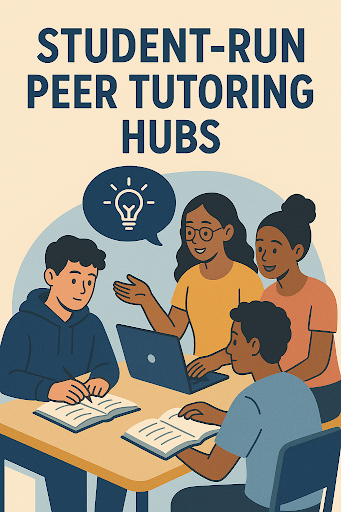
Every college has its own last-minute study hacks — that friend explaining three chapters in the canteen, the 11 PM “anyone got notes?” group chat, or a library table covered in coffee cups and open textbooks. A student peer tutoring hub basically takes that same vibe but gives it a proper corner, some loose structure, and a lot more teamwork. — turning casual study sessions into a form of collaborative education that actually works.
Not Your Boring Lecture Setup
This isn’t about sitting in rows while someone talks at you. It’s students teaching students, usually in plain words that actually make sense. One day, you might be explaining a finance problem to a junior, and the next, you’re on the other side of the table, stuck on an organic chemistry diagram. That swap is the best part — everyone’s both teacher and learner at some point.
Collaborative Education, But Without the Buzzword-y Feel
This is collaborative education in the real sense. There’s no “sir” or “ma’am” to impress, no marks riding on your question. You just ask — even if it feels basic — and someone explains. Sometimes it’s drawn on scrap paper, sometimes it’s a weird analogy that somehow just… clicks. And those little tips? They stay in your head way longer than the neat textbook definition.
Building a Campus Where People Actually Help Each Other
Peer tutoring hubs quietly change the mood on campus. When you see classmates sharing notes, breaking down tough topics, or just sitting with someone until they “get it,” it sets a tone. New students feel like they belong faster, and older ones end up being the people others look up to — without trying too hard.
Why Colleges Love Them (Even If They Don’t Say It Out Loud)
From a marketing side, this stuff is gold. Photos of small groups leaning over notebooks, laughing while figuring out a problem, speak louder than any glossy brochure. It says: This place won’t leave you to struggle alone. Parents like it. Prospective students like it. And it makes the college look like more than just a degree factory.
Student-Run = Student-Owned
Here’s the fun part — no strict timetable unless the group decides on one. Some weeks it’s a quick one-hour Q&A. Other weeks, it’s a crash course. Sometimes it’s just a handful of people solving problems over snacks. That freedom keeps it alive instead of feeling like yet another “mandatory” thing.
You Learn More Than Just the Subject
Someone has to book the space, spread the word, figure out who’s teaching what, and make sure things run smoothly. That’s event planning, marketing, leadership — all sneaking in while you’re “just” studying. Tutors revise their own subjects, learners gain confidence, and everyone leaves a little sharper than when they came in.
Why It’s Probably Not Going Away Anytime Soon
Education’s moving away from stiff, top-down styles and leaning into social, flexible ones. A student-run peer tutoring hub fits right in. It’s proof that the best person to explain something might be the one sitting right next to you — coffee cup in hand, notes spread out, and a quick “Don’t worry, you’ll get this” smile.
Conclusion: Student-Run Peer Tutoring Hubs Are the Future of Campus Learning
Peer tutoring hubs managed by students demonstrate that true learning is not necessarily achieved in the classrooms or lecture halls — it is the outcome of conversations, sharing notes, late-night problem-solving, and the simplest act of students helping students. These hubs promote teamwork, nurture self-esteem, develop leadership skills, and establish a campus culture where nobody is left behind.
Unlike traditional programs, the student peer tutoring hub is successful because they are flexible, student-owned, and genuinely supportive. For universities, they are not merely a study resource — they are community-builders and a great tool to attract and retain students. As higher education is moving more towards social and adaptive learning styles and collaborative education, peer tutoring hubs are not a fad but a permanent solution.
References
[1] N. Topping, “Peer Tutoring: Old Method, New Developments,” Theory Into Practice, vol. 34, no. 1, pp. 5–10, 1995.
[2] A. Roscoe and M. Chi, “Understanding Tutor Learning: Knowledge-Building and Knowledge-Telling in Peer Tutors’ Explanations and Questions,” Review of Educational Research, vol. 77, no. 4, pp. 534–574, Dec. 2007.
FAQ’s
Q1. What is collaborative education and why does it matter?
Collaborative education is a style of learning where students help each other understand difficult topics through discussion, explanation, and teamwork. It matters because students don’t just memorize information; they process and apply it together, which makes learning deeper and longer lasting.
Q2. How does collaborative education improve learning outcomes?
This approach makes complex subjects easier because ideas are explained in different ways. A student might hear a theory in class but only grasp it when a peer uses a simple analogy. Within a student peer tutoring hub, this back-and-forth support often improves exam performance and boosts confidence.
Q3. How is collaborative education different from traditional lectures?
Lectures usually involve a teacher speaking while students listen. In contrast, collaborative education encourages active involvement. Learners ask questions, explain concepts, and solve problems together. Instead of sitting silently, students are part of the process.
Q4. What is a student peer tutoring hub?
A student peer tutoring hub is a space—physical or online—where peers gather to learn together. It may look like a library study corner, a group chat, or a scheduled Q&A session. These hubs are flexible, student-owned, and built around shared effort rather than top-down instruction.
Q5. What life skills can students gain from these hubs?
Beyond academics, hubs build teamwork, leadership, time management, and communication skills. Someone organizing a study session is essentially practicing project management. Collaborative education supports not only intellectual growth but also personal development.
Q6. Why do tutors learn as much as the learners?
When a student explains something, they revisit the material, fill in gaps, and make sure their explanation makes sense. This reinforcement is why collaborative education benefits the tutor as much as the learner—it’s learning by teaching.
Q7. Do student peer tutoring hubs help shy students?
Yes. Many shy students avoid asking questions in class. In the relaxed atmosphere of a student peer tutoring hub, the pressure is lower. Learners feel safe to ask even basic questions, gradually building their confidence.
Q8. How can collaborative education lower exam stress?
Study groups reduce isolation. Instead of struggling alone, students revise together, share notes, and explain concepts. Collaborative education creates a support system that makes exam preparation less overwhelming.
Q9. How flexible are peer tutoring hubs?
They are extremely adaptable. Some weeks they run short Q&A sessions; before exams they might become crash courses. The freedom keeps them fresh, and that’s why collaborative education thrives in these settings—it fits student needs instead of imposing rigid rules.
Q10. What impact do these hubs have on campus culture?
They foster a culture of cooperation rather than competition. When students regularly help each other, campuses feel more welcoming. A student peer tutoring hub makes new learners feel at home and gives senior students a chance to become role models.
Q11. Do universities benefit from supporting such hubs?
Yes. Institutions that encourage hubs find their students more engaged and satisfied. Images of learners supporting each other are also powerful for admissions marketing, showing that education here is more than grades—it is community-driven.
Q12. Can collaborative education work online?
Definitely. With group chats, video calls, and shared documents, students can collaborate from anywhere. Online peer tutoring hubs give the same benefits as in-person ones, making learning inclusive and accessible.
Q13. What challenges exist in peer learning setups?
Sometimes stronger students dominate while quieter ones hold back. The solution is light structure—rotating facilitators or setting small group goals. Even with challenges, collaborative education remains effective because it is adaptable.
Q14. Why is this approach sustainable long-term?
It is based on human interaction. Students have always learned through conversations, comparisons, and shared problem-solving. Peer tutoring hubs simply give that habit a structured home. Collaborative education is not a trend—it is a natural way of learning.
Q15. Why is collaborative education called the future of learning?
Modern education values flexibility, community, and adaptability. Collaborative education fits perfectly with this shift, showing that the best explanations often come from peers. A student peer tutoring hub embodies this philosophy, proving that students can be both learners and teachers.
Penned by Apeksha S
Edited by Shashank Khandelwal, Research Analyst
For any feedback mail us at [email protected]
Transform Your Brand's Engagement with India's Youth
Drive massive brand engagement with 10 million+ college students across 3,000+ premier institutions, both online and offline. EvePaper is India’s leading youth marketing consultancy, connecting brands with the next generation of consumers through innovative, engagement-driven campaigns. Know More.
Mail us at [email protected]