
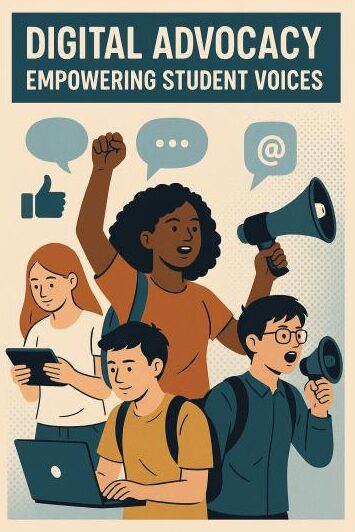
Topic: Digital Advocacy
The Internet and the other communication technologies (ICTs) are powerful tools for social justice education and for civic action. Social media platforms and digital devices are powerful tools that enable activists to mobilise the public, document the injustices that are part of society, and awaken a larger public. Throughout society, young people are increasingly becoming vocal about raising various issues, ranging from the Black Lives Matter movement to demonstrations against environmental issues; young people are becoming more active in activism.
It is critical to recognize how online advocacy is raising the voices of students amidst the cacophony.
Amplifies Student Voices
There are lots of apps such as Instagram, Twitter , and LinkedIn that allow students to share their opinions, ideas, and experiences with the world. Voice democratization makes sure the voices of young people are heard in important discussions.
Encourages Civic Participation
Cyber activism encourages active involvement in social and political causes among students. Petitions, email campaigns, and viral hashtag crusades push young adults to debate policies as well as hold their leaders accountable.
Encourages Inclusivity and Diversity
The World Wide Web provides a level playing field for any student, irrespective of origin, to make their opinions heard. Gender equality, global warming, mental illness, and education reform can be debated by anyone interested in bringing about change.
Digital advocacy
gains valuable skills such as public speaking, content creation, critical thinking, and networking, all of which apply in today’s workplace.
Student-Initiated Digital Advocacy Examples
#FridaysForFuture – Initiated by Greta Thunberg, this climate movement was brought into the mainstream by students around the globe using social media.
Awareness of Campus Mental Health
Students usually begin blogs, vlogs, and online forums to de-stigmatize and share information.
Students’ Educational Policy Campaigns
Online petitions of students have triggered a change in exam timetable schedules, tuition fee policies, and campus facilities.
Tools and Strategies for Digital Advocacy
Social Media Campaigns
Utilize platforms such as Instagram Reels, YouTube, or TikTok to make compelling, shareable content to draw attention to a cause.
Online Petitions
Websites such as Change.org enable students to collect signatures and submit them to the authorities to facilitate policy change.
Virtual Events and Webinars
Livestreaming live discussions and forums with experts online can reach and mobilize people efficiently.
Storytelling
Retelling personal experiences via blog entries, podcasts, or video helps to engage emotionally with the audience and motivate action.
Collaborations and Networking
Collaborations with NGOs, activists, and student groups are able to increase reach and impact
Challenges in Digital Advocacy
While digital advocacy helps students express and assert their self-identity to the public, it also presents some challenges, making it a more hazardous endeavour. The challenges are:
Misinformation – Students should make sure facts are verified before posting.
Digital Divide – Not everybody is equally connected to the internet.
Online Harassment – Criticisms may draw insulting comments or cyberbullying.
To counter these, students need to practice digital literacy, be respectful in communication, and request help from colleagues and mentors.
The Way Forward
Online activism has changed students’ interaction with the world. It has given them a voice that is not geographically constrained and a platform to effect change in the present moment. Organisations can make this happen by providing courses in digital skills, enhancing civic engagement, and integrating advocacy projects into courses of study.
In digital advocacy practice, not only do students produce the now, they are positioning themselves to become good, engaged, and well-educated citizens of the future.
Conclusion
Amplifying students’ voices through online activism is not a fad, but an imperative in the world today. When youth leverage the exploitation of technology to fight for causes they believe in, they influence policy, organize communities, and create a more equitable society. The message is clear: students are not leaders of the future; through the medium of digital advocacy, they are leading today
References
[1] M. Gladwell, “Small Change: Why the revolution will not be tweeted,” The New Yorker, Oct. 2010. [Online]. Available: https://www.newyorker.com/magazine/2010/10/04/small-change-malcolm-gladwell
[2] H. Jenkins, S. Shresthova, L. Gamber-Thompson, N. Kligler-Vilenchik, and A. Zimmerman, By Any Media Necessary: The New Youth Activism. New York, NY, USA: NYU Press, 2016.
[3] A. Loader, B. Vromen, and M. Xenos, “The networked young citizen: Social media, political participation and civic engagement,” Information, Communication & Society, vol. 17, no. 2, pp. 143–150, 2014.
[4] Change.org, “Start a Petition,” 2023. [Online]. Available:https://www.change.org
[5] UNICEF, “The State of the World’s Children 2021: On My Mind – Promoting, protecting and caring for children’s mental health,” 2021. [Online]. Available: https://www.unicef.org/reports/state-worlds-children-2021
FAQ
Q1. What is digital advocacy?
Digital advocacy refers to using online tools and platforms to raise awareness, promote causes, and influence change. Students use it to campaign for issues such as mental health, sustainability, and equality through digital media.
Q2. How does digital advocacy help students make a difference?
It allows students to use technology creatively — from social media campaigns to online petitions — to mobilize communities, educate others, and push for policy changes on issues that matter to them.
Q3. What are the key tools used in digital advocacy?
Students rely on social platforms like Instagram, X (Twitter), TikTok, and YouTube, along with petition sites such as Change.org. Blogs, podcasts, and webinars are also powerful for spreading digital advocacy messages.
Q4. Why is digital advocacy important in education?
It equips students with civic awareness, critical thinking, and communication skills. Through digital advocacy, they learn leadership, ethical digital use, and the value of active participation in social issues.
Q5. What are some real-world examples of student digital advocacy?
Movements such as #FridaysForFuture and campus mental health campaigns show how students have used digital advocacy to create tangible change, both locally and globally.
Q6. What challenges do students face in digital advocacy?
Major challenges include misinformation, online harassment, and unequal internet access. These can be minimized with digital literacy, fact-checking, and maintaining respectful communication online.
Q7. How can universities support student-led digital advocacy?
Universities can offer workshops on digital ethics, social media strategy, and civic engagement, helping students integrate advocacy projects into their academic or extracurricular programs.
Q8. Does digital advocacy really lead to real-world change?
Yes. Many successful policy reforms and awareness campaigns began as online movements. Digital advocacy often drives petitions, partnerships, and public discussions that lead to institutional or governmental responses.
Q9. What skills do students develop through digital advocacy?
Students learn storytelling, content creation, collaboration, and networking—skills that enhance both employability and civic responsibility.
Q10. What is the future of digital advocacy?
With emerging tools like AI, virtual events, and blockchain transparency, digital advocacy will become more interactive, personalized, and impactful. Students will continue to lead these changes, shaping global conversations.
Penned by Gaurav Chaturvedi
Edited by Reeya Kumari, Research Analyst
For any feedback mail us at [email protected]
Transform Your Brand's Engagement with India's Youth
Drive massive brand engagement with 10 million+ college students across 3,000+ premier institutions, both online and offline. EvePaper is India’s leading youth marketing consultancy, connecting brands with the next generation of consumers through innovative, engagement-driven campaigns. Know More.
Mail us at [email protected]