Topic: Digital Storytelling for Mental Health Awareness
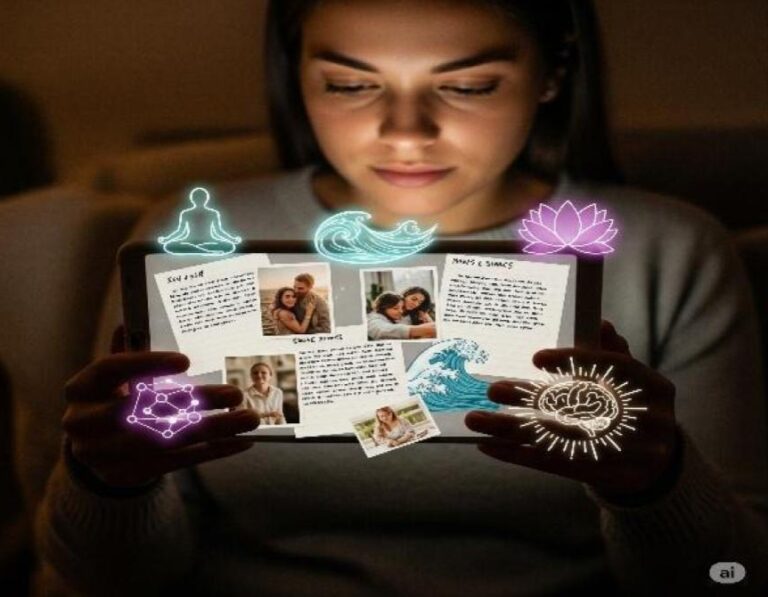
Digital storytelling has emerged as a uniquely potent means of raising awareness about mental health, during an era in which electronic message constructs our reality. This method capitalizes on the strong force of individual testimony coupled with available multimedia technologies, through more than mere isolated facts and jargon from the experts. It is creating brief, engaging video clips based on a mix of text, photo, personal photo, and audio narrative to tell an experience lived. These stories are twofold in nature and in doing so, create a more empathetic and educated populace they are an excellent therapy for their authors while being an unrivaled learning resource for the masses.
Building Healing and Connection Stories
Fundamentally, the art of digital storytelling is self-reflection and creative expression. Individuals are led through scripting their experience of mental health typically centered around an issue, a moment of change, or a survival narrative. The script is used as the foundation for their video. The author then selects multimedia elements suitable to their narrative, i.e., personal images at various stages of life, symbolic images, brief video clips, or ambient sound having an emotional color.
The most personal element is usually the voice-over, where the person themselves narrates when reading out their script. This act of re-telling in one’s own words is an additional sense of honesty and openness hard to express even through the written word. The end product, a finished short film usually anywhere between three to five minutes, is a refined, highly intimate narrative ready to be taken to the public. This act of taking public is the important step, taking intimate work and making it a tool of public debate. When shared with other professionals, health professionals, or the broader community, they allow for widespread discourse, breaking the deep feeling of loneliness that typically comes with mental illness.
The Double Advantage: Producer and Audience Benefits
The effect of digital storytelling is significant and two-sided, clearly helpful to both the author and viewer. For the author, the production process is more therapeutic in nature. It provides a formal means of meeting and coming to terms with challenging experience, articulating feelings and thoughts in a concrete fashion. This can result in a stronger sense of being in control and writer of one’s own life, turning around previously endured trauma into a site of strength and wisdom. Creativity is a healing and powerful process, allowing voice to be spoken.
These personal stories are a powerful force for change for the listener . They humanize mental health disorders, replacing the voice of an individual. abstract label and stereotype with the known face. This personal connection to an experience is extremely effective in deconstructing stigma and engendering genuine empathy and compassion. Audiences are given first-hand knowledge regarding mental health complexities, significantly enhancing health literacy and understanding. Furthermore, by sharing recovery and successful coping stories, digital storytelling can be encouraging and bring about hope, prompting others to seek the help they require, thereby making seeking help a normalizing process. For clinicians and researchers, the stories also offer rich, contextualized qualitative data that can be used to inform more person-centered care.
Conclusion
The adaptability of digital storytelling means that it can be tailored for a vast variety of uses across the mental health context. As a direct therapeutic technique, it is applied in one-to-one and group therapy sessions to assist clients in integrating experience and developing an integrated sense of self. As a dynamic teaching aid, it appeals to young people and is increasingly being employed in schools and universities to promote emotional intelligence and mental health. It is also a priceless resource for instruction of medical students and future physicians, giving them a glimpse of the patient experience that text cannot provide.
They are at the heart of public health advocacy and publicity campaigns, offering the authentic voice of policy change and fundraising activities. Lastly, the act of producing and viewing these narratives is an empowering force for building communities. Viewings and internet forums can provide untrammelled spaces of discourse, authenticating experienced life and inciting sentiments of solidarity and support, affirming that by sharing our stories, we are empowered.
References
1. National Institute of Health
https://pubmed.ncbi.nlm.nih.gov/26900000/
2. Sage Journals
https://journals.sagepub.com/doi/10.1177/15381927251313732
3. APA PsycNET
https://psycnet.apa.org/record/2024-67162-001
FAQ on Digital Storytelling for Mental Health Awareness
Q1. What Is Digital Storytelling for Mental Health Awareness?
Digital storytelling for mental health awareness is the use of multimedia short films, combining personal narratives, photos, and audio, to share lived experiences and reduce stigma.
Q2. Why Is Digital Storytelling for Mental Health Awareness Effective?
It makes abstract mental health concepts personal and relatable, encouraging empathy, breaking stereotypes, and building public understanding.
Q3. How Do Individuals Benefit from Creating Digital Storytelling for Mental Health Awareness Projects?
The process is therapeutic, allowing people to reflect on their experiences, regain control, and find healing through creative expression.
Q4. How Does Digital Storytelling for Mental Health Awareness Impact Audiences?
It humanizes disorders, provides authentic insight, and inspires compassion, helping audiences better understand mental health challenges.
Q5. Can Digital Storytelling for Mental Health Awareness Be Used in Therapy?
Yes. Therapists use this method in one-on-one or group settings to help clients integrate experiences and develop resilience.
Q6. How Long Should a Digital Storytelling for Mental Health Awareness Video Be?
Most projects are short films lasting 3–5 minutes, making them powerful yet accessible tools for awareness.
Q7. How Does Digital Storytelling for Mental Health Awareness Reduce Stigma?
By replacing abstract labels with personal voices and faces, it normalizes discussions around mental health and seeking support.
Q8. Is Digital Storytelling for Mental Health Awareness Useful in Education?
Yes. Schools and universities increasingly use it to promote emotional intelligence and reduce stigma among young people.
Q9. How Do Clinicians Use Digital Storytelling for Mental Health Awareness?
Clinicians and researchers use these stories as qualitative data, shaping more person-centered mental health care.
Q10. How Does Digital Storytelling for Mental Health Awareness Build Communities?
Community screenings and online forums create safe spaces for dialogue, fostering solidarity and collective advocacy.
Q11. What Are the Dual Benefits of Digital Storytelling for Mental Health Awareness?
It heals the storyteller through self-expression while educating audiences, making it a double-impact approach.
Q12. What’s the Future of Digital Storytelling for Mental Health Awareness?
It will expand as a tool for therapy, public health campaigns, and education, reaching wider audiences through digital platforms.
Penned by Ritisha Behl
Edited by Ridhima Sharma, Research Analyst
For any feedback mail us at [email protected]
Transform Your Brand's Engagement with India's Youth
Drive massive brand engagement with 10 million+ college students across 3,000+ premier institutions, both online and offline. EvePaper is India’s leading youth marketing consultancy, connecting brands with the next generation of consumers through innovative, engagement-driven campaigns. Know More.
Mail us at [email protected]