From Blueprint to Smart Future: What is a Digital Twin?
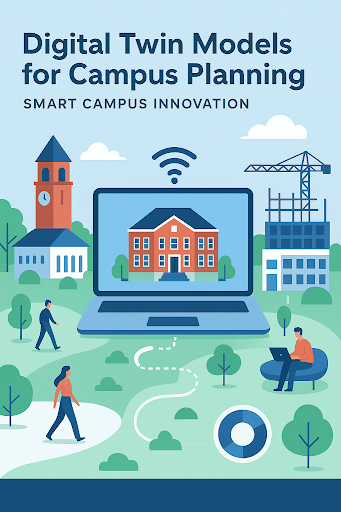
What is a digital twin campus model? And how can it be leveraged for campus planning? In this article, both of those questions will be answered.
A digital twin is essentially a dynamic model that reflects the real conditions of facilities and buildings. This is a revolutionary technology that has a great deal of benefits.
- Sustainable planning
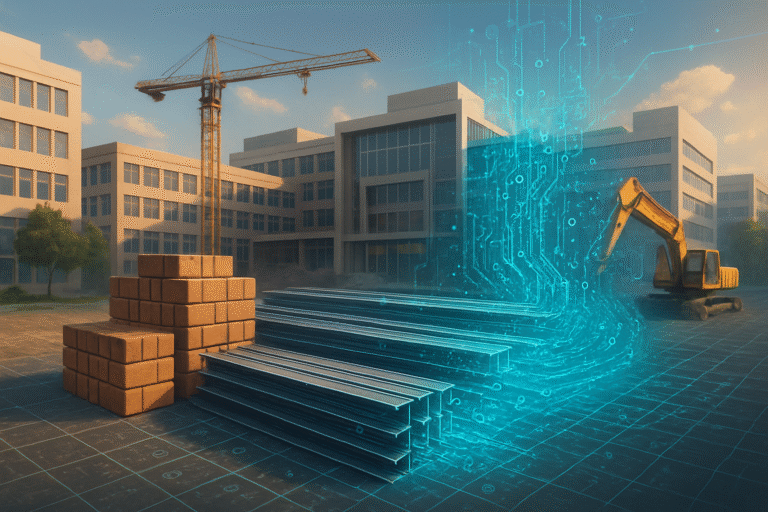
Using a digital twin model saves on a huge amount of resources – tangible resources, such as building materials, construction costs, as well as human labour that goes into the assembly of a large-scale building facility.
- Proactive risk calculation
Digital twin models allow for the detection of any sort of architectural defects or safety risks before the final building is even assembled. This prevents any potential mishap as a result of faulty construction, as it can be fixed and accounted for before the building process even begins. This allows for safety, budget cutting, and reduced labour.
- Energy saving
Often, in large-scale operations, inefficiency in terms of energy and resource consumption easily gets hidden or side-stepped. Since a digital twin models exactly what the real-life equivalent would like, energy consumption can be accounted for, allowing for inefficient design to be altered in a way that maximises both efficiency and minimises unnecessary consumption of energy.
Smarter, Safer, Greener: Digital Twins in Campus Planning
One may wonder, where is the relevance of the digital twin modelling process applicable in the context of campus planning? In fact, academic institutions like universities and colleges are a prime candidate to embrace such a technology to create a space that is both student-friendly and sustainable, with the tools for smart campus planning via campus digital twins.
- Digital replicas of physical campus infrastructure, systems and operations mirror the real-world environment in a way that empowers planners and architects to visualise and analyse campus activities in a previously unimaginable manner.
- When applied to a higher education context, campus digital twins are able to track energy use across various arms – student dormitories, predicting classroom occupancy, and even model pedestrian traffic patterns. This results in improved efficiency and sufficient resource allocation, minimising any future mishaps and complaints.
- Campus digital twins can monitor energy usage across campus buildings, identify excesses and wastage and simulate green, eco-friendly alternatives. For example, a digital twin can encourage optimisation of HVAC systems to reduce carbon emissions.
- By enacting digital twins for the above purposes, not only are massive costs saved in the long run, but such institutions are also able to align themselves with global sustainability goals, which have huge positive impacts on the environment at large.
- Importantly, campus planning via digital twins inevitably enhances safety and emergency preparedness. Fire drills, campus evacuations in case of a disease breakout, can all be accounted for by the integration of security systems and IoT sensors, providing insights that enhance the prevention and management of potential crises.
- Digitising the student experiences also allows students to leverage the rapidly transforming technological landscape, being the largest stakeholders in the same. Whether it’s analysis of foot traffic across cafeterias or gyms, students can interact with digital twin interfaces to find study spots, track shuttle availability, etc, thus navigating campus efficiently.
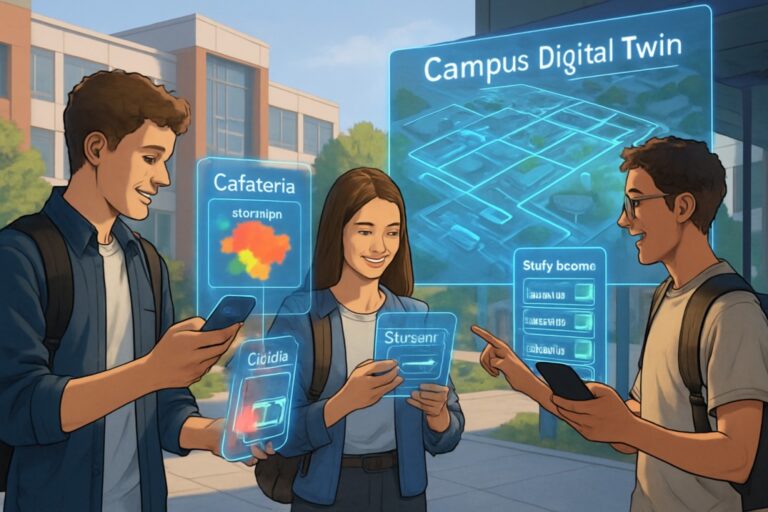
Evidently, campus digital twins represent a blend of rapid development in technology with an increase in both convenience and efficiency in the lives of all university stakeholders. By enabling long-term strategic planning, costly mistakes are avoided and infrastructural renovations are made easy, making the predictive capacity of campus digital twins a vital tool in shaping higher education.
Conclusion
Digital twin models are not merely sci-fi depictions any longer, but are the tools that have drastically changed the way we create, manage, and maintain physical spaces. The digital twin model application in campus releases a lot of possibilities that are not only limited to optimising energy use and cutting down expenses but also to ensuring safety and making the students’ stay more enjoyable. Through the construction of a virtual campus duplicate, the institutions can experiment with various scenarios, foresee results, and make choices that are informed by data, directly supporting campus planning, sustainability targets, and overall strategic growth goals.
In the end, campus digital twins do not solely mean campus digital replicas; rather, they are the decision-making engines that power colleges to be more intelligent, eco-friendly and secure as a whole. With the incessant change in higher education in a tech-driven world, the implementation of digital twin technology will be a game-changer in designing tomorrow’s campuses.
References
[1] M. Abdelrahman, E. Macatulad, B. Lei, M. Quintana, C. Miller, and F. Biljecki, “What is a Digital Twin Anyway? Deriving the Definition for the Built Environment from over 15,000 Scientific Publications,” arXiv, Sep. 21, 2024. [Online]. Available: https://arxiv.org/abs/2409.19005
FAQs: Digital Twin Campus
1. What is a digital twin campus?
A digital twin campus is a virtual replica of a university or college campus that mirrors its real-world infrastructure, systems, and operations. It allows planners, administrators, and students to interact with campus layouts, track resources, and simulate various scenarios to optimize efficiency and safety.
2. How does a digital twin campus improve planning?
By using a digital twin campus, institutions can simulate construction projects, monitor energy usage, and assess building layouts before implementing changes. This ensures smarter resource allocation, reduces costs, and helps identify potential issues before they become real problems.
3. What are the benefits of implementing a digital twin campus?
The main benefits include energy efficiency, proactive risk management, sustainability, improved safety, and enhanced student experience. Digital twins allow administrators to test scenarios, optimize systems like HVAC and lighting, and create a safer, greener campus.
4. Can a digital twin campus save money?
Yes. By modeling buildings, energy systems, and resource use virtually, institutions can identify inefficiencies and costly mistakes before they occur. This reduces construction errors, minimizes wasted materials, and lowers energy consumption, resulting in long-term financial savings.
5. How does a digital twin campus enhance sustainability?
A digital twin campus provides detailed insights into energy consumption, waste management, and resource utilization. Institutions can simulate eco-friendly alternatives, optimize building systems, and ensure that sustainability goals are met while reducing the campus carbon footprint.
6. How is student experience improved by a digital twin campus?
Students can interact with digital twin interfaces to find study spaces, check shuttle availability, or track cafeteria traffic. By digitizing real-life campus scenarios, a digital twin campus makes navigation easier, saves time, and improves overall student convenience.
7. What technologies are used in a digital twin campus?
Digital twin campuses leverage IoT sensors, 3D modeling, AI analytics, and cloud computing. These technologies capture real-time data from buildings, utilities, and traffic patterns to create a live, dynamic virtual replica of the campus.
8. Can a digital twin campus be used for emergency planning?
Absolutely. Digital twin campuses allow simulation of fire drills, evacuation plans, and disaster scenarios. Planners can test emergency routes, predict congestion points, and ensure student safety by analyzing potential risks virtually before they occur.
9. How does a digital twin campus help with energy efficiency?
By modeling energy flows across campus buildings, a digital twin campus can identify inefficient systems or overconsumption areas. Administrators can then adjust HVAC, lighting, or other systems to save energy, reduce costs, and meet sustainability standards.
10. Is a digital twin campus useful for long-term planning?
Yes, it provides data-driven insights for future expansions, renovations, or new campus projects. Institutions can simulate multiple scenarios, anticipate challenges, and make informed decisions that align with growth and sustainability objectives.
11. Who benefits from a digital twin campus?
Administrators, facilities managers, and students all benefit. Administrators gain actionable data, facilities managers optimize operations, and students enjoy a safer, smarter, and more convenient campus environment.
12. Can multiple campuses be integrated into one digital twin system?
Yes. Institutions with multiple buildings or satellite campuses can integrate all their data into a centralized digital twin platform. This enables consistent monitoring, unified planning, and coordinated resource management across locations.
13. What challenges exist in implementing a digital twin campus?
Challenges include high initial setup costs, integrating legacy systems, ensuring data accuracy, and training staff to use the platform effectively. However, these challenges are outweighed by long-term efficiency, cost savings, and improved campus operations.
14. How is data privacy handled in a digital twin campus?
Data collected for a digital twin campus must follow privacy and security standards. Student, staff, and operational data should be anonymized, encrypted, and accessed only by authorized personnel to prevent breaches.
15. Why is a digital twin campus considered the future of higher education planning?
A digital twin campus combines smart technology, sustainability, and strategic planning. It enables institutions to optimize operations, improve student experience, ensure safety, and reduce costs. As technology evolves, digital twin campuses will become essential for creating intelligent, efficient, and eco-friendly campuses.
Penned by Tapasmi Ray Chaudhuri
Edited by Shashank Khandelwal, Research Analyst
For any feedback mail us at [email protected]
Transform Your Brand's Engagement with India's Youth
Drive massive brand engagement with 10 million+ college students across 3,000+ premier institutions, both online and offline. EvePaper is India’s leading youth marketing consultancy, connecting brands with the next generation of consumers through innovative, engagement-driven campaigns. Know More.
Mail us at [email protected]