
On one such wintry afternoon, I saw my younger brother playing Scavenger Hunt with much enthusiasm and energy. From the other side of the room, was his mother cheering for his win like no other. Gamified learning has always fascinated students, as they have been providing a platform for growth and maximum engagement of kids via games. The idea is central to the theme of Game-Based Learning. In order to break the monotony of their daily schedule and the traditional learning method, gamified activities can help increase their concentration and determination, with a willingness to win the game and unknowingly adapt new techniques for education.
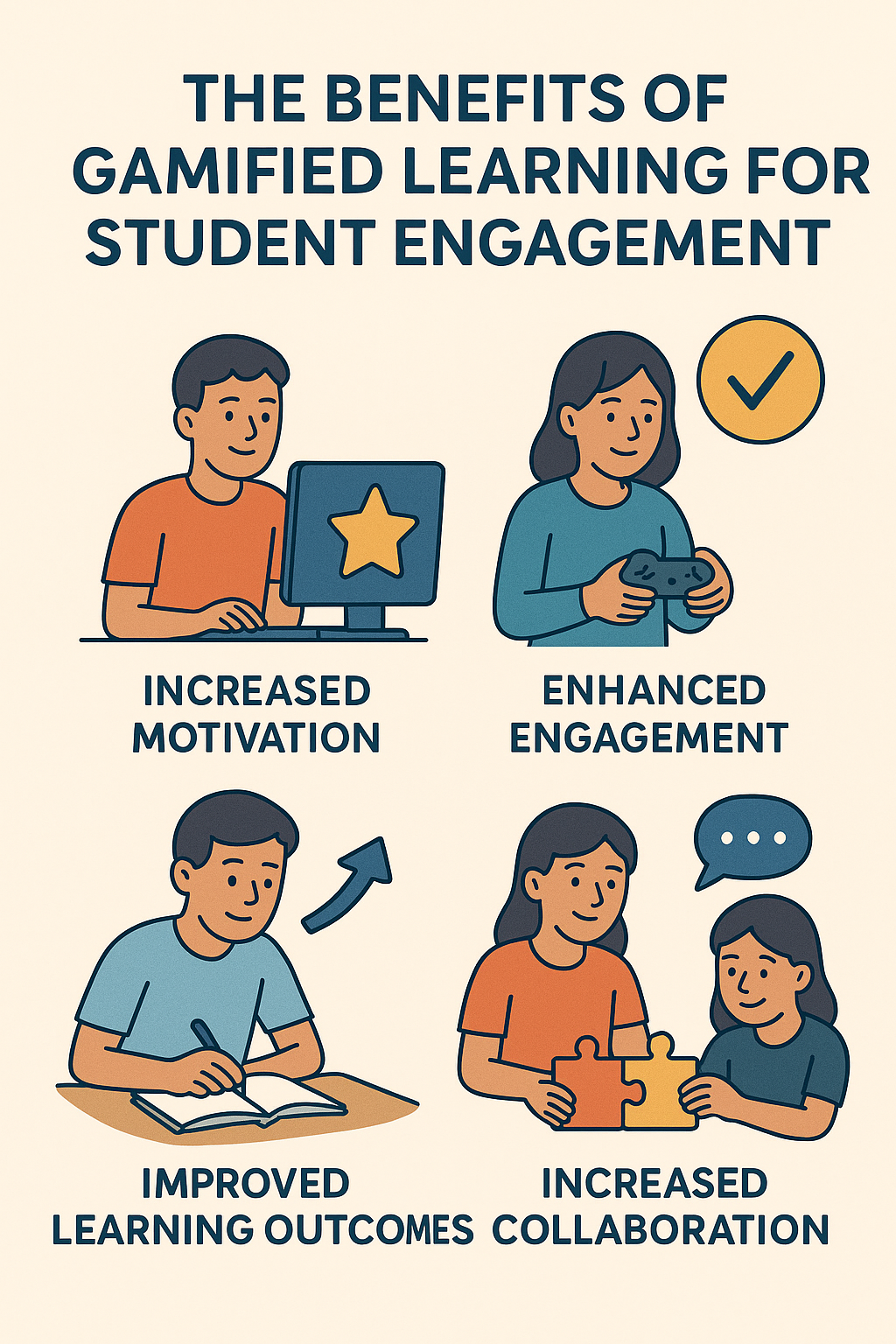
Making classes fun, gamification taps into students’ love for success, games, and working together. When classes are set up like a game, students want to stay in, take part more, and keep what they know for a longer time. Schools, colleges, and online sites all over the world are now using games in learning to make lively and deep places to learn.
The good things are not just about having better marks. Games in learning grow sharp thinking, solving problems, and working as a team, while also letting students lead their own learning. From language apps that give points for daily practice to math sites with fun tests, gamification has many ways to make learning better and more meaningful. In this piece, we will look at the top good parts of games in learning for pulling in students and how it is changing how we teach and learn.
5 Powerful Benefits of Gamified Learning for Student Engagement
- More Fun and Drive – Gamified tasks give points, badges, and show who is leading. This grabs kids’ eyes, makes them join in more and thus, learn in a fun way. Wanting to win can build their character and push them to do better. They tend to love the games and keep up their hard work.
- Collaboration and Teamwork-Working together and teamwork – These two go side by side. With teamwork, people work as one and talk with others from all over the world. Teamwork helps you make smart choices and fix problems well. Students learn to help each other and shoot for the same end goal: the win.
- Development of Critical Thinking– Gamified learning demands students to critically analyse, think, and make a decision, which assists them in developing valuable skills. They overcome challenges and improve their mindset, and as a result, rewards can be of great achievement for them.
- Improved Knowledge– Information in a contextual and virtual world can seem attractive to children, and they are more likely to catch various incomprehensible concepts through games. Elements that include animated learning can foster the process of learning, and at the same time, present kids with fun-filled activities.
- Personalised Learning– A Gamified Learning platform can contribute towards students’ pace and allows them to focus on areas where they need improvement by providing them with accessible resources required for learning. Availability of a wide range of games.
Conclusion
To end with, and conclude by saying that gamified activities have become an indispensable component to assist students with their growth with joy-filled techniques.
Gamification in education offers numerous benefits by increasing student engagement, motivation and knowledge. We see a transformation of a student. Shifting from traditional learning to a more interactive experience improves their attitude towards learning.
References
[1] R. Nacional, “Gamifying Education: Enhancing Student Engagement and Motivation,” Puissant, vol. 5, pp. 716–729, 2024. Discusses increased participation, improved learning outcomes, and the importance of effective implementation strategies.
[2] M. C. Frontiers, “Impact of gamification on school engagement: a systematic review,” Frontiers in Education, published 2024, highlights enhanced student motivation, efficacy, participation, and self-regulation with gamification.
FAQ’s
Q1. What is gamified learning and how does it enhance classroom experiences?
Gamified learning is an educational approach that uses game elements such as points, challenges, and badges to make lessons more engaging. This method encourages students to participate actively and makes learning more interactive. Lessons structured like games can increase focus and motivation, turning routine topics into memorable experiences that students enjoy.
Q2. How does critical thinking improve problem-solving skills?
Critical thinking involves analysing information, considering different perspectives, and making informed decisions. Developing this skill helps students solve complex problems effectively. By thinking critically, learners can evaluate evidence, identify solutions logically, and approach challenges in both academic and real-life situations with confidence.
Q3. Why is collaboration and teamwork important in education?
Collaboration and teamwork enable students to work together, communicate effectively, and achieve shared goals. By participating in group activities, learners build empathy, patience, and leadership skills. Working collectively allows them to combine diverse ideas, resulting in more innovative and comprehensive solutions than they could achieve individually.
Q4. How can personalised learning benefit individual students?
Personalised learning allows students to progress at their own pace, focusing on areas that require improvement. This method tailors learning resources and tasks to each learner’s strengths and weaknesses, ensuring no one is left behind. It also encourages self-directed study, allowing students to take control of their progress while building confidence in their abilities.
Q5. How does gamified learning increase student engagement?
By integrating interactive tasks, challenges, and rewards, this method keeps students actively involved in the learning process. When lessons are enjoyable and competitive in a healthy way, students are more likely to participate consistently. Engaged learners retain knowledge better and demonstrate higher levels of effort and creativity in completing assignments.
Q6. How does critical thinking relate to decision-making?
Critical thinking strengthens decision-making by encouraging careful analysis of situations before taking action. Students learn to weigh options, consider possible outcomes, and choose the best course. This ability is crucial in academics and beyond, as it promotes logical reasoning and strategic problem-solving in various scenarios.
Q7. In what ways can collaboration and teamwork enhance creativity?
Teamwork allows students to pool their ideas, brainstorm, and explore solutions collectively. This approach encourages creativity by combining different viewpoints and skills, resulting in more innovative results. Collaborative projects teach students how to negotiate, compromise, and build on each other’s suggestions, fostering both creative thinking and social skills.
Q8. Can personalised learning be applied in group activities?
Yes, it can. Even in collaborative settings, tasks can be adjusted to suit individual learning needs. This ensures that each student benefits from the group experience while still receiving the personalised guidance necessary for understanding specific concepts. It creates a balanced learning environment that supports both individual and collective growth.
Q9. How can gamified learning improve knowledge retention?
Interactive elements, repeated practice, and challenges in gamified learning help students remember information longer. By making lessons enjoyable and participatory, learners are more likely to focus and internalise concepts. This approach reinforces learning in a way that traditional lecture-based methods often cannot, improving overall comprehension.
Q10. Why is critical thinking valuable for academic growth?
It helps students process information deeply, evaluate arguments, and form logical conclusions. Critical thinking promotes understanding beyond rote memorisation and allows learners to apply knowledge in practical situations. It also encourages curiosity, independent thought, and the ability to solve problems creatively and effectively.
Q11. How does collaboration and teamwork prepare students for future careers?
Students who practice collaboration and teamwork develop essential workplace skills, including communication, leadership, and adaptability. Working on group projects in school mirrors real-world professional environments, where success often depends on coordinated efforts. These experiences equip learners with the ability to work confidently in diverse teams.
Q12. How does personalised learning support diverse learning styles?
By providing resources that cater to visual, auditory, and kinesthetic learners, personalised learning ensures that each student can engage effectively with the material. This tailored approach increases comprehension and retention while reducing frustration. Teachers can address knowledge gaps and support individual learning preferences, leading to better academic outcomes.
Q13. What strategies keep students engaged through gamified learning?
Incorporating leaderboards, interactive quizzes, and progressive challenges encourages continuous participation. Recognition for accomplishments and incremental rewards boosts motivation, while fun, interactive content ensures students remain focused. These strategies create an enjoyable environment where learners are eager to complete tasks and achieve goals.
Q14. How can critical thinking be nurtured in classrooms?
Teachers can encourage critical thinking through problem-based learning, open-ended questions, and analytical exercises. These approaches challenge students to evaluate information, consider alternatives, and reason logically. By consistently applying these methods, learners develop stronger decision-making skills and a deeper understanding of the subjects they study.
Q15. What long-term benefits do students gain from collaboration and teamwork?
Engaging in collaborative activities helps students build empathy, interpersonal skills, and adaptability. They learn how to communicate ideas, resolve conflicts, and achieve collective goals. These skills are not only valuable in school but also crucial for personal development and success in professional and social environments later in life.
Penned by Prateeksha
Edited by Shashank Khandelwal, Research Analyst
For any feedback mail us at [email protected]
Transform Your Brand's Engagement with India's Youth
Drive massive brand engagement with 10 million+ college students across 3,000+ premier institutions, both online and offline. EvePaper is India’s leading youth marketing consultancy, connecting brands with the next generation of consumers through innovative, engagement-driven campaigns. Know More.
Mail us at [email protected]