
Hybrid Models of Learning for Students Today
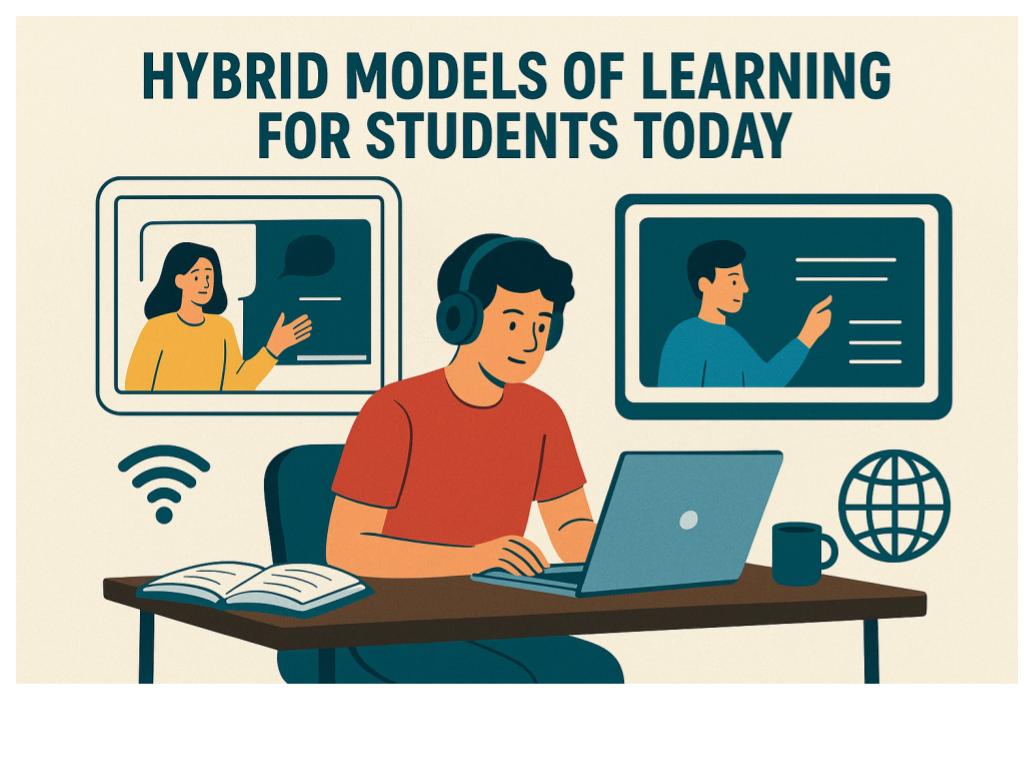
Topic: Hybrid Models of Learning
In the rapidly changing world of today, education has taken a completely different shape. Those good old days of studies, when it would mean studying in a classroom with a chalkboard and chalk, are bygones. Students of today are not only learning from books but also from screens, apps, and online whiteboards. This revolution brought along a powerful new model of learning—a hybrid model of learning.
But what is a hybrid model of learning, and why are schools, colleges, and coaching institutes globally shifting to it?
4 Useful Insights that you must know about Hybrid Models of Learning for Students
Hybrid Learning Unlocked: The Best of Both Worlds
Hybrid learning is the combination of online and offline class learning. Rather than taking one or both, this model picks the best of both in a bid to bring forth a flexible, student-centred learning process.
For example, a student can attend physical classes on some days of the week and live or recorded classes online on others. Or, they can watch it later in the night after watching it during the day in class. It is a clever combination of tradition and technology.
Why Hybrid Learning Works So Well for Modern Students?
Today’s students are different from their predecessors. They are digital natives—born and bred in an age where smartphones, YouTube, and instant Google searches were the way things were. Hybrid learning is their vocabulary. That is why it succeeds so well:
Flexibility
One of the biggest strengths is flexibility. The students learn at their own pace. If a student received an answer incorrectly during class, they can take the web lecture again. If a student wants to study at midnight, they can without having to adhere to a classroom schedule.
Personalized Learning
We all learn in our own ways. Some learn quick, others take their time. Flexible education through Hybrid learning lets students stop, go back, and watch classes again. They can get help from pros when they meet on campus if they need it.
Improved Utilization of Time
Daily commuting to class is exhausting, especially in urban or rural settings. Hybrid learning conserves commuting time, which can be spent in revising, resting, or relaxing.
IT Skills
In flexible education and hybrid learning, students are conditioned to learn using technological tools such as Zoom, Google Classroom, Microsoft Teams, and other learning management systems as the default. Such technological skills not only facilitate learning but are also beneficial when they venture out into the labor market.
Challenges of Hybrid Learning (And How to Fix Them)
There is no such thing as perfect. Hybrid learning also has some issues.
Internet Connectivity
No. Nobody has a reliable internet connection at home. Frustrating to attend live online lectures. Simple fix: offer downloadable content or low-data recorded lectures to view offline.
Home Distractions
Online learning is distracting—e.g., messages, background noise at home, or having to look at Instagram. In order to have control over this, students can maintain a specific study room, listen to music while wearing headphones, and use apps that eliminate distractions for studying.
Absence of Motivation
Others find it more difficult to remain interested when not under the roof of a classroom. Occasional visits by the teachers, discussion with peer groups, and setting goals can keep the students interested and motivated.
The Future of Learning: Hybrid Education is Here to Stay
The pandemic might have driven the world towards hybrid learning, but even in the present era, after the world achieved normalcy, this model has simply been amplified. Why? Because it simply makes sense.
Most of the best universities, coaching institutes, and even education systems are now shifting models to incorporate hybrid learning—not as a war strategy but as a default mode. It is flexible, accessible, and equips students for an increasingly digital world.
Conclusion
Hybrid learning is a mix, and it’s a good one. It keeps the fun and close feel of being on campus and mixes it with the free and new ways of learning online. For all students today who juggle class work, training in work places, hobbies after class, and keeping a sound mind, flexible education provides the perfect balance.
Learning should not make things tough, or messy, or take away the real meaning.
References
[1] Khaled Essa, E. (2023). “The Effectiveness of Hybrid Learning in Enhancing Academic Mindfulness and Deeper Learning of University Students.” International Journal of Research in Education and Science (IJRES), 9(1), 188-202. https://doi.org/10.46328/ijres.3081ERIC+3ResearchGate+3ResearchGate+3
[2] Mittal, K., & Srivastava, S. (2025). “Hybrid Learning in Higher Education System: A New Frontier in Pedagogical Innovation.” Journal of Education and Educational Research, 3(2), 130-145. https://doi.org/10.33545/26649799.2025.v7.i2b.248ResearchGate
[3] Anjum, R., Ali, N. Z., & Sarwar, U. (2025). “The Impact of Remote and Hybrid Learning Models on Student Engagement and Academic Performance at University Level.” Research Review, 9(2), 50-65. https://doi.org/10.33282/rr.vx9i2.04ResearchGate
FAQ on Hybrid Models of Learning
Q1. What Is Hybrid Learning?
Hybrid learning is a model that combines in-person classes with online education, creating a flexible education system for students.
Q2. Why Is Blended Learning Effective for Modern Students?
Blended learning matches the lifestyle of digital-native students, offering flexibility and personalized education that adapts to individual needs.
Q3. What Are the Main Advantages of Flexible Education?
Flexible education allows students to learn at their own pace, revisit lectures, and balance online and offline classes more effectively.
Q4. How Does a Mixed Learning Model Improve Student Engagement?
By combining classroom interaction with digital tools, mixed learning models create a more engaging and practical approach for students.
Q5. Can Hybrid Learning Save Time for Students?
Yes. Hybrid learning reduces commuting, letting students invest more time in revision, relaxation, or personal development.
Q6. What Role Does Technology Play in Blended Learning?
Tools like Zoom, Google Classroom, and LMS platforms make blended learning interactive and an essential part of flexible education.
Q7. How Does Hybrid Learning Support Personalized Learning?
Students can pause, replay, and learn at their own pace, making hybrid learning highly adaptable to different learning styles.
Q8. What Are the Challenges of Mixed Learning Models?
Connectivity issues, distractions at home, and reduced motivation are common challenges that flexible education must address.
Q9. How Can Institutions Improve Blended Learning Experiences?
Providing offline materials, interactive sessions, and regular teacher-student interaction makes blended learning more effective.
Q10. Why Is Flexible Education Considered the Future of Learning?
Flexible education combines the strengths of digital platforms and classrooms, ensuring that learning remains accessible and practical.
Q11. Are Blended Learning Models Useful Beyond Universities?
Yes. Blended learning is widely adopted in coaching centers, professional training, and corporate education programs.
Q12. Is Hybrid Learning Here to Stay?
Absolutely. Hybrid learning has become the default model of flexible education, balancing tradition with innovation for modern students.
Penned by Deepika
Edited by Shashank Khandelwal, Research Analyst
For any feedback mail us at [email protected]
Transform Your Brand's Engagement with India's Youth
Drive massive brand engagement with 10 million+ college students across 3,000+ premier institutions, both online and offline. EvePaper is India’s leading youth marketing consultancy, connecting brands with the next generation of consumers through innovative, engagement-driven campaigns. Know More.
Mail us at [email protected]