
Topic: Micro-Campaigns
Introduction
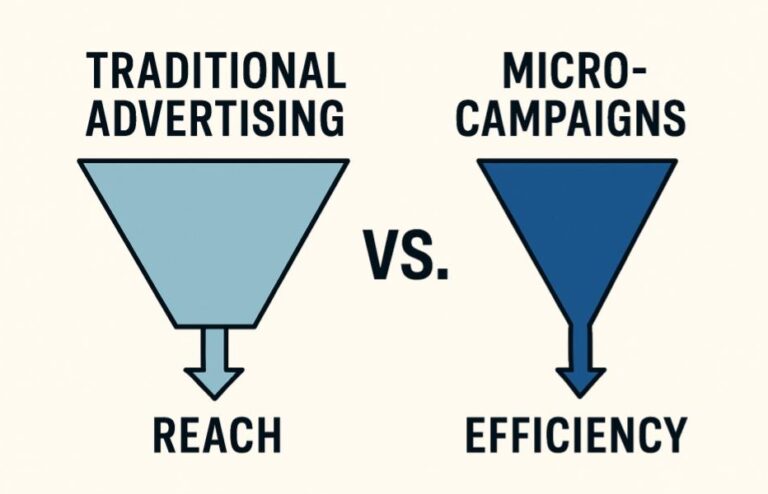
With the constantly fluctuating digital marketing world, companies are no longer heading towards blanket marketing strategies but towards customized data-driven micro-marketing strategies. Micro-marketing is one such disruptor wherein companies craft targeted campaigns specifically designed for micro audiences instead of the general market. This strategy allows for not only enhanced engagement but also expanded digital reach with minimum cost.
Let us examine why micro-campaigns always outperform the ad average — and why marketers are reaching individuals further than ever with them.
Precision of Target and Relevance
As compared to broad-brush conventional advertising campaigns, micro-marketing campaigns reach highly specific groups of individuals. Through the use of data analytics and behavioral research, marketers are able to establish niche groups based on interests, demographically, as well as online behaviors. This allows each advertisement to be effective with the audience’s needs — resulting in click-throughs as well as improved conversion rates.
When people read about the things that matter to them personally, the interest is intrinsic as opposed to extrinsic.
Cost Effectiveness with Targeted Investment
The micro-campaigns also minimize wastage of funds on uninterested audiences. Rather than investing in high-cost traditional or mass-media slots, marketers use smaller funds precisely to reach audiences that will most likely convert. This optimizes ROI in addition to enabling small and medium-sized enterprises to compete favorably in the digital platform.
Real-Time Performance Monitoring with Data
One of the best things about micro-marketing campaigns is their agility and adaptability. Any campaign can be measured in real time, so the marketer can fine-tune the message, look/feel, or spot as needed, depending on success. Such improvisation is the norm with traditional advertising—not once the TV commercial goes on the air or the newspaper ad hits the big page; it remains stationary regardless.
But micro-campaigns can be optimized in real time — adjusting the ad during the course of the campaign to achieve max reach and engagement.
Personalization Elevates Customer Loyalty
The customer of the current day demands one-on-one communication. Micro-marketing campaigns allow companies to establish emotional nearness with communications that are viewed as personalized. As a limited-time area marketing program or limited-product launch, micro-marketing fosters a membership as well as gratitude among the final users.
This type of individualization creates long-term loyalty — long-term ad metrics that aren’t typically possible with conventional ads.
Broader Digital Reach through Multi-Channel Integration
The micro-campaign shines in the digital world because it can be easily carried from platform to platform — social networks, e-mail, search engines, etc. Each platform represents a distinct micro-audience, boosting the brand’s digital reach significantly while keeping messaging consistent
The hybrid approach ensures that the consumers receive platform-appropriate content as opposed to redundant or irrelevant advertising.
Experimentation and Flexibility
It can be brief, precise, and easily variable. Brands can experiment with different creatives at the same time — different tone, images, or calls-to-action — and instantly see what works best. This enables continuous innovation with the minimum heavy investment that is the hallmark of big-scale classical campaigns.
Higher ROI And Conversion Rate
Ultimately, micro-campaigns deliver hard business results. With extremely targeted buyer profiles and correspondingly accurate communication, companies realize three to four-times ROI and conversion rates over traditional advertising. The smaller, smarter strategy generates bigger, better results.
Conclusion
In today’s digital marketing environment, accuracy trumps quantity. Micro-marketing enables brands to connect intimately, rather than broadly — turning eyeballs into tangible behavior. Large-scale ads can still be a part of branding visibility, but where relevance, responsiveness, and customization are concerned, micro-campaigns evidently dominate the field.
With micro-marketing science, businesses can broaden their online reach, reduce wastage cost, build true bonds with the customer — one effective campaign at a time.
References
[1] “Micro Marketing: The Future of Personalized Advertising,” Digital Marketing Institute, 2024. [Online]. Available: https://digitalmarketinginstitute.com/blog/micro-marketing
[2] “Why Micro Campaigns Deliver Higher ROI,” HubSpot Blog, 2023. [Online]. Available: https://blog.hubspot.com/marketing/micro-campaigns
[3] S. Patel, “Precision Targeting in the Age of AI Marketing,” Marketing Today Journal, 2024. [Online]. Available: https://www.marketingtoday.com/precision-targeting-ai
[4] J. Smith, “From Mass Media to Micro Moments: The Evolution of Digital Reach,” Forbes, 2023. [Online]. Available: https://www.forbes.com/digital-reach-micro-moments
FAQs
Q1. What are micro-campaigns in digital marketing?
They are targeted campaigns designed for specific audience segments, often using data and behavioral insights to make the message more relevant.
Q2. How do they differ from traditional ads?
Unlike broader advertising that reaches everyone, these campaigns focus on niche groups. This makes the messaging sharper and the budget more effective.
Q3. Why are they considered cost-efficient?
Because the focus is on smaller, interested audiences, less money is wasted on people who are unlikely to engage. This improves returns on investment.
Q4. How can they increase engagement?
When the message is tailored to the right people, it naturally attracts more clicks, responses, and shares. Relevance drives stronger interaction.
Q5. Can these campaigns run on multiple platforms?
Yes. They can be adapted to different channels such as social media, email, and search, ensuring consistent communication across the board.
Q6. Are they suitable for small businesses?
Definitely. Smaller brands can use this approach to compete with larger players because it requires lower investment and focuses on impact rather than scale.
Q7. What kind of results can be expected?
Many businesses see stronger ROI and better conversion rates because the campaigns reach people who are more likely to respond.
Q8. What tools are helpful for running them?
Email platforms, ad managers, CRMs, and analytics dashboards are commonly used to plan, launch, and track results.
Q9. How do brands personalize their content?
They use insights like browsing history, past purchases, or location data to tailor messages so they resonate with specific groups.
Q10. Can this strategy be scaled up over time?
Yes. It starts with small audience groups and can be gradually expanded while keeping the personalized touch intact.
Penned by Kartikey
Edited by Ridhima Sharma, Research Analyst
For any feedback mail us at [email protected]
Transform Your Brand's Engagement with India's Youth
Drive massive brand engagement with 10 million+ college students across 3,000+ premier institutions, both online and offline. EvePaper is India’s leading youth marketing consultancy, connecting brands with the next generation of consumers through innovative, engagement-driven campaigns. Know More.
Mail us at [email protected]