
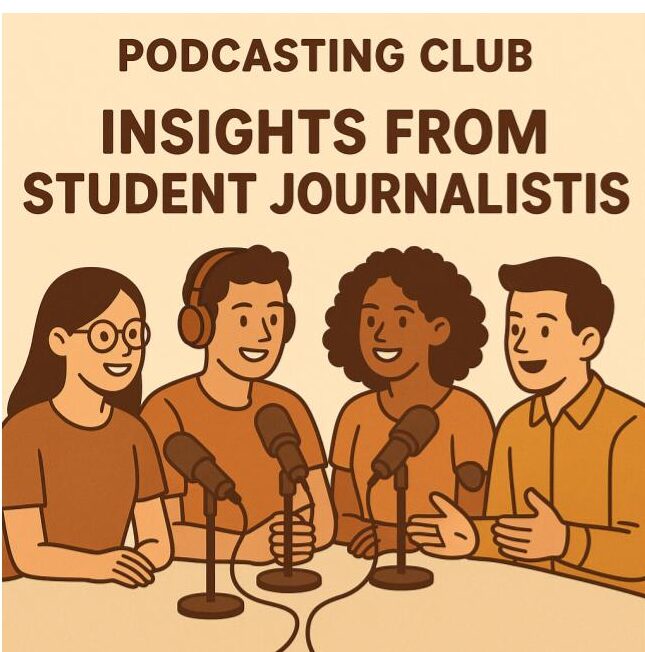
Topic: Podcasting Club
The world of journalism is undergoing a rapid transformation, and the development of the journalist podcast is the new trend that shows this change most visibly. All over college campuses, student’s journalist podcast is reviving the stories by using the audio medium, thereby making their campus podcasting clubs not just a place for learning but also a ground for the media leaders of the future. These student journalist podcasts are changing the way campus stories are delivered, storytelling with characters and conversations to engage, unveil the ignored issues, and foster a greater feeling of community.
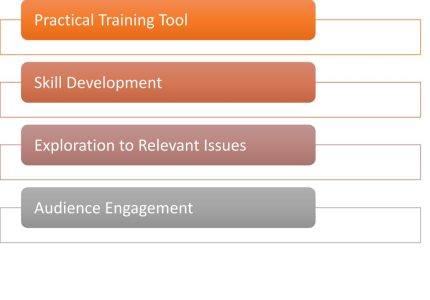
3 Reasons why Journalist Podcasts Matter for Students
Numerous aspiring reporters consider creating a podcast not only as an amusing leisure time activity but also as an indispensable part of their campus reporting training. Podcasting really does impart essential skills: the ability to carry out incisive interviews, narrate stories engagingly, and adapt journalistic standards to different formats. Journaling through creating scripts and recording episodes to editing audio and promoting content, every podcasting process step deepens students grasp of journalisms core values.
These skills are not theoretical. On such podcasts as “The Student Lawyer Podcast,” “The Voracious Student,” and numerous campus shows featured on networks like NPR’s Student Podcast Challenge, students delve into local issues, interpret school policies, and unearth the voices of the marginalized. The immediacy of the audio medium enables them to establish a relationship with their audience and, thus, to be witnesses to the influence of journalism.
The Podcasting Club as a Learning Laboratory
Currently, many universities have podcasting clubs as part of the campus reporting training, and in these clubs, students have collaborative projects that simulate professional newsrooms working. They can be brainstorming ideas, assigning reporting, and reviewing as a group one more time the finished episodes. The club turns into a supportive space of experimentation and development where student podcasters get their learning by doing, failing, and succeeding.
One characteristic of journalist podcasts that sets them apart from the rest is their combining of the old and the new. Students pick up the skills of the conventional journalist—fact-checking, sourcing, ethics, truthfulness—that they have deepened with the oddities of the podcast medium. Usually, professors or media experts are not only involved to guide but also to judge the students’ work and provide them with ideas, thus making the learning process more engaging and interactive.
Student Journalists on the Mic: Real Impact
The best journalist podcasts don’t just entertain—they make a real impact on campus life. Podcasting clubs have reported on student government elections, campus protests, wellness resources, and even crucial topics like mental health and inclusion. Their coverage often sparks discussion, motivates change, and gives the student body a voice they may not find in traditional media.
One of the key advantages of making a podcast is the enhancement of soft skills that are equally as crucial as co-operation and time-management capabilities. Working under the pressure of a tight deadline is similar to the experience in media offices, and a guest interview is excellent students; contact with the outside world. Reporting from their university, students get to know how influential their voices are and the necessity of media morals that is inevitably linked to it.
Challenges and Opportunities
Student podcasting is filled with many challenges. Some of these problems are technical errors, lack of time, and the question of being honest in reporting. In such a situation, club members are those who have to come up with ways to solve these issues. However, these problems can also be treated in another way, i.e., they only deepen their experience, which to some extent can be considered as training for the real world of journalism.
In addition, the advent of technology has made it possible for aspiring podcasters to easily enter the field. Having a smartphone and using free editing software is all they need to start a journalist podcast with almost no initial cost. The likes of Spotify, Apple Podcasts, and YouTube have made it possible for a podcast to reach not only an on-campus audience but also one that is far away, thus having a large audience.
Conclusion
Media careers students, the podcasters club is no more a pastime but a springboard for future jobs in journalism, broadcasting, and communications. Employers are looking for candidates who have practical audio skills and a portfolio of student work, especially those who have been trained in campus reporting training. and demonstrate initiative and adaptability.
Student journalists are gaining the needed skills while they actually produce a journalist podcast, thereby they are influencing campus discourse and learning what being a trusted voice means. Podcasting clubs are confirming that the next generation of reporters will be equally adept at using a mic as a keyboard and, thus, their stories will be accessible across a wider range of platforms.
References
- E. Provost, “The Power of Student Journalism,” TEDxUofT, Jul. 20, 2023. : https://www.youtube.com/watch?v=jY06UaahJbg
- M. Fourwaves, “Top 10 Academic Podcasts to Listen to in 2024,” Fourwaves, Feb. 14, 2022. : https://fourwaves.com/blog/academic-podcasts/
- Journalism and Media Studies Centre, “Student Podcasts,” The University of Hong Kong. : https://jmsc.hku.hk/student-podcasts/
- M. Finlay and T. Gershuny, “Student-created podcasts as a tool for teaching economics and communication,” Computers & Education, vol. 205, 2025. : https://www.sciencedirect.com/science/article/abs/pii/S1477388025000076
- A. Clemens, “Academic Podcasts for Researchers & Scientists,” June 10, 2024. https://annaclemens.com/blog/podcast-writing-researcher-scientist/
FAQ on Podcasting Club
Q1. What is a podcasting club in a university or college?
A podcasting club is a student-run group where members learn to create podcasts, practice campus reporting training, and share stories with their community.
Q2. Why should students join a podcasting club?
Joining a podcasting club helps students develop storytelling skills, technical know-how, and confidence while amplifying their voices on campus.
Q3. How does a podcasting club support campus reporting training?
A podcasting club provides practical experience in interviewing, scripting, recording, and editing, which complements traditional campus reporting training.
Q4. What equipment is used in a podcasting club?
Most podcasting clubs use basic tools such as microphones, headphones, editing software, and recording spaces to produce quality audio content.
Q5. Can a podcasting club improve journalism skills for students?
Yes, a podcasting club teaches students fact-checking, ethical reporting, and narrative building—skills crucial to modern journalism.
Q6. What topics can be covered in a podcasting club?
Podcasting clubs often cover student elections, mental health, inclusion, cultural events, and campus life, giving students a wide scope of practice.
Q7. How does a podcasting club benefit student communities?
A podcasting club amplifies student voices, creates awareness, and fosters dialogue about important campus and social issues.
Q8. Do podcasting clubs prepare students for media careers?
Yes, being active in a podcasting club builds a portfolio of audio work that can impress employers in journalism, broadcasting, or communications.
Q9. What challenges do podcasting clubs face?
Podcasting clubs often face challenges like lack of time, limited equipment, and maintaining ethical standards in reporting.
Q10. How do podcasting clubs collaborate on projects?
Members of a podcasting club brainstorm topics, assign roles, and co-produce episodes—replicating the workflow of a real newsroom.
Q11. Can podcasting clubs reach audiences outside campus?
Yes, podcasting clubs can publish episodes on platforms like Spotify, Apple Podcasts, and YouTube, reaching wider audiences beyond campus.
Q12. How does a podcasting club encourage student creativity?
By allowing students to experiment with formats, interviews, and narratives, a podcasting club fosters creativity and innovation in storytelling.
Penned by Akshat Duggal
Edited by Reeya Kumari, Research Analyst
For any feedback mail us at [email protected]
Transform Your Brand's Engagement with India's Youth
Drive massive brand engagement with 10 million+ college students across 3,000+ premier institutions, both online and offline. EvePaper is India’s leading youth marketing consultancy, connecting brands with the next generation of consumers through innovative, engagement-driven campaigns. Know More.
Mail us at [email protected]