
How Sleep Impacts Competitive Exam Pressure Management
Published: October 18, 2026
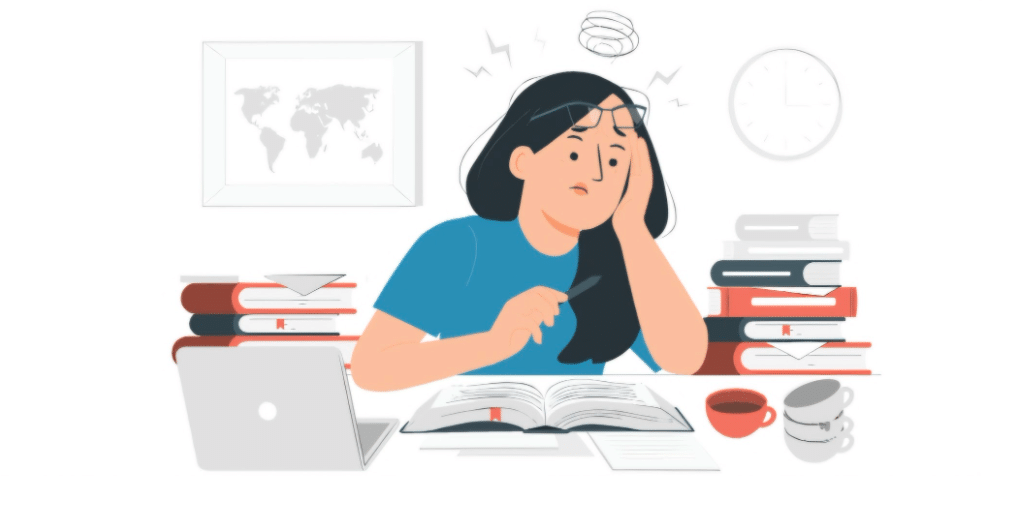
Table of Contents
Every competitive exam season brings the same advice: study more, revise more, sleep less. Many aspirants believe that every hour of sleep is an hour of lost marks.
But sleep and exam pressure are closely connected. When you stay up until 2 a.m., you wake up tired, anxious, and forgetful, and the pressure feels even heavier.
This article explains how sleep and exam pressure affect each other, and how to build a routine that keeps you calm.
Why Competitive Exams Create So Much Pressure
Competitive exams are different from regular school tests. A single paper can decide your college, your career, and sometimes your family’s expectations.
Add long syllabi, heavy competition, and months of continuous preparation, and the stress of college life and study quickly builds up.
Common signs of exam pressure include:
- Constant worry about the syllabus or the result
- Difficulty concentrating for long periods
- Irritability, restlessness, or low mood
- Headaches, stomach discomfort, or tight shoulders
- Trouble falling asleep even when you are exhausted
Many students try to fix this with more study hours. But managing sleep and exam pressure often starts at night, with better rest.
What Happens to Your Brain When You Sleep
Sleep is not a passive shutdown. While you rest, your brain does work that directly affects your exam results.
1. Memory consolidation. During sleep, the brain organizes what you learned and moves it into long-term memory. A student who studies six hours and sleeps well often remembers more than one who studies eight hours and sleeps badly.
2. Mental clean-up. Sleep helps clear waste built up during waking hours, which supports clear thinking the next day.
3. Emotional balance. Deep and REM sleep help regulate emotions. A good night makes problems feel smaller, and a bad night makes everything feel heavier.
4. Energy for focus. Attention, reasoning, and problem-solving all depend on a rested brain.
How Sleep and Exam Pressure Feed Each Other
The link between sleep and exam pressure works like a cycle. Stress makes it harder to fall asleep, and poor sleep makes stress feel bigger.
A student who sleeps badly after a tough mock test wakes up more worried, studies less effectively, and scores lower on the next test. Breaking this cycle is one of the fastest ways to handle sleep and exam pressure together.
Higher stress response
When you are sleep-deprived, the body tends to produce more stress hormones. Small worries, like a low mock test score, start to feel like major threats.
Weaker memory and slower thinking
Tired brains find it harder to learn and recall. You might read a chapter three times and still blank out on questions you actually know.
Careless mistakes
Sleep loss reduces attention. In exams with negative marking, a few careless errors can lower your rank.
Mood swings and low motivation
Lack of sleep can leave you irritable or low, which makes it harder to follow your study plan.
The All-Nighter Myth
Many aspirants rely on all-nighters before a mock test or the final exam. It feels productive, but it usually backfires, because sleep and exam pressure both rise when the body is exhausted.
- You may cover more pages, but you remember less of them.
- Your concentration the next day drops sharply.
- Your anxiety rises because your body is tired.
If you must choose between two extra hours of study and two extra hours of sleep the night before an exam, sleep is usually the better investment.
How Much Sleep Do Exam Aspirants Need?
Needs vary, but teens need about 8 to 10 hours of sleep a night, and adults should get at least 7 hours.
Getting the right amount is a simple way to control sleep and exam pressure before they affect your results.
Quality matters as much as quantity. Six hours of broken sleep is not the same as six hours of deep sleep.
A Practical Plan to Manage Sleep and Exam Pressure
You don’t need a perfect routine to improve sleep and exam pressure. You need a steady one. Try these habits.
1. Fix a sleep and wake time
Go to bed and wake up at roughly the same time every day, including Sundays. Experts also recommend a consistent sleep schedule, even on weekends.
2. Protect the last hour before bed
Stop heavy studying 45 to 60 minutes before sleep. Use that time for light revision, a short walk, stretching, or a bath.
3. Keep your phone away from the bed
Scrolling social media or exam forums at night keeps your mind alert and increases comparison and worry. Keep your phone outside the bed area.
4. Watch your caffeine
Tea, coffee, and energy drinks can stay in your system for hours. Avoid them after late afternoon.
5. Make your room sleep-friendly
A dark, quiet, and cool room helps. Keep study material off the bed so your brain links the bed with rest.
6. Write down worries before bed
Keep a notebook beside you. Write tomorrow’s top three tasks and any worries, then close it. This tells your brain it doesn’t need to hold everything overnight.
7. Get daylight and movement
Morning light and 20 to 30 minutes of brisk walking improve sleep at night and reduce stress during the day.
8. Keep naps short
If you need a nap, keep it to 20 to 30 minutes and finish before late afternoon.
A Sample Daily Schedule
This is only an example, so adjust it to your batch and exam timing:
- 6:00 a.m.: Wake up, daylight, water, light stretching
- 7:00 a.m. to 1:00 p.m.: Classes and study blocks with short breaks
- 1:00 p.m.: Lunch and a short rest
- 2:00 p.m. to 7:00 p.m.: Practice, revision, and mock analysis
- 7:00 p.m.: Walk and dinner
- 8:00 p.m. to 9:30 p.m.: Light revision of formulas or notes
- 9:30 p.m. to 10:30 p.m.: Wind down with no screens
- 10:30 p.m.: Sleep
Sleep in the Final Week and on Exam Day
The last week matters a lot. Managing sleep and exam pressure in these days is more important than squeezing in extra hours of revision.
- Don’t change your sleep schedule drastically.
- Avoid new topics late at night. Revise what you already know.
- Prepare your admit card, ID, and travel plan the evening before.
- If you can’t fall asleep the night before the exam, don’t panic. Resting still helps.
- On exam day, wake up early enough for a light breakfast and a calm journey.
When Sleep Problems Need Extra Help
Occasional bad nights are normal during exam season. But talk to a doctor or counsellor if:
- You have trouble sleeping most nights for several weeks
- You feel constantly hopeless or extremely anxious
- You snore loudly or wake up gasping
- You use sleeping pills without medical advice
If exam stress is mixed with hostel or housing worries, read our guide on student rights in campus housing. Asking for help is not a weakness.
Frequently Asked Questions
Does sleep really affect exam performance?
Yes. Sleep and exam pressure are directly linked. Good sleep supports memory, focus, and emotional control, while poor sleep raises stress and makes mistakes more likely.
How many hours should a competitive exam aspirant sleep?
Most teenagers need about 8 to 10 hours and adults at least 7 hours. Consistency and sleep quality also matter.
What should I do if I can’t sleep because of exam anxiety?
Try a wind-down routine, write your worries on paper, practise slow breathing, and avoid your phone. If it continues for weeks, speak to a professional.
Can I make up for lost sleep on weekends?
A little extra rest helps, but irregular sleep disrupts your body clock. A steady routine works better.
Conclusion
Sleep is one of the most powerful and least expensive tools for handling sleep and exam pressure. It strengthens memory, calms emotions, improves focus, and gives you energy for months of preparation.
Aspirants who protect their sleep are not studying less. They are studying smarter.
This week, pick one change: a fixed bedtime, a phone-free last hour, or a short worry-writing habit. Small steps, repeated daily, can change how you feel about the exam.
Disclaimer: This article is for general information only and is not medical advice. If you have ongoing sleep problems, please consult a qualified healthcare professional.
Event Snapshots
Connect Your Brand with Gen-Z
Unlock high-impact youth marketing strategies with EvePaper.
Book Strategy Call