
Introduction
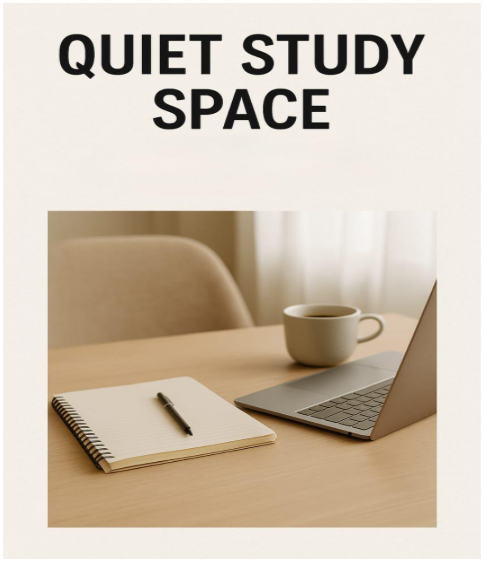
The environment plays a crucial role during the time of study, and a quiet study space is an essential need that helps one focus on their studies.During a deep dive study session, noise might disrupt concentration. People’s physical and mental well-being are impacted by sound.
Accuracy, speed, comprehension, and other elements are all part of learning efficiency, which is a measure of how fast or slowly someone learns. A peaceful study area that prevents distractions is a must for any successful campus learning environment.
We are all aware of how crucial a peaceful study area and a cozy setting are to maintaining concentration and productivity at work. The majority of productive, focused, and frequent students have a dedicated study space at home or on campus.
Having a peaceful, pleasant space to study in is usually beneficial.The upcoming topics will be a detailed review and will give you a proper idea about how to make your perfect study space.
The Search for Silence
Why Do We All Need a Quiet Place?
According to studies, unsettling sounds or noises cause mental disruptions that frequently cause us to lose focus. Additionally, it causes a person who is attempting to focus to lose concentration. Therefore, a calm, cozy setting is necessary for sustained concentration during study sessions.
People who are very interested in their studies, enjoy studying, and work hard to get good grades typically have a quiet, pleasant place to study. This frequently has a significant impact on their academic performance.
Silence is the best weapon that can be used to attain complete concentration and conquer focus. Most students often choose quiet spaces over other environments, while others create or find their own quiet space.
This often becomes one of their favorite places that helps them achieve their academic goals. This is what drives one to find the path to silence.
What Makes a Space Truly Great for Studying?
For a long time, most people find studying difficult. Their capacity to maintain concentration for prolonged periods of time will be significantly enhanced by having the ideal focus place. An ideal study area should be quiet, well-lit, and equipped with the resources you need close at hand. One’s focus and concentration should stay on the task at hand once they begin studying in their designated place. They shouldn’t be distracted, and the area should be comfortable for them.
Some people want their study space to be well-lit, while others want it to be aesthetically pleasing and tastefully constructed. It all boils down to the individual’s fundamental requirements and inclinations. Some like to study in libraries, some in coffee shops, and some at their home, where they have a dedicated table or space as a focus spot. In the end, the comfort that the space provides will make it truly a great space for studying.

The Role of Comfort: Lighting, Seating, and Ergonomics
As mentioned, noise affects the mental and psychological health of a person, but it is not the only factor that decides a good focus spot. A comfortable study space should also include other factors, such as
Good lighting
A good seat
Ergonomics
The length of time spent studying will be greatly extended by good illumination, which will lessen eye strain. Medical professionals also advise against straining one’s eyes because this might harm the retina and lead to eye issues.
Doctors also advise people to sit with proper posture. improper shoulder alignment, aching muscles, and back pain can all be caused by improper posture. Having a decent chair that cushions the body with pleasant material is advised.
The study of workstation layout and design is known as ergonomics. This is frequently a smart habit to follow in any situation. A tidy and organized workspace will provide for a terrific place to concentration and a productive atmosphere.
How to Create an Ideal Study Space
A fundamental aspect in creating a peaceful study area is ergonomics. A comfortable chair, a well-organized desk, noise-canceling headphones, and adequate lighting are all essential components of a secure study area.
These days, noise-canceling headphones help keep a study area peaceful by blocking out background noise. Additionally advised are a table with height adjustment and a cozy seating chair. Include a nice lamp or other lighting source.
The comfort of the environment and the enhancement of our ability to concentrate and focus when using a quiet study room are ultimately more significant than anything else. It should fit the previously listed requirements if you’re looking for the ideal focus spot.
References
[1] C. Liu, “The effect of the acoustic environment of learning spaces on students’ learning efficiency,” Building and Environment, [Online]. Available: www.sciencedirect.com.
[2] A. Asselineau, G. Grolleau, and N. Mzoughi, “Quiet environments and the intentional practice of silence: Toward a new perspective in the analysis of silence in organizations,” Journal of Management & Organization, Cambridge University Press, 2020.
[3] K. Swargiary and K. Roy, “The impact of study environment on students’ academic performance: An experimental research study,” Indira Gandhi National Open University (IGNOU), 2021.
[4] K. Hall, “Silent and independent: Student use of academic library study space,” M.A. thesis, Dept. Education, Concordia Univ., Montréal, Canada, 2010.
FAQ Section – Quiet Study Space Reviews
1. What are Quiet Study Space Reviews?
Quiet Study Space Reviews are evaluations and insights into study environments that help students identify the best places to focus without distractions.
2. Why are Quiet Study Space Reviews important for students?
They highlight the benefits of silence, comfort, and ergonomics, allowing students to choose study spots that improve concentration and productivity.
3. How can Quiet Study Space Reviews improve my exam preparation?
By showing which spaces minimize distractions and maximize focus, reviews guide students toward settings that support deeper learning during exam prep.
4. What features do Quiet Study Space Reviews usually consider?
They typically assess lighting, seating comfort, ergonomics, noise levels, and accessibility of study materials.
5. Do Quiet Study Space Reviews include both libraries and home setups?
Yes, reviews often compare libraries, coffee shops, home study corners, and even digital spaces to cover a wide range of preferences.
6. Can Quiet Study Space Reviews help with online learning setups?
Absolutely. Many reviews include recommendations for at-home ergonomic setups and noise-reduction tools suitable for virtual learning.
7. How do Quiet Study Space Reviews address noise issues?
They often evaluate the effectiveness of soundproofing, noise-canceling headphones, and location choices to ensure minimal disturbance.
8. Are Quiet Study Space Reviews based on student feedback?
Yes, most reviews include input from students who share their real experiences with specific study environments.
9. Do Quiet Study Space Reviews recommend specific furniture?
Often, yes. Reviews highlight ergonomic chairs, height-adjustable desks, and proper lighting options for long study hours.
10. How can I find authentic Quiet Study Space Reviews?
Look for reviews backed by student surveys, academic studies, or trusted educational platforms rather than just personal opinions.
11. Do Quiet Study Space Reviews cover psychological benefits?
Yes, many reviews discuss how silence reduces stress, improves focus, and boosts long-term learning efficiency.
12. How often should I consult Quiet Study Space Reviews?
Whenever you’re considering a new study environment, a review can help you evaluate whether it meets your focus needs.
13. Are Quiet Study Space Reviews useful for group study sessions?
Yes, reviews also mention whether a study space supports collaborative work without losing its quiet and focused atmosphere.
14. Can Quiet Study Space Reviews suggest affordable setups?
Definitely. Many reviews provide budget-friendly recommendations for home study spaces that still promote concentration.
15. Do Quiet Study Space Reviews include lighting tips?
Yes, they highlight the importance of natural lighting, desk lamps, and avoiding eye strain while studying.
16. Are Quiet Study Space Reviews relevant for competitive exam aspirants?
Very much so. Aspirants often rely on focused environments, and reviews guide them toward ideal silent study spots.
17. How do Quiet Study Space Reviews help with productivity?
They outline how specific study environments reduce distractions, helping students stay consistent and productive.
18. Do Quiet Study Space Reviews talk about digital distractions?
Yes, some reviews emphasize limiting gadget use, using productivity apps, or creating device-free study zones.
19. Can Quiet Study Space Reviews help me design my own study corner?
Absolutely. Reviews often suggest practical steps for creating a personalized study space at home.
20. Where can I read the best Quiet Study Space Reviews?
Educational blogs, student forums, and academic research platforms frequently publish reliable quiet study space reviews.