
Exams are not just a test of what you’ve studied they’re a test of how well your brain can think, recall, and stay calm under pressure. During this intense time, sleep becomes one of the most essential (yet often ignored) tools for maintaining strong mental health and overall sleep wellness. Students who protect their sleep perform better, feel more emotionally balanced, and experience less burnout compared with those who sacrifice sleep to cram.
Why Sleep Matters More Than One Extra Chapter
Sleep isn’t “downtime.” It’s the time your brain uses to file memories, regulate emotions, restore attention, and recharge cognitive power. Research shows that students often sleep less and experience poorer sleep quality during exams, which leads to more fatigue, mood dips, and reduced concentration. Most young adults need around 7–9 hours of quality sleep for peak academic performance, but exam stress often cuts this short.
Hack 1: Protect a Non-Negotiable Sleep Window
Think of sleep like an exam slot fixed and non-negotiable. Students who consistently get around 6–8 hours of sleep tend to score better and feel mentally more stable. Instead of stretching your study hours into late nights, plan your revision around a protected sleep window. If your energy dips during the day, a 20–30-minute power nap can help without disrupting nighttime sleep.
Hack 2: Keep Your Sleep–Wake Rhythm Consistent
Your brain relies heavily on routine. When your sleep and wake times change drastically from day to day, your internal body clock becomes confused, reducing both sleep quality and mental health. Studies show that sleep consistency over weeks predicts better grades than occasional long study nights. During exams, try to keep your sleep timings within a one-hour range even on weekends.
Hack 3: Create a Bedroom That Calms Your Mind
Your environment sends psychological cues. A cool, dark, and quiet room helps your brain slow down and shift into rest mode. If you’re living in a hostel or a shared space, simple tools like earplugs, an eye mask, or a white-noise playlist can dramatically improve sleep quality and reduce exam-season stress.
Hack 4: Be Smart About Caffeine and Screen Timing
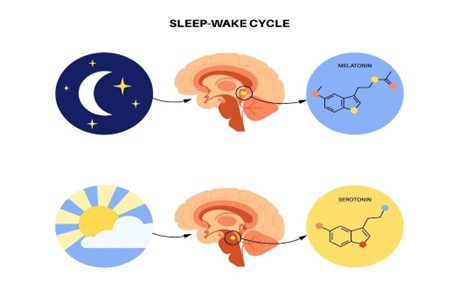
Caffeine and screens are exam season companions, but they can also sabotage sleep. Many students increase caffeine intake during exams, which often leads to sleep disturbances and higher stress. Try to avoid coffee or energy drinks after late afternoon its affect on mental health. Similarly, dim bright screens at night and unplug at least one hour before bed. This helps your body produce melatonin naturally.
Hack 5: Use Wind-Down Rituals to Exit “Study Mode”
If your mind is racing at bedtime, falling asleep becomes difficult. A short pre-sleep ritual signals your body to relax. Activities like gentle stretching, deep breathing, journaling, or guided meditation help bring down stress levels. Just 10–15 minutes of a soothing routine can make your sleep deeper and your mood more stable.
Hack 6: Match Study Tasks With Your Energy Peaks
Studying when you’re mentally drained leads to poor retention and more stress. Instead, observe when you feel naturally alert morning, afternoon, or evening and schedule difficult subjects or mock tests during those times. Low-energy moments can be reserved for light review. This approach keeps your sleep intact and helps you study smarter, not longer.
Hack 7: Treat Sleep as Essential Mental Health Care
Sleep is not an optional luxury it’s one of the strongest tools for emotional stability during exams. Chronic sleep loss increases anxiety, irritability, low mood, and overwhelm. Students who maintain steady sleep patterns report better motivation, clearer thinking, and improved overall wellbeing. Look at sleep as part of your exam-preparation plan, just like notes, practice papers, or revision time.

Bringing It All Together
Better sleep isn’t just about the number of hours you rest, it’s about quality, timing, and consistency. During exam season, every choice you make to protect your sleep becomes a direct investment in sharper focus, emotional balance, and academic performance. Whether it’s minimizing late-night caffeine, setting up a calming sleep environment, or sticking to a stable routine, these small habits collectively strengthen your mental health and give you a real advantage during exams.
References
[1] I. Bouloukaki et al., “Sleep Quality and Fatigue during Exam Periods in University Students,” 2023. [Online].
Available: https://pmc.ncbi.nlm.nih.gov/articles/PMC10487416/
[2] A. Lo et al., “Sleep Quality, Duration, and Consistency Are Associated With Better Academic Performance,” 2019. [Online].
Available: https://www.nature.com/articles/s41539-019-0055-z
[3] “Why Sleep Matters for Students During Exam Season,” 2025. [Online].
Available: https://www.igauge.in/blogs/why-sleep-matters-for-students-during-exam-season
[4] “A Study Guide To Getting Sleep During Final Exams,” 2023. [Online].
Available: https://www.sleepfoundation.org/school-and-sleep/final-exams-and-sleep
[5] “The Importance of a Good Night’s Sleep Before Exams,” 2025. [Online].
Available: https://www.patuck.edu.in/good-sleep-before-exams
[6] “Managing Stress, Sleep and Wellbeing During Exams,” 2024. [Online].
Available: https://jigsaw.ie/managing-stress-sleep-and-wellbeing-during-exams
[7] “Sleep Tips for Exam Success,” 2024. [Online].
Available: https://www.surrey.ac.uk/features/sleep-tips-exam-success
[8] “Caring for Your Mental Health During Exam Season,” 2025. [Online].
Available: https://futurumcareers.com/caring-for-your-mental-health-during-exam-season
[9] “Self-Care During Exam Time,” 2024. [Online].
Available: https://www.thelivelovelaughfoundation.org/blog/self-care-support/self-care-during-exam-time
[10] “Causes and Consequences of Sleepiness Among College Students,” 2014. [Online].
Available: https://pmc.ncbi.nlm.nih.gov/articles/PMC4075951/
[11] “The Differing Relationships Between Academic Discipline, Sleep Characteristics and Academic Performance,” 2024. [Online].
Available: https://www.frontiersin.org/articles/10.3389/fpsyg.2024.1396579/full
[12] “Student Life and Sleep Management Tips,” 2025. [Online].
Available: https://thesleepcompany.in/blogs/sleep-tips/student-life-and-sleep-management-tips
FAQs: Sleep Optimization & Exam Mental Health
1. What is sleep optimization during exam season?
Sleep optimization during exams means improving sleep quality, consistency, and timing to support focus, memory retention, and mental health.
2. Why is sleep important for mental health during exams?
Sleep helps regulate emotions, reduce anxiety, improve concentration, and strengthen memory, all of which are critical for exam performance and mental health.
3. How many hours of sleep should students get during exams?
Most students need 7–9 hours of quality sleep for optimal brain function, even during exam periods.
4. Can lack of sleep affect exam performance?
Yes. Poor sleep reduces attention, memory recall, emotional control, and decision-making, leading to lower academic performance and higher stress.
5. What are the best sleep optimization hacks for students?
Key hacks include maintaining a fixed sleep schedule, limiting caffeine at night, reducing screen time before bed, creating a calming sleep environment, and using wind-down routines.
6. Is it better to study late at night or sleep early before exams?
Sleeping early is more effective. Sleep helps consolidate memory, so studying well and sleeping properly improves recall more than late-night cramming.
7. How does caffeine affect sleep during exams?
Excess caffeine, especially in the evening, disrupts sleep quality and increases anxiety, making it harder to focus and rest properly.
8. Can naps help during exam season?
Yes. Short power naps of 20–30 minutes can boost alertness without affecting nighttime sleep.
9. How does screen time impact sleep before exams?
Screens emit blue light that suppresses melatonin, delaying sleep and reducing sleep quality. Limiting screens an hour before bed improves rest.
10. Is sleep part of mental health self-care for students?
Absolutely. Sleep is one of the strongest forms of mental health care, helping students stay emotionally balanced, focused, and resilient during exams.
Penned by Avi
Edited by Isha Yadav, Research Analyst
For any feedback mail us at [email protected]
Transform Your Brand's Engagement with India's Youth
Drive massive brand engagement with 10 million+ college students across 3,000+ premier institutions, both online and offline. EvePaper is India’s leading youth marketing consultancy, connecting brands with the next generation of consumers through innovative, engagement-driven campaigns. Know More.
Mail us at [email protected]