
Redefining The Way We Learn, Together
Come on—learning has changed quite drastically in the past few years.
Let’s take a jump back in time, ten years ago; the classroom would have textbooks, blackboards, and lectures. The students would be quiet and jot down something as the teacher lectured. But today? Learning is a different ball game. It is dynamic, digital, and most importantly—social.
That is where social learning platforms enter the picture. They’re making learning a commodity further fun, engaging, and social. By promoting collaborative learning, these platforms help students—already used to scrolling, sharing, and messaging—feel right at home.
So, What Are Social Learning Platforms?
Imagine them as web communities where students and educators can interact outside of the classroom. You can:
Ask questions,
Share notes or videos,
Collaborate on group projects
Discuss,
Even mark triumphs—such as surviving a challenging project!
Larger sites such as Google Classroom, Edmodo, Microsoft Teams, Canvas, and even WhatsApp groups (used constructively) are all examples. They make people learn from one another—not necessarily books or lectures.
Why Social Learning Feels So Right for Our Generation?
Let’s face facts—our entire day is spent being online. Maybe it’s Instagram stories or YouTube comments, but we just learn naturally off others. We share reels describing difficult things, or pin posts with tricks to speed through maths faster. That is social learning, just on alternate sites.
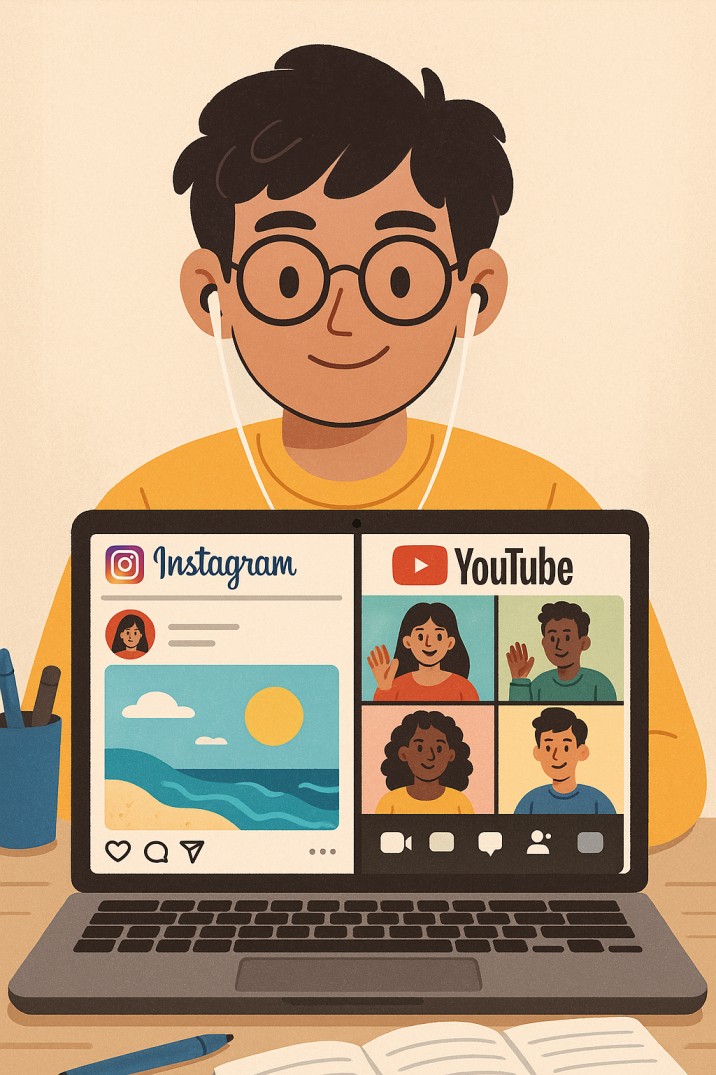
And when the natural process of learning gets intertwined with collaborative learning and formal learning on smooth platforms, magic happens.
Here’s How It Works So Well:
1.Learning Need Not Be Solitary
You’re not stuck with a question and no one else to go to. You simply put it in the forum or group, and someone answers it. Your friends are sometimes even better at explaining something than your teacher—because they know how you think.
2.Everyone Gets to Have Their Say
In class, the loudest voices are heard. But on the Web, the quietest idea has its turn. By type, response, or entry, everyone has room.
3.You Can Learn Anytime, Anywhere
You do not need to wait for the next lesson to raise your question. With Google Classroom or Slack and other sites, discussion happens after class. Learning is as easy—and actually, less stressful.
4.It Mirrors Real-Life Collaboration
Let’s be real—most jobs today require teamwork. You’ll rarely work in isolation. So learning how to work in online groups, manage deadlines, and communicate clearly is real-world prep.
Real Story: How It Helped Me
I recall for a freshman statistics class assignment, we had to iterate through a sample data set in R. It made no sense at first. Someone in my study group just sent a brief YouTube link to us all, another sent a cleaned data set, and a third sent to review our results. We never even met as a group. The outcome? A wonderful report—and it was enjoyable.
That’s the magic of integrated social literacy and cooperative literacy. Everyone lifts each other.
But Let’s Not Ignore the Challenges
Like anything tech-related, these platforms come with their own issues.

Distractions Are Real
It’s easy to get carried down — one nanosecond you’re agitating a conception, the coming you’re watching memes. Setting particular limits and having chairpersons helps keep effects on track.
Not Everyone Has Access
Not all people have lesser opportunities to be equipped with a stable internet or computers. This digital divide is a humongous problem, and colleges or schools would need to offer substitutes where possible, such as offline reading or communal devices.
Too Much Information Can Overwhelm
There might be so many messages, links, and documents floating around that it can become a mess. Having the content well-arranged and observing channel-based topics can undoubtedly do wonders.
The Way Forward: Not Just a Tool, But a Mindset
It’s not a matter of “applying technology to the classroom.” It’s a matter of transforming our thinking about the way we think about learning.
Learning is no longer an individual thing. It’s about collaborating on ideas, learning from one another, and creating a community where students don’t just compete—but cooperate.
Conclusion: Learning Is a Team Sport Now
The brightest people today aren’t necessarily those who’ve acquired the most—but who acquire knowledge together through collaborative learning. Social learning platforms allow us to do just that. They’re not substituting schools—they’re bridging the gaps.
And as we progress—whether you’re still in school, university, or just beginning as a professional—this type of learning will become increasingly vital. Because knowledge is passed on fastest when disseminated.
References
[1] A. Santos, “The Benefits of Social Learning Platforms in eLearning: Boosting Engagement & Skills,” Enterprise eLearning Hub, 24 Sep. 2024. [Online].
[2] “Digital divide lurks behind school reopening plans,” Axios, 8 Feb. 2021. [Online].
[3] “Research on the development and innovation of online education based on digital knowledge sharing community,” BMC Psychology, 2023. [Online].
FAQs
1. What are social learning platforms?
Social learning platforms are online tools or communities that allow learners to collaborate, share knowledge, and engage with each other beyond traditional classrooms. They integrate discussion forums, group projects, file sharing, and messaging features, making learning more interactive and social.
2. How do social learning platforms improve student engagement?
Social learning platforms enhance engagement by encouraging discussions, peer-to-peer teaching, and collaborative problem-solving. Students are more motivated when they can interact, share resources, and learn actively instead of passively listening to lectures.
3. Are social learning platforms only for students?
No, social learning platforms are not limited to students. Professionals, educators, and corporate teams also use them to upskill, collaborate on projects, and share knowledge in workplace training environments.
4. Why are social learning platforms important in modern education?
They align with today’s digital lifestyles. Since students already interact online daily, social learning platforms make education feel natural and engaging, bridging the gap between formal learning and everyday communication.
5. Can social learning platforms replace traditional classrooms?
Not entirely. Social learning platforms complement traditional education by adding collaboration and flexibility. They work best when blended with in-person learning rather than replacing it completely.
6. What are some popular social learning platforms?
Well-known examples include Google Classroom, Edmodo, Microsoft Teams, Canvas, Slack, and even structured WhatsApp or Discord groups. Each of these platforms helps learners share content, ask questions, and collaborate.
7. How do social learning platforms prepare students for the workplace?
They teach teamwork, time management, and communication skills. Since most modern jobs require collaboration, social learning platforms mirror real-world work environments, preparing students for professional challenges.
8. Do social learning platforms support all types of learners?
Yes. They benefit both active and quiet learners. In classrooms, only outspoken students often participate, but on social learning platforms, even reserved learners can contribute equally through written discussions.
9. What challenges come with using social learning platforms?
Some common challenges include distractions, digital divide (not everyone has internet access), and information overload. With proper moderation and structure, these challenges can be managed.
10. How do teachers benefit from social learning platforms?
Teachers gain tools to extend learning beyond classroom hours. They can answer questions, share materials instantly, monitor participation, and foster peer-to-peer support, making their teaching more effective.
11. Are social learning platforms secure?
Most trusted social learning platforms have privacy settings, restricted groups, and content moderation features. However, educators and administrators must still enforce safe practices and teach digital responsibility.
12. Can social learning platforms improve memory retention?
Yes. Research shows that collaborative and active learning improves retention. On social learning platforms, learners explain, debate, and revisit topics, which strengthens memory and understanding.
13. What role do mobile devices play in social learning platforms?
Mobile accessibility is key. Since most learners use smartphones, social learning platforms with mobile apps ensure that learning happens anytime, anywhere—whether during a commute or at home.
14. How do social learning platforms encourage lifelong learning?
They create communities where knowledge exchange never stops. Learners can join interest groups, explore new skills, and stay updated even after formal education ends, fostering lifelong learning habits.
15. What is the future of social learning platforms?
The future includes AI-driven personalization, gamification, and deeper integration with VR/AR. As education becomes more digital, social learning platforms will be central in shaping collaborative and accessible learning worldwide.
Penned by Deepika
Edited by Shashank Khandelwal, Research Analyst
For any feedback mail us at [email protected]
Transform Your Brand's Engagement with India's Youth
Drive massive brand engagement with 10 million+ college students across 3,000+ premier institutions, both online and offline. EvePaper is India’s leading youth marketing consultancy, connecting brands with the next generation of consumers through innovative, engagement-driven campaigns. Know More.
Mail us at [email protected]