
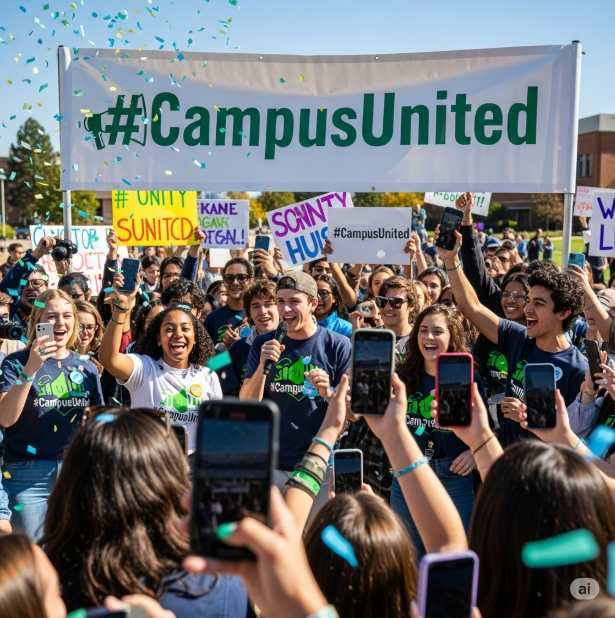
Campus social media movement voices are louder than ever before in the digital age. From opening spaces for designers to creating ideal avatars for ideas to mutate into other organisms in sharing communities, social media has changed the course of how change happens. For a university/college student, a campus social media movement is not only about sharing memes and updating events; it’s about stirring people into action.
Creating a campus social media movement for campus requires more than putting up a few posts; it takes vision, strategy, and endurance, like in sustainability-related affairs, mental health awareness, and student entrepreneurship. A well-executed campus social media movement can convert an idea into a powerful movement.
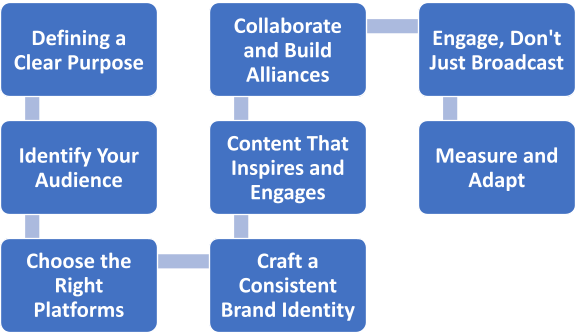
Step 1: Defining a Clear Purpose
All movements start with a cause. Hence, before opening a laptop and creating that first post, ask:
- What issues matter to students now?
- Is this issue relevant to a lot of people around campus?
- What do you want to change or increase awareness of specifically?
One example is that the campaign may be #GreenCampusWeek because it involves reducing single-use plastic, and another example is #MindMattersDU, which might focus on mental health resources and destigmatizing help-seeking behaviour. The clearer the mission, the easier it becomes to draw support in.
Step 2: Identify Your Audience
There are many varied audiences on a campus, and not all of them would perceive your message similarly: undergraduate and postgraduate students, faculty, societies, and alumni will all respond differently. So change your messaging accordingly.
Students: Informal, relatable language, and trending formats such as reels, memes, or short videos.
Faculty: Formal updates, articles, and progress reports that show impact might benefit from sharing with faculty members.
Clubs & Societies: Collaborate with them for cross-promotion.
When you know who you’re reaching out to, there’s a greater probability of your content not getting lost in the feed.
Step 3: Choose the Right Platforms
Not all social media platforms are for all movements. The most effective ones on campus are:
Instagram: Ideal for visuals, reels, and event promotion.
WhatsApp & Telegram: Fast ways of giving updates and recruiting participants.
YouTube: Interviews, behind-the-scenes stories, documentaries.
LinkedIn: Professional acknowledgment and alumni connections.
You don’t have to be on every platform. Understand your audience and choose 2-3 popular platforms.
Step 4: Craft a Consistent Brand Identity
A movement stands for more than just words-it becomes a feeling. You create a visual identity through:
Own hashtag (for example, #CampusForChange, #EcoWithUs).
A color palette and font style to maintain visual consistency in posts.
A logo or symbol with which one can identify during your campaign.
Consistency brings about recognition, and recognition builds trust.
Step 5: Content That Inspires and Engages
The all-too-familiar mistake is that the majority of the posts comprise just announcements about events. That’s hardly ideal for growing a movement. It needs to have a diversity of content: Educational: Facts and figures, infographics, experts give interviews.
Story-based: Real stories, testimonials from students.
Interactive: Polls, Q&As, challenges.
Call-to-action posts: Clear action steps followers can take to help (e.g., signing petitions, attending events, sharing the content).
Pro Tip: Use fast-motion videos — this has a high engagement rate with the student audience.
Step 6: Collaborate and Build Alliances
Next, wider movements with many voices give great strength to a movement. An alliance can be:
Student councils and societies.
Nearby NGOs or activist groups.
Emerging influential students, artists, or alumni.
Joining campaigns, sharing resources, or setting up joint events develops great network reach and credibility.
Step 7: Engage, Don’t Just Broadcast
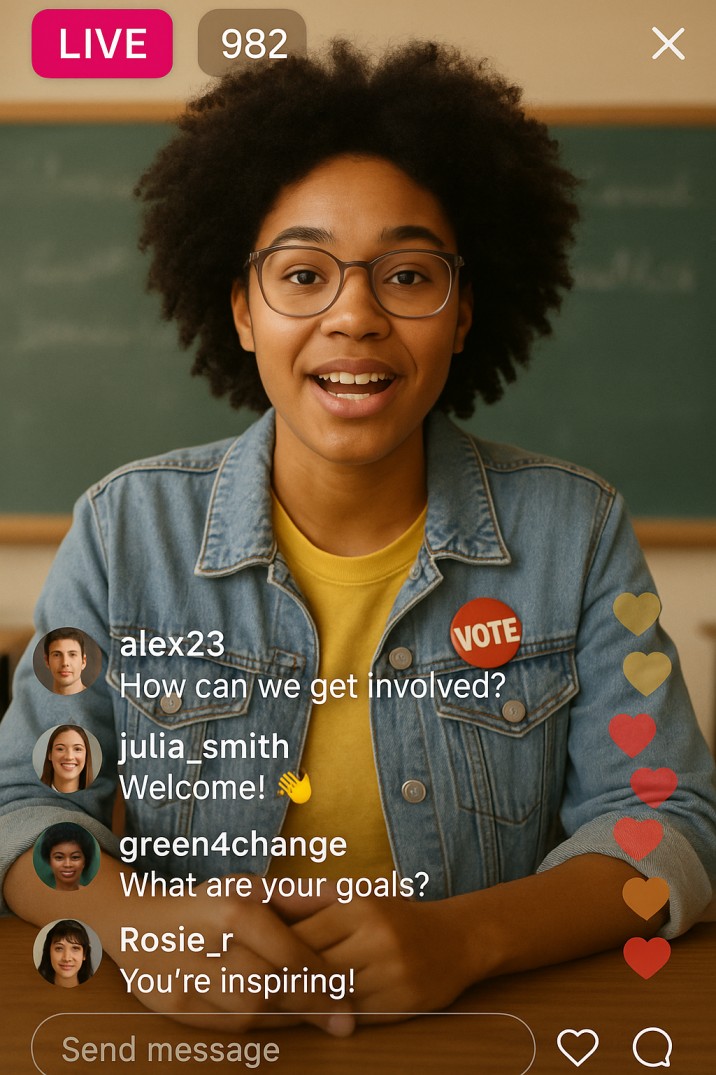
A failed social media movement is bound to be a one-way communication vehicle. Encourage comments, ask for opinions, and provide timely responses. Host live sessions to answer questions and make people feel like part of the cause. The more involved your audience feels, the more likely they are to want to share your message.
Step 8: Measure and Adapt
Using analytics will give you progress: likes, shares, comments, views of stories, and reach of posting all indicate what’s working. If some of your posts do well, do more like them. If engagement falls, change or adjust the schedule of your content.
Common Challenges and Ways to Overcome Them
- Low Initial Engagement: Use giveaways and contests to spark interest in active involvement.
- Negative Comments: Respond respectfully, or moderate if necessary.
- Content Burnout: Make a prior posting calendar in advance to avoid carding stress at the last minute.
References
Kaplan, A. M., & Haenlein, M. (2010). Users of the world, unite! The challenges and opportunities of Social Media. Business Horizons, 53(1), 59–68.
Link: https://www.sciencedirect.com/science/article/pii/S0007681309001232Qualman, E. (2019). Socialnomics: How Social Media Transforms the Way We Live and Do Business. Wiley.
Link: https://www.wiley.com/en-us/Socialnomics%3A%2BHow%2BSocial%2BMedia%2BTransforms%2Bthe%2BWay%2BWe%2BLive%2Band%2BDo%2BBusiness%2C%2B2nd%2BEdition-p-9781118232651Kietzmann, J. H., Hermkens, K., McCarthy, I. P., & Silvestre, B. S. (2011). Social media? Get serious! Understanding the functional building blocks of social media. Business Horizons, 54(3), 241–251.
Link: https://www.sciencedirect.com/science/article/pii/S0007681311000061Rheingold, H. (2012). Net Smart: How to Thrive Online. MIT Press.
Link: https://mitpress.mit.edu/9780262526135/net-smart/
FAQs on Campus Social Media Movement
1. What is a campus social media movement?
A campus social media movement is a collective digital effort by students, faculty, or campus organizations to raise awareness, promote causes, and encourage participation in meaningful discussions or actions. Unlike traditional activism, a campus social media movement happens online, primarily through platforms like Instagram, WhatsApp, YouTube, and LinkedIn. These movements aim to amplify student voices and bring campus issues into the spotlight.
2. Why are campus social media movements important today?
Campus social media movements are important because they give students the power to influence change beyond physical boundaries. Issues such as sustainability, mental health, diversity, or student entrepreneurship gain traction when shared widely. A campus social media movement creates awareness faster than posters or physical campaigns, ensuring the message spreads across the campus community and even to alumni, parents, and industry leaders.
3. How does a campus social media movement differ from traditional student activism?
Traditional student activism often relied on rallies, posters, or physical meetings. In contrast, a campus social media movement uses digital platforms to engage, mobilize, and organize. Social media movements allow students to share information instantly, gather support through hashtags, and collaborate with wider networks. While both methods aim to create change, social media campaigns are faster, more scalable, and often reach a broader audience.
4. What are some examples of successful campus social media movements?
Examples include campaigns like #GreenCampusWeek (promoting eco-friendly practices), #MindMatters (focusing on mental health), or #StudentsForChange (advocating for equality and diversity). In many universities, students have used a campus social media movement to push for plastic bans, better mental health services, or gender-neutral facilities. These campaigns show that digital activism can spark real change on campus.
5. How do I start a campus social media movement?
To start a campus social media movement, begin with:
Define the cause clearly – What do you want to achieve?
Identify your audience – students, faculty, or clubs.
Choose platforms – Instagram for visuals, WhatsApp for quick updates, YouTube for stories.
Create a brand identity – hashtag, logo, and color scheme.
Plan engaging content – mix of facts, polls, challenges, and personal stories.
Collaborate with allies – student councils, societies, NGOs.
With these steps, your campus social media movement will gain visibility and credibility.
6. What role do hashtags play in a campus social media movement?
Hashtags are the lifeblood of a campus social media movement. They unify content, make campaigns searchable, and allow students to engage with the movement easily. For example, #EcoWithUs or #CampusForChange creates a recognizable tag that students can use to contribute posts, share updates, and build momentum. Hashtags also help in tracking campaign progress and analyzing reach.
7. How can a campus social media movement engage students effectively?
Engagement happens when students feel like participants, not just spectators. A successful campus social media movement includes polls, challenges, live Q&A sessions, reels, and personal testimonials. Students should be encouraged to share their experiences, stories, and creative ideas. This sense of community builds trust and keeps the audience motivated to contribute to the cause.
8. What challenges can a campus social media movement face?
Some common challenges include:
Low initial engagement – students may hesitate to participate.
Digital distractions – memes or irrelevant content can derail focus.
Negative comments – criticism may arise online.
Access issues – not all students have reliable internet or devices.
Content burnout – maintaining regular posting can be exhausting.
Addressing these proactively ensures the campus social media movement remains strong.
9. How do you measure the success of a campus social media movement?
Success can be measured through both qualitative and quantitative indicators. Metrics like likes, shares, comments, followers, and hashtag usage reflect digital reach. Qualitative success shows in student participation, policy changes, or improved awareness. For instance, if a campaign on mental health results in increased counseling services, that campus social media movement is truly successful.
10. Can a campus social media movement influence university policies?
Yes. When enough students engage, universities are forced to notice. A strong campus social media movement can influence administrators to adopt eco-friendly policies, expand student services, or include more inclusive practices. Because social media amplifies voices, university officials often pay attention to avoid reputational damage. Persistent digital activism can lead to concrete institutional changes.
11. What platforms are best for a campus social media movement?
The choice depends on your target audience:
Instagram – best for visuals, reels, and event promotion.
WhatsApp/Telegram – fast updates and group communication.
YouTube – storytelling, interviews, and awareness videos.
LinkedIn – professional campaigns, alumni involvement.
By combining 2–3 platforms, a campus social media movement can reach maximum impact.
12. How can faculty and alumni support a campus social media movement?
Faculty can provide mentorship, credibility, and even share resources. Alumni can amplify the message by sharing posts, contributing expertise, or funding initiatives. Involving them also bridges generational gaps, making the movement stronger. A campus social media movement that integrates students, faculty, and alumni becomes multi-dimensional and harder to ignore.
13. What type of content works best for a campus social media movement?
The most effective content is diverse and engaging:
Educational posts – infographics, fact sheets.
Interactive content – polls, quizzes, challenges.
Storytelling – student experiences and testimonials.
Call-to-action posts – petitions, events, volunteering opportunities.
A balanced content calendar ensures that the campus social media movement keeps growing.
14. How can students avoid distractions while running a campus social media movement?
Students can overcome distractions by setting boundaries, creating a content schedule, and using productivity tools. Assigning roles to team members—such as content creator, community manager, and analytics tracker—ensures smoother execution. Moderators can help manage spam or irrelevant content. A focused approach ensures the campus social media movement doesn’t lose direction.
15. What is the future of campus social media movements?
The future is bright. As more students grow up digitally native, a campus social media movement will become a regular tool for activism. With the rise of AI-driven analytics, live streaming, and global student collaboration, campus campaigns will gain even greater visibility. From sustainability to mental health, these movements will continue shaping not just campus life but also broader social awareness
Penned by Tanjal kapoor
Edited by Reeya kumari, Research Analyst
For any feedback mail us at [email protected]
Transform Your Brand's Engagement with India's Youth
Drive massive brand engagement with 10 million+ college students across 3,000+ premier institutions, both online and offline. EvePaper is India’s leading youth marketing consultancy, connecting brands with the next generation of consumers through innovative, engagement-driven campaigns. Know More.
Mail us at [email protected]