
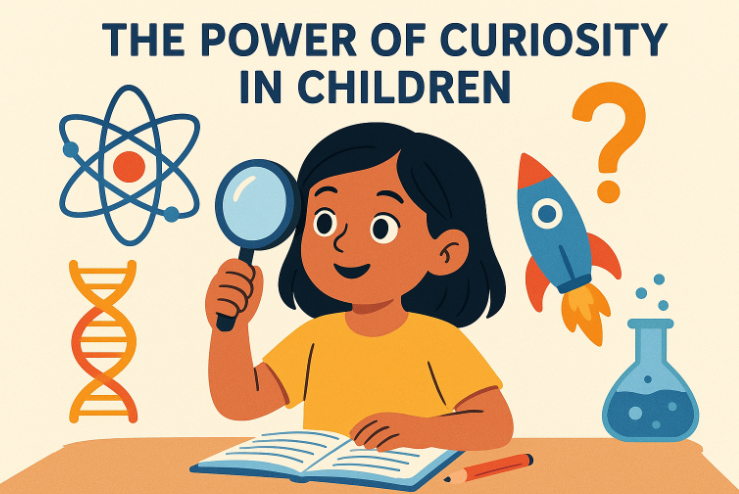
The Power of Curiosity in Children
Everything science starts with a question: Why? For STEM students, the research is where curiosity and unfettered imagination reign supreme. Not book learning and lab time, but a way of life wherein students learn, build problem-solving capacity, and become change leaders in society. Since student research in STEM today is larger than ever before, innovation, collaboration, and self-discovery doors are opening wide.
Research: The Key to Learning in STEM
STEM education is built on research. There isn’t a high amount of theoretic content in the mix, but research makes knowledge an experience. When they’re doing their research projects, they’re not memorizing equations or formulas-they’re learning to think, read data, and generate solutions. If they build a model robot, research how global warming works, or research gene trends, research shows them how science and technology apply in the real world.
Research is no longer the domain of university and college postgraduate students. Undergraduates are increasingly being sought by institutions to participate in research, internships, and innovation projects from the beginning of tertiary education. The exposure builds confidence and readiness for further development or studies.
Platforms that Foster Young Innovators
There are many schemes and programs worldwide to facilitate student research in the STEM field. NASA, ISRO, DRDO, Indian IITs and MIT, Stanford, and other foreign universities and colleges provide mentored internships and summer camps to students.
Even in school, hackathons, science fairs, and innovation competitions are challenging young minds to be creative. Initiatives like India’s Atal Tinkering Labs attempt to facilitate innovation through hardware access, mentorship, and technology. These initiatives enable students to experiment over projects that have the potential to transform society—e.g., develop sustainable sources of energy or assistive technology for disability.
The Role of Mentorship in Research
There is always someone to guide and motivate each successful student researcher. Professors, research scholars, or industry professionals can adequately assist students sort out their minds, realize the scientific approach, and overcome setbacks. Mentorship and technoskill training develop patience, persistence, and problem-solving skills.
It is most representative of the learning experience of the majority of students, and it makes research an exciting learning and discovery experience, rather than one to dread.
Why Research Experience Matters
Research exposure equips students with an edge over others in their professional career as STEM graduates. Research provides them with independent thinking, collaboration, data analysis, and communication skills that are also needed in industry and academia.
Exposure to research in real-world projects is a value-added credential in the eyes of employers and graduate schools alike because it ensures that they are open to learning and possess an initiative.
Also, student-level research largely discovers their true interest. While a few discover that they like doing fieldwork and surveys, some students discover that they like computational modeling, laboratory experiments, or guessing. They decide on the future career and opt for lifelong learning based on this discovery.
Breaking Barriers: Research for All
Back in the day, research was the domain of large institutions or research labs funded. All have been brought down by technology nowadays. Students can do work at home, employ open-source analysis software, and have results out on international websites. Web-based research internships, citizen science, and virtual labs have made research in STEM accessible to all.
Conclusion: Turning Curiosity into Impact
STEM studies for children does not always translate to career building—of thinkers, inventors, and world-savers. Any child who decides to question, inquire, and investigate is helping to build the world forward.
Classroom project or international competition, with each step of research the students are one step closer to constructing their ideas into world-savers. The future of STEM are those who will ask questions—and student research is where that questioning starts changing the world.
References
- National Research Council. A Framework for K-12 Science Education: Practices, Crosscutting Concepts, and Core Ideas. Washington, DC: The National Academies Press, 2012.
- OECD. PISA 2018 Results (Volume II): Where All Students Can Succeed. OECD Publishing, 2019.
- Atal Innovation Mission (AIM), NITI Aayog. Atal Tinkering Labs. Government of India. [Online].
Available: http://aim.gov.in/atl.php?utm_source=chatgpt.com - Lopatto, David. “Undergraduate Research as a High-Impact Student Experience.” Peer Review, vol. 12, no. 2, Spring 2010, pp. 27–30. [Online].
Available: https://eloncdn.blob.core.windows.net/eu3/sites/126/2020/10/Lopatto-2010.pdf
FAQs :-
1. What is STEM research for children?
STEM research for children involves hands-on projects that teach kids science, technology, engineering, and mathematics concepts. STEM research for children encourages creativity, problem-solving, and curiosity from an early age.
2. Why is STEM research important for children?
STEM research for children is crucial because it allows kids to explore real-world problems, learn critical thinking, and develop skills that prepare them for future STEM careers.
3. How can children start with STEM research?
Children can begin STEM research for children at school or home using kits, experiments, or online platforms. Programs designed for STEM research for children help them gain guidance and mentorship for successful learning.
4. What skills do children gain from STEM research?
STEM research for children develops a range of skills including problem-solving, collaboration, critical thinking, creativity, and data analysis. They also improve communication skills as they present findings, write reports, or discuss projects. These skills benefit both academic success and personal growth.
5. Are there programs that support STEM research for children?
Yes, numerous programs and initiatives support STEM research for children. For example, Atal Tinkering Labs in India, NASA’s student programs, and international science fairs offer mentorship, resources, and structured guidance. These platforms enable children to experiment safely and contribute to meaningful innovations.
6. How does mentorship enhance STEM research for children?
Mentorship plays a crucial role in STEM research for children. Guidance from teachers, professionals, or senior students helps them understand scientific methods, troubleshoot problems, and stay motivated. Mentors also encourage persistence, patience, and curiosity, ensuring children gain the most from their research projects.
7. Can STEM research for children be done at home?
Absolutely. STEM research for children can be done at home with everyday materials, kits, or online virtual labs. Technology and open-source tools make it possible for children to conduct experiments, analyze results, and even publish findings on global platforms, making research accessible beyond formal institutions.
8. How does STEM research influence future careers?
Engaging in STEM research for children helps them discover interests in areas like robotics, environmental science, or computational modeling. Early exposure guides their future academic choices and career paths. Employers and universities value research experience as it demonstrates initiative, independent thinking, and real-world problem-solving ability.
9. What are some examples of STEM research projects for children?
Children can undertake projects like designing energy-efficient models, studying plant biology, developing simple coding applications, or building small robots. Such projects not only make learning interactive but also spark creativity and innovation. STEM research for children allows them to transform ideas into practical solutions.
10. How does STEM research build curiosity in children?
STEM research for children nurtures a natural curiosity by encouraging questioning, exploration, and experimentation. Each project provides an opportunity to investigate, hypothesize, and discover outcomes, creating a lifelong love for learning. Curiosity-driven research helps children grow into critical thinkers and innovative problem-solvers.
Penned by Deepika
Edited by Anuj Kumar, Research Analyst
For any feedback mail us at [email protected]
Transform Your Brand's Engagement with India's Youth
Drive massive brand engagement with 10 million+ college students across 3,000+ premier institutions, both online and offline. EvePaper is India’s leading youth marketing consultancy, connecting brands with the next generation of consumers through innovative, engagement-driven campaigns. Know More.
Mail us at [email protected]