
Topic: Student Orientation Tech
Today, in our hyper-connected world, a college or university’s initial impression does not necessarily happen when the student gets on campus — it typically begins online. For groups willing to recruit, engage, and inspire, virtual campus tours become a powerful mediator between geographical sites and the digital lives of future students. Driven by state-of-the-art AR/VR solutions and integrated student orientation tech, such tours are revolutionizing how students explore their would-be study environments while ensuring a seamless onboarding experience.
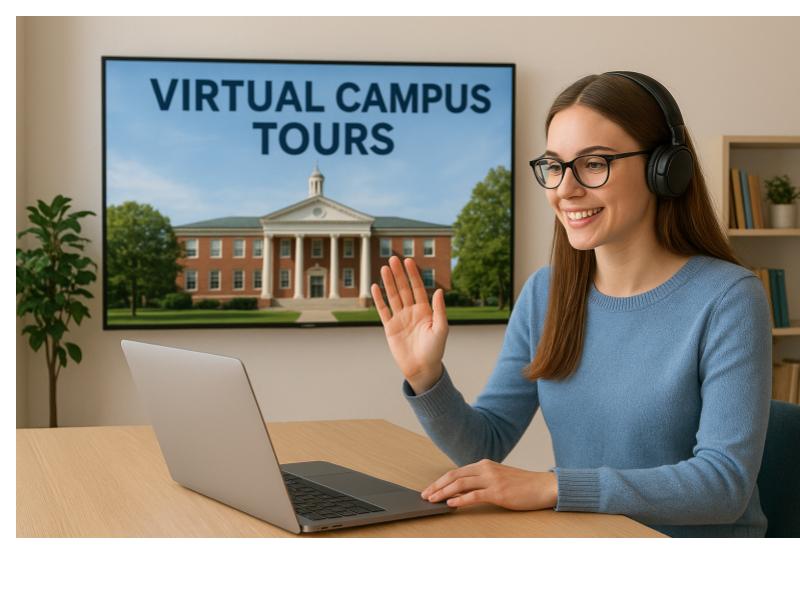
A virtual campus tour guide is not just a map or a slideshow anymore. It’s an immersive, interactive experience in which potential students can stroll across the quadrangle, visit a dorm room, browse the library, and even sit through a mock lecture — all from the comfort of their own homes. These virtual welcome tours aren’t gestures; they are thoughtfully planned routes to inspire wonder, foster emotional resonance, and solve the question: “Can I see myself here?”
4 Key Reasons Virtual Campus Tours Redefine Student Orientation Tech
Why Virtual Tours Are Important for Student Orientation?
The move to university life is every bit as psychological as intellectual. Student orientation technology is at the centre of facilitating this move, and virtual campus tours are its crown jewel. Whether the student resides across the nation or halfway around the world, he or she can nevertheless “tour” the campus before the first day ever comes. This crosses geographical divides and eliminates fear of the unknown.
Institutions are investing in advanced virtual campus tour guides that are more than navigation. These sites may include instant Q&A chatbots, emphasize important student services, and offer personalized tours based on interest areas. An environmental science student may be taken through the university’s green lab and sustainability centres, while a prospective musician may see concert halls and rehearsal spaces.
The Power of AR VR Technology
The actual game-changer in such an experience is AR VR technology. Virtual Reality headsets can position a prospective student into a life-size, 360-degree simulation of the campus. Augmented Reality overlays can animate campus maps so that students may hold up a print brochure and see animated buildings immediately or listen to students.
Picture yourself walking across campus with a VR headset on, hearing birds chirping in the background, or locating your assigned dorm room with AR and following a glowing line. These sensory-perfect experiences introduce students and prime them weeks before arrival day. For some, it makes a lukewarm interest a firm commitment.
Blending Orientation with Engagement
There isn’t a successful virtual campus tour guide in a vacuum — it’s usually part of comprehensive student orientation software. Students might get a pre-orientation app, along with their virtual tour, event calendars, campus safety tips, and networking tools with other prospective classmates. The blended model keeps students engaged on the path from applicant to enrolled student.
Others are gamifying the experience as well. Passing a few of the checkpoints on the virtual campus tour can unlock digital badges, special campus trivia, or an invitation to live video chats with current students and faculty members. Gamification, driven by AR VR technology, turns passive viewing into active participation.
Accessibility and Inclusivity
Among the strongest strengths of virtual tours of campus is their inclusivity potential. For students with disabilities, virtual tours can be provided with tailored navigation, customizable graphics, and audio description. For foreign students, multilingual support guarantees that they are incorporated to the same degree. Through the utilization of student orientation technology to create inclusive tours that serve everyone, the institutions provide a solid assurance of equity and belonging.
- A Permanent First Impression, Only Online. The best virtual campus tour guides are no longer maps but storytellers. They share the soul of a campus: its traditions, its people, its culture. They merge technology’s accuracy with the warmth of a welcoming personalized message.
- When equipped with AR VR technology, such tours are able to record things live visits just can’t — golden hour lights on library steps, the warm glow of laughter spilling out of the student union, the peaceful quiet of campus in winter.
- As higher education begins to place greater value on digital-first experience, virtual campus tours are proving themselves to be more than recruitment gimmicks. They are part of the student orientation tech platform of today — a means of engaging, educating, and inspiring in the language students most readily speak: immersive, interactive, and accessible technology.
In the end, a virtual campus tour guide is not merely pointing out buildings — it’s opening doors. And with AR VR technology at the forefront, those doors can be opened by anyone, anywhere, at any time, and lead to a whole world of welcome to the world of academia.
Conclusion
Currently, virtual campus tours are not merely a convenience; they have become a core component of student orientation technology. Through the amalgamation of AR/VR innovation, accessibility, and personalization, these tours allow educational institutions to forge deeper emotional bonds with the students even before they physically visit the campus. For the students, these tours turn doubt into assurance and interest into loyalty.
In the era of “digital-first” impressions, the colleges that provide engaging, accessible, and interactive campus visit experiences will not only have a competitive advantage in recruitment but also create a strong sense of community among the students. The future of student induction is no longer limited to the campus gates; it is virtual, accessible, and always available.
References
[1] M. N. Notermans, “How Virtual Reality (VR) Campus Tours are Revolutionizing Student Recruitment in Higher Education,” 25-Oct-2024. [Online]. Available: https://thinkorion.com/blog/virtual-reality-campus-tours-for-student-recruitment/
[2] K-12 Insight, “9 Benefits of Virtual Campus Tours for Universities,” Concept3D, 10 months ago.[Online]. Available: https://concept3d.com/blog/higher-ed/9-benefits-of-virtual-campus-tours-universities/
FAQ on Student Orientation Tech
Q1. What Is Student Orientation Tech?
Student orientation tech includes digital tools like apps, platforms, and virtual campus tour guides that help students transition smoothly into university life.
Q2. Why Are Virtual Campus Tour Guides Important Today?
A virtual campus tour guide allows students to explore facilities, services, and campus culture online, making student orientation tech more accessible and inclusive.
Q3. How Do Virtual Campus Tours Improve Recruitment?
By providing immersive first impressions, student orientation tech with virtual campus tour guides helps universities attract, engage, and convert prospective students.
Q4. What Role Does AR VR Technology Play in Student Orientation Tech?
AR VR technology powers 360° tours, interactive maps, and simulations, making a virtual campus tour guide more realistic and engaging for new students.
Q5. Can Virtual Campus Tours Replace Physical Visits?
While not a complete replacement, student orientation tech ensures that virtual campus tour guides supplement in-person visits and broaden access worldwide.
Q6. How Do Virtual Campus Tours Support Accessibility?
Student orientation tech ensures inclusivity by offering audio descriptions, customizable navigation, and multilingual support in every virtual campus tour guide.
Q7. What Features Make a Good Virtual Campus Tour Guide?
Interactive walkthroughs, real-time Q&A, gamified checkpoints, and AR overlays are core elements of modern student orientation tech.
Q8. How Can Virtual Campus Tours Increase Student Engagement?
Gamified experiences, digital badges, and live video chats make virtual campus tour guides a key feature of student orientation tech for engagement.
Q9. Are Virtual Campus Tours Useful for International Students?
Yes. Student orientation tech enables virtual campus tour guides with global access, multilingual support, and real-time exploration for overseas students.
Q10. How Do Universities Personalize Virtual Campus Tours?
By integrating interest-based pathways, a virtual campus tour guide can adapt to a student’s major, showcasing labs, studios, or cultural spaces.
Q11. What Are the Benefits of Combining Apps with Virtual Campus Tours?
Student orientation tech apps extend virtual campus tour guides with calendars, networking tools, and safety resources for a seamless onboarding experience.
Q12. Will Virtual Campus Tours Continue to Shape Higher Education?
Yes. With AR VR innovations, student orientation tech ensures virtual campus tour guides remain central to digital-first recruitment and engagement strategies.
Penned by Nitya Gosain
Edited by Shashank Khandelwal, Research Analyst
For any feedback mail us at [email protected]
Transform Your Brand's Engagement with India's Youth
Drive massive brand engagement with 10 million+ college students across 3,000+ premier institutions, both online and offline. EvePaper is India’s leading youth marketing consultancy, connecting brands with the next generation of consumers through innovative, engagement-driven campaigns. Know More.
Mail us at [email protected]