
Topic: Student Skill Sharing Events
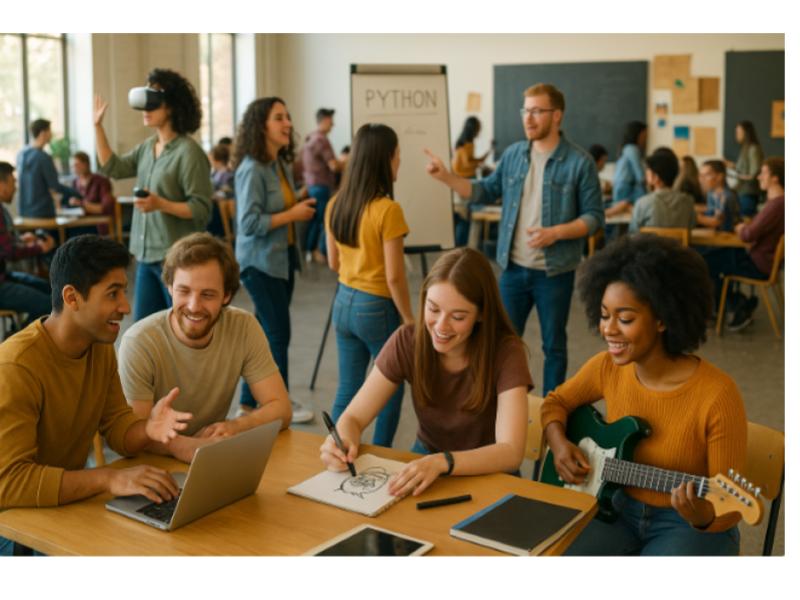
Visualize a space that is just brimming with excitement. People are in motion; it’s a buzz of activity everywhere. Students are not only sharing the latest in technology and art, but also the whole campus is picking up with their own kind of life. Student skill-sharing events for students have become an indispensable part of their lives, a club they cannot miss. They are an opportunity to really engage with peer-to-peer learning in a way that is different and more effective.
This is the way to get your skill-sharing event off the ground and retain why it is so much more different from the usual student workshop routine.
Flip the Script on “Teaching”
The best student skill-sharing events work because they throw hierarchy out the window. Instead of one expert and a flock of note-takers, you invite everyone to bring something to the table, whether it’s coding, guitar riffs, sketching comics, or public speaking. When you let students teach students, magic happens. The skills feel accessible, learning feels mutual, and no one is afraid to ask “dumb” questions.
Ditch the Lecture; Design the Experience
Forget long PowerPoints. Instead, organize each session as a hands-on micro-workshop:
- Pair beginners and veterans for quick-fire skill exchanges.
- Make your space flexible (beanbags, whiteboards, open circles)
- Invite students to set up “demo stations” where peers can try out new skills for themselves.
Encourage spontaneous “skill jams”: set aside time for students to swap roles, tackle mini challenges, and laugh through mistakes. These moments build the trust and camaraderie that power campus peer learning.
Get Personal And Celebrate Quirks
Every student brings oddball strengths. Spotlight real stories: the shy coder who can teach you basic Python in five minutes, the marketing wiz who cracked Instagram reels, the artist who makes origami from old notes. Shine a light on both niche skills and everyday know-how. Celebrate variety: your club’s diversity will be its biggest draw.
Use sign-ups that ask what students want to LEARN, not just what they can teach. This curiosity-driven approach ensures sessions stay relevant and interesting for all.
Keep the Momentum Alive
One-off events are enjoyable, but a change in culture is far more enduring. Set up a campus peer learning network, a greater digital forum, or hold regular ‘Skill Swap Days.’ Solicit and implement suggestions for future gatherings. The friendships formed and the ideas that are born in a single gathering last a long time, well past the actual event.
Don’t underestimate the impact that a campus skill-sharing event can have in terms of unlocking talent and dormant ambitions. Expect to challenge students to collaborate, uncover latent passions, and develop a true learning community.
Embrace the spirit of informality. Set up skill-sharing events that will make peer learning not a goal, but an everyday reality for clubs and organizations.
Conclusion
Skill-sharing events are not only another entry on the student activities calendar—they are the very base of a successful culture of peer-to-peer learning. As these events break down hierarchies, stimulate collaboration, and recognize every student’s personal strengths, campuses become transformed from places of sheer intellect and idea exchange into places of creativity and social interaction.
A perfectly organized skill-sharing event is not just an information transmission vehicle; it also empowers, creates bonds, and establishes a community of peer learning on campus, which is sustainable. The students, clubs, and organizations can benefit greatly from these casual but powerful forums, as this is to discover the talent that was previously invisible, energise the innovation, and produce such a vibrant campus culture where learning is shared, lived, and celebrated every day.
References:
[1] J. Topping, Peer-assisted learning: A practical guide for teachers. Cambridge, MA, USA: Brookline Books, 2001. [Online]. Available: https://eric.ed.gov/?id=ED459149
[2] D. Boud, R. Cohen, and J. Sampson, “Peer learning and assessment,” Assessment & Evaluation in Higher Education, vol. 24, no. 4, pp. 413–426, Dec. 1999. [Online]. Available: https://doi.org/10.1080/0260293990240405
[3] M. Prince, “Does active learning work? A review of the research,” Journal of Engineering Education, vol. 93, no. 3, pp. 223–231, Jul. 2004. [Online]. Available: https://doi.org/10.1002/j.2168-9830.2004.tb00809.x
FAQ on Student Skill Sharing Events
Q1. What Are Student Skill-Sharing Events?
Student skill-sharing events are campus activities where students teach and learn from one another, fostering collaboration and enhancing campus peer learning.
Q2. How Do Student Skill-Sharing Events Differ from Traditional Workshops?
Unlike top-down lectures, student skill-sharing events emphasize peer-led sessions, hands-on learning, and informal exchanges that boost campus peer learning.
Q3. Why Are Student Skill-Sharing Events Effective?
They break down hierarchies, make skills more accessible, and create a safe environment where campus peer learning feels natural and fun.
Q4. What Skills Can Be Shared in These Events?
Anything from coding, music, and art to public speaking or social media marketing can be taught in student skill-sharing events for campus peer learning.
Q5. How Do Student Skill-Sharing Events Build Community?
By spotlighting personal strengths and quirks, these events foster trust, friendships, and long-term networks for campus peer learning.
Q6. How Can Organizers Make Events More Engaging?
Incorporate micro-workshops, demo stations, and spontaneous “skill jams” to keep student skill-sharing events dynamic and interactive.
Q7. Why Should Student Clubs Host Skill-Sharing Events?
Hosting student skill-sharing events helps clubs uncover hidden talents, energize collaboration, and strengthen campus peer learning culture.
Q8. How Do You Keep Momentum After a Skill-Sharing Event?
Follow up with digital forums, regular “Skill Swap Days,” and student feedback to sustain campus peer learning beyond a single event.
Q9. How Do Student Skill-Sharing Events Support Peer-to-Peer Learning?
They allow students to learn directly from each other in a supportive environment, making campus peer learning more practical and impactful.
Q10. What Role Does Inclusivity Play in Student Skill-Sharing Events?
By celebrating diverse skills and everyday know-how, student skill-sharing events ensure every student can contribute to campus peer learning.
Q11. Can Student Skill-Sharing Events Improve Academic Performance?
Yes. Active participation in peer learning activities can strengthen understanding, improve communication, and complement classroom knowledge.
Q12. What Long-Term Impact Do These Events Have on Campus Culture?
They transform campuses into vibrant hubs of creativity, collaboration, and campus peer learning, fostering innovation and lasting connections.
Penned by Stuti Modi
Edited by Shashank Khandelwal, Research Analyst
For any feedback mail us at [email protected]
Transform Your Brand's Engagement with India's Youth
Drive massive brand engagement with 10 million+ college students across 3,000+ premier institutions, both online and offline. EvePaper is India’s leading youth marketing consultancy, connecting brands with the next generation of consumers through innovative, engagement-driven campaigns. Know More.
Mail us at [email protected]