
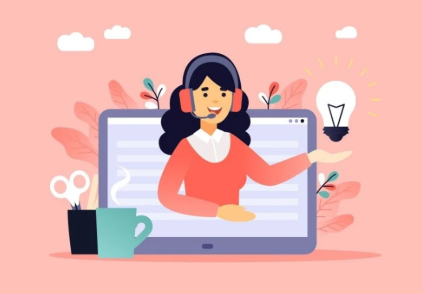
This concept of virtual teachers is no longer futuristic; we can see it in today’s world. With the rapid growth of online learning, artificial intelligence-powered teaching systems are now stepping in to guide more and more students by answering queries, and providing instant feedback. This trend is now reshaping global classrooms and leading to a larger education transformation.
What Are Virtual Teachers?
Virtual teachers are AI-driven systems designed to mimic real educators. They can deliver lectures like real teachers, assign the students homework, evaluate their tests, and even interact with students in real-time. Instead of replacing human educators, they act as a powerful assistant for them, they also help them to create adaptive classrooms where learning becomes more personalized.
Benefits
The adoption of virtual teachers comes with many advantages:
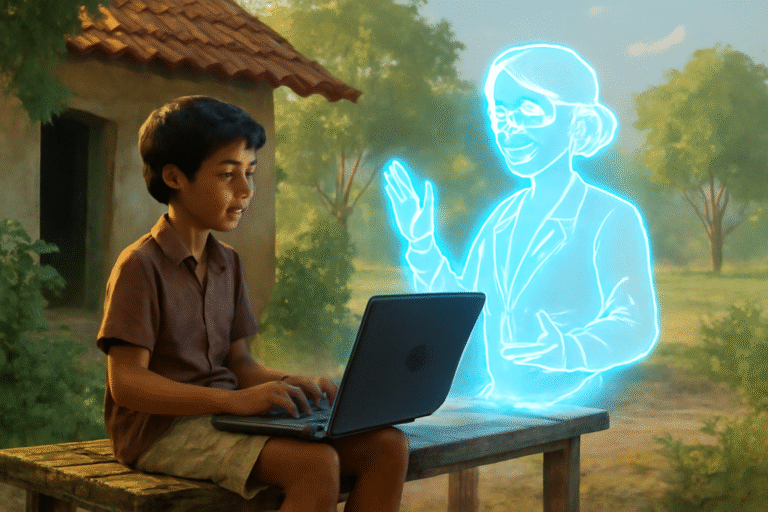
- Accessibility: Students who are from the rural or remote areas can access quality learning from their own home if they can’t travel that much.
- Consistency: Unlike humans, virtual teachers can be operated anytime without being tired.
- Personalization: They adjust their content that they provide to the students according to each student’s learning speeds and styles.
- Instant Feedback: Through real-time evaluation of their specific results, students get immediate corrections and guidance from mentors.
Challenges and Limitations
While useful, virtual teachers also present certain challenges:
- Lack of emotional intelligence and empathy compared to human teachers.
- High dependence on technology infrastructure.
- Risk of reduced student-teacher relationships.
- There are ethical concerns about the students’ data privacy.
These limitations remind us that technology should complement, not replace, human educators.
How Virtual Teachers Support Adaptive Classrooms
One of the biggest roles of virtual teacher is enabling adaptive classrooms:
- The lessons are adjusted to match the progress of students.
- Students who struggle get extra practice materials too.
- And advanced learners receive additional challenges also.
- Teachers develop insights into student’s performance through proper analyses of students’ grades.
This ensures no student is left behind, making education fairer and more efficient.
Future of Virtual Teachers in Education
The future looks promising as universities and schools begin integrating virtual teachers with human educators. Some trends include:
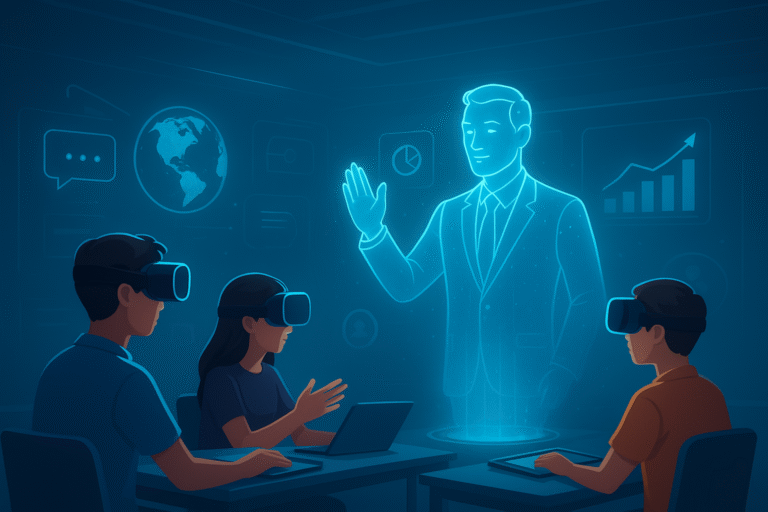
- Virtual reality (VR) classrooms with AI tutors are the best possible combination.
- Real-time translation is also available for global students.
- AI mentors also help with career guidance.
- Collaboration between teachers and AI to design advanced lesson plans according to students.
Such developments are going to push forward education transformation at all levels.
Conclusion: A Partnership Between Humans and AI
Virtual teachers represent a big shift in online mode of learning. They make the classrooms more inclusive for the students, accessible for students from remote areas, and personalized for the students too. By supporting adaptive classrooms and real-time evaluation, they help human educators to focus on mentoring students and creativity of their own. With the right balance of both, virtual teachers will not replace humans but will work with them to shape the future of education.
References
[1] EDUCAUSE, “AI and Virtual Teachers in Education,” EDUCAUSE Review, 2023. [Online]. Available:
https://er.educause.edu
[2] UNESCO, “Technology in Education: Virtual Teachers,” 2022. [Online]. Available:
https://www.unesco.org/en/education
[3] World Economic Forum, “Virtual Teachers and the Future of Learning,” 2023. [Online]. Available:
https://www.weforum.org
FAQs
1. What are virtual teachers?
Virtual teachers are AI-driven systems designed to simulate real-life educators. They can conduct lessons, assign homework, evaluate student performance, and even provide real-time feedback. Virtual teachers are not intended to replace human educators but to assist them, helping create adaptive classrooms where learning becomes more personalized and efficient.
2. How do these work?
Virtual teachers work using artificial intelligence, machine learning, and natural language processing technologies. They analyze student responses, adapt teaching materials based on performance, and provide instant feedback. By tracking students’ progress, virtual teachers can adjust the curriculum to suit individual learning speeds, ensuring a personalized education experience.
3. What are the main benefits?
They offer several benefits, including accessibility, as students from remote areas can access quality education from home; consistency, since virtual teachers are available 24/7 without fatigue; personalization, with content tailored to each student’s learning style; and instant feedback, allowing students to improve faster. These benefits make virtual teachers a significant part of modern education transformation.
4. Can virtual teachers replace human teachers?
These are designed to assist, not replace, human educators. While they can provide lessons, evaluate students, and offer guidance, they lack emotional intelligence and empathy. Human teachers are essential for mentorship, motivation, and fostering meaningful student-teacher relationships. Together, virtual teachers and human educators can create more effective learning environments.
5. What challenges do they face?
Some limitations include dependence on technology infrastructure, reduced emotional connection with students, data privacy and security concerns, and limited ability to handle complex behavioral or emotional issues. Despite these challenges, virtual teachers are still a valuable tool for adaptive classrooms and education transformation.
6. How do virtual teachers support adaptive classrooms?
Virtual teachers enable adaptive classrooms by customizing lessons according to each student’s learning pace. They provide extra resources for struggling students and advanced challenges for high performers. Teachers gain insights into student performance through analytics provided by virtual teachers, helping ensure no student is left behind.
7. What role does real-time evaluation play?
Real-time evaluation is a key feature of virtual teachers. It allows students to receive immediate feedback on their work, helping them correct mistakes quickly. Teachers can monitor progress in real-time, making it easier to identify learning gaps and adjust lessons accordingly. This functionality enhances both learning and teaching efficiency.
8. Are these suitable for all age groups?
Yes, virtual teachers can be adapted for different educational levels—from elementary schools to universities. The AI systems powering virtual teachers can adjust complexity based on age and learning needs. Younger students benefit from interactive and gamified lessons, while older students can receive more advanced coursework and career guidance.
9. How do they enhance education transformation?
Virtual teachers play a significant role in education transformation by making learning more inclusive, personalized, and accessible. They bridge gaps for students in remote areas, provide consistent teaching, and integrate adaptive learning techniques. As AI evolves, virtual teachers will continue to drive innovation and improve global education standards.
10. Can these facilitate global learning?
Absolutely. With features like real-time translation and AI-powered tutors, virtual teachers can support students from different countries and languages. This global reach allows learners to access quality education without geographical constraints, making classrooms truly borderless.
11. What technologies are used in this?
Virtual teachers rely on technologies such as artificial intelligence, machine learning, natural language processing, and sometimes virtual reality (VR). These technologies enable them to understand student queries, provide instant responses, analyze performance, and even create immersive learning experiences in VR classrooms.
12. How do these impact teacher workload?
Virtual teachers reduce repetitive tasks for educators, such as grading and answering common questions. This allows teachers to focus more on mentoring, creative lesson planning, and supporting students emotionally. By collaborating with virtual teachers, human educators can optimize their teaching efforts while improving student outcomes.
13. Are these cost-effective?
While the initial setup for virtual teachers can be expensive due to AI technology and infrastructure, they can be cost-effective in the long run. They reduce the need for additional teaching staff, minimize physical resource usage, and provide scalable education solutions for larger student populations.
14. What is the future?
The future of virtual teachers is promising. Trends indicate wider adoption of AI tutors, VR classrooms, career guidance tools, and global learning platforms. As AI becomes more advanced, virtual teachers will complement human educators even more, shaping the future of education through adaptive classrooms and real-time evaluation systems.
15. How can schools integrate this effectively?
Schools can integrate virtual teachers by first assessing their technological infrastructure and teacher readiness. Proper training for educators, ensuring data security, and combining AI systems with human oversight are key steps. Virtual teachers work best when they enhance classroom experiences without replacing the human touch, supporting both students and educators in the learning journey.
Penned by Oum Mishra
Edited by Ragi Gilani , Research Analyst
For any feedback mail us at [email protected]
Transform Your Brand's Engagement with India's Youth
Drive massive brand engagement with 10 million+ college students across 3,000+ premier institutions, both online and offline. EvePaper is India’s leading youth marketing consultancy, connecting brands with the next generation of consumers through innovative, engagement-driven campaigns. Know More.
Mail us at [email protected]